

There’s something deeply comforting about gathering around a bubbling pot of old fashioned beef stew on a crisp evening. This classic dinner feels like a warm hug, complete with tender chunks of beef, heartwarming broth, and an orchestra of vegetables that sing with flavor. Hearty and comforting, this Old Fashioned Beef Stew is a time-tested favorite that warms the soul with every bite. From the very first stir of tomato paste into the simmering liquid to the final scatter of vibrant green peas, each ingredient has a starring role in creating that unforgettable depth of taste. With just 20 minutes of hands-on prep time and about 2 hours of slow cooking, you’ll have six generous servings (around 450 calories each) ready to feed family or friends.
As someone who first tried this recipe on a blustery winter day, I can still recall the satisfying sizzle of beef browning in my Dutch oven and the intoxicating blend of herbs and spices filling the kitchen. It’s a little more effort—an intermediate-level recipe—but guided by a pinch of patience and a dollop of enthusiasm, you’ll find that cooking this stew transforms into a meditative ritual rather than a chore. Whether you’re a seasoned home cook or a curious newbie, you’ll delight in stirring the pot low and slow until the beef becomes fall-apart tender and the vegetables soak up every ounce of savory goodness. So grab your apron, preheat your pot, and let’s dive into the magic that makes this Winter warmer a forever favorite.
KEY INGREDIENTS IN OLD FASHIONED BEEF STEW
Before you begin, gather high-quality ingredients to ensure your stew turns out robust and well-rounded. Each element contributes its own unique character, building layers of flavor that transform simple components into a dish you’ll want to return to again and again.
- Beef chuck
A richly marbled cut that breaks down beautifully during long, gentle cooking. It’s the foundation of deep, meaty flavor and yields irresistibly tender bites.
- Vegetable oil
Used for searing, it helps achieve a golden crust on the beef cubes, locking in juices and developing the stew’s signature savory aroma.
- Beef broth
This is the liquid backbone of the stew, providing a concentrated beefy base that carries all the other flavors.
- Tomato paste
Adds a tangy sweetness and rich color, enhancing the stew’s complexity without overpowering the other ingredients.
- Worcestershire sauce
A splash of umami-packed seasoning that deepens the overall taste profile and adds a pleasant zing.
- Dried thyme
An earthy herb that infuses the broth with a subtle, aromatic twist, pairing perfectly with beef.
- Bay leaves
Impart a delicate layer of herbal flavor, rounding out the savory notes throughout the long simmer.
- Salt and freshly ground black pepper
Essential seasonings to balance and lift all the flavors, added to taste at the end for precise seasoning.
- Carrots
Bring natural sweetness and a pop of color, softening just enough to melt in your mouth.
- Potatoes
Hearty chunks that soak up the broth, creating a luscious, filling consistency.
- Onions
Build the aromatic base when sautéed, adding sweetness and depth as they caramelize slightly.
- Garlic
Delivers that unmistakable garlicky warmth, blooming in the pot for a punch of flavor.
- Frozen peas
Stirred in at the last minute for a touch of freshness and bright green contrast.
- All-purpose flour
Coats the beef to help thicken the stew, giving it a rich, velvety texture without any extra work.
HOW TO MAKE OLD FASHIONED BEEF STEW
Let’s dive into the cooking adventure! This recipe is all about layering flavors through careful browning, slow simmering, and thoughtful seasoning. Follow these steps to create a stew that’s rich, hearty, and sure to become a staple in your dinner rotation.
1. Brown the beef
Heat 1 tablespoon of oil in a large pot or Dutch oven over medium-high heat. Working in batches, add the beef cubes and sear until a deep, golden crust forms on all sides. This caramelization builds serious flavor. Remove the beef and set it aside.
2. Sauté aromatics
In the same pot, add another tablespoon of oil. Sauté the chopped onions until they turn translucent and start to soften, about 5 minutes. Add the minced garlic and cook for an additional minute, stirring constantly to prevent burning and to release those aromatic oils.
3. Coat with flour
Return the browned beef cubes to the pot. Sprinkle the all-purpose flour evenly over the meat, then stir thoroughly until every piece is lightly coated. This step creates a natural thickener for the stew as it simmers.
4. Build the broth
Pour in the beef broth and stir in the tomato paste until fully dissolved. Add the Worcestershire sauce, dried thyme, and bay leaves. Bring the mixture up to a gentle simmer, scraping any browned bits off the bottom of the pot to incorporate every bit of flavor.
5. Long, slow simmer
Cover the pot with a lid, reduce the heat to low, and let it cook for about 1.5 hours. This gentle simmer breaks down tough connective tissues in the beef, resulting in melt-in-your-mouth tenderness.
6. Add root vegetables
Uncover the pot and stir in the sliced carrots and chunky potatoes. Replace the lid and continue to simmer for another 30 minutes, or until the vegetables are fork-tender and infused with rich, savory juices.
7. Finish with peas and seasoning
Stir in the frozen peas during the last 5 minutes of cooking to warm them through without losing their bright color. Taste the stew and season with salt and freshly ground black pepper to your preference.
8. Remove bay leaves
Before serving, fish out and discard the bay leaves. They’ve done their job infusing the stew with gentle herbal notes.
SERVING SUGGESTIONS FOR OLD FASHIONED BEEF STEW
When it comes to serving this Old Fashioned Beef Stew, presentation and pairing can elevate each spoonful into a memorable experience. Whether you’re dishing it up for a cozy family dinner or bringing it to a potluck, these serving ideas will help you showcase the stew’s comforting warmth while offering complementary flavors and textures.
- Serve in deep bowls with a generous ladle of stew, then garnish with a sprinkle of freshly chopped parsley and a swirl of sour cream for a pop of color and creaminess.
- Accompany the stew with crusty bread or a warm baguette, perfect for dipping into the rich, thick broth and scooping up every last morsel.
- For extra indulgence, ladle the stew over garlic mashed potatoes or creamy polenta. The smooth base soaks up the juices and creates a hearty, satisfying plate.
- Pair your bowl of stew with a glass of robust red wine, such as Cabernet Sauvignon or Malbec, whose bold tannins and dark fruit notes beautifully complement the beefy depths of the stew.
HOW TO STORE OLD FASHIONED BEEF STEW
Proper storage ensures your delicious stew retains its flavor, texture, and freshness—whether you’re saving leftovers for later in the week or prepping meals for the freezer. Follow these tips to keep your Old Fashioned Beef Stew tasting just as good as the moment it came off the stove.
- Refrigerator:
Allow the stew to cool to room temperature, then transfer it to an airtight container. It will keep beautifully for up to 4 days, giving you convenient lunches or dinners that heat up in minutes.
- Freezer:
Portion the cooled stew into freezer-safe bags or containers, leaving a small gap at the top for expansion. Label with the date, and freeze for up to 3 months—perfect for those days when you need a comfort meal in a hurry.
- Portioning:
For easy meal prep, divide the stew into individual servings before refrigerating or freezing. This way, you can defrost exactly what you need without waste, and reheat just a single portion.
- Reheating:
Gently warm portions on the stovetop over low heat, stirring occasionally, or microwave in short bursts to prevent overcooking. Add a splash of beef broth if the stew has thickened too much during storage.
CONCLUSION
This Old Fashioned Beef Stew has everything you love about a timeless comfort dish: succulent chunks of beef, tender vegetables, and a broth brimming with savory, herb-infused goodness. From the initial sear to the final ladle, each step builds layers of flavor you’ll want to savor again and again. With only 20 minutes of prep and around 2 hours of gentle cooking, you’ll end up with six satisfying servings at roughly 450 calories each—enough to feed the entire family or share with friends. Feel free to print this article and save it for future meal planning, and keep it tucked into your recipe binder for those chilly nights when a hearty dinner means the world. You can also find an FAQ below to answer any lingering questions before you begin.
I’d love to hear about your experiences making this stew—did you add a splash of red wine as suggested in the notes, or perhaps sprinkle in some fresh herbs at the end? Leave a comment, share your questions or feedback, or tell me how you personalized the recipe to make it your own. Your thoughts help me improve and inspire other home cooks on their culinary journey. Happy cooking, and may every spoonful bring warmth and joy to your table!
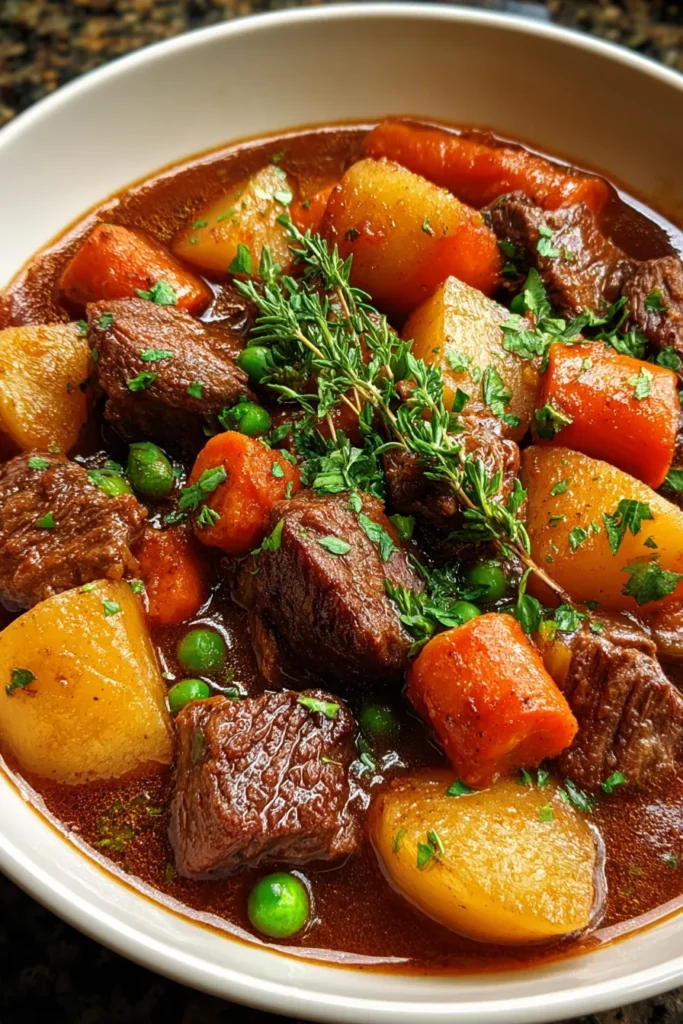

Old Fashioned Beef Stew
Description
Rich beef, tender vegetables, and aromatic herbs come together in this classic stew, creating a deep, savory flavor that's perfect for any family gathering.
Ingredients
Instructions
-
Heat 1 tablespoon of the oil in a large pot or Dutch oven over medium-high heat. Add the beef cubes in batches, browning them on all sides. Remove the beef and set aside.
-
In the same pot, add another tablespoon of oil and sauté the onions until they are translucent. Add garlic and sauté for another minute.
-
Return the beef to the pot. Stir in the flour until the beef is well coated.
-
Add the beef broth, tomato paste, Worcestershire sauce, thyme, and bay leaves. Bring to a simmer.
-
Cover the pot with a lid and reduce the heat to low. Let it simmer for about 1.5 hours, or until the beef is beginning to get tender.
-
Add the carrots and potatoes to the pot. Continue to simmer for another 30 minutes until the vegetables are tender.
-
Stir in the frozen peas during the last 5 minutes of cooking. Season the stew with salt and pepper to taste.
-
Remove and discard the bay leaves before serving.
Note
- Browning the beef well ensures a richer flavor in the stew.
- Cooking the stew low and slow results in more tender meat.
- The stew can be made a day ahead; flavors will intensify as it sits.
- Consider adding a splash of red wine during cooking for an added depth of flavor.

