

These Korean-Style Baked Cauliflower florets have quickly become a weekly staple in my kitchen, and I can’t help but smile every time I pull that golden tray from the oven. There’s something enchanting about the way the panko coating crisps up around each tender piece of cauliflower, forming a crunchy shell that gives way to its soft, mild heart. When I bite into one, the sweet heat of gochujang melds with the floral sweetness of honey, creating a flavor explosion that’s as satisfying as it is surprising. It’s the kind of dish that invites you to linger around the table, swapping stories and passing plates, because who needs small talk when you have these spicy-sweet morsels to focus on?
Last weekend, I invited some friends over to test out this recipe, and let’s just say it was a hit—so much so that one of my guests went back for a third helping before we even thought about plating. As steam rose from the saucy cauliflower, we talked about everything under the sun: favorite travel spots, guilty-pleasure TV shows, and that one time I accidentally doubled the honey in a stir-fry (spoiler: it was still delicious). Throughout it all, these baked cauliflower bites were the star performers, stealing every bit of attention. If you’re looking for a vegetarian side or appetizer that’s bursting with personality, this recipe is your perfect match. It’s easy enough for a weeknight dinner yet bold enough to steal the spotlight at a weekend gathering.
KEY INGREDIENTS IN KOREAN-STYLE BAKED CAULIFLOWER
Before we dive into the step-by-step instructions, let’s take a moment to appreciate the ingredients that make this dish so irresistible. Each component plays a vital role, from creating that satisfyingly crisp texture to building layers of sweet, savory, and spicy flavor. Here’s what you’ll need:
- Cauliflower florets: The star of the show, these bite-sized pieces soak up the flavorful sauce while providing a satisfying crunch after baking.
- Vegetable oil: Helps the breadcrumbs and seasoning adhere to the florets and promotes even browning in the oven.
- Salt: Enhances the natural flavors of the cauliflower and balances the sweetness of the sauce.
- Black pepper: Adds a subtle heat that complements the chili paste without overpowering the dish.
- All-purpose flour: Forms the base of the batter, giving the panko a sticky surface to cling to for maximum crispiness.
- Water: Thins the flour into a smooth, lump-free batter that coats each floret evenly.
- Panko breadcrumbs: Creates an extra-crispy shell that cracks delightfully with every bite.
- Gochujang (Korean chili paste): Provides that signature blend of spicy, savory, and slightly sweet notes that define Korean-style sauces.
- Soy sauce: Infuses the sauce with umami depth and a gentle saltiness.
- Honey: Balances the heat with natural sweetness and contributes to a glossy sauce finish.
- Rice vinegar: Cuts through the richness with bright acidity, lifting the flavors.
- Sesame oil: Brings a toasty, nutty aroma that ties all the sauce ingredients together.
- Garlic (minced): Offers pungent warmth and layers of savory complexity.
- Ginger (grated): Adds a refreshing zing that brightens each bite.
- Sesame seeds (toasted): Provide a delicate crunch and visual contrast when sprinkled over the finished dish.
- Green onions (sliced thinly): Introduce a fresh, oniony bite and vibrant color to the final presentation.
HOW TO MAKE KOREAN-STYLE BAKED CAULIFLOWER
Now that our ingredients are all set, let’s talk about how to transform them into the crispiest, most flavorful cauliflower bake you’ve ever tasted. We’ll go through each step in detail so you can achieve restaurant-quality crunch and sauce perfection right in your home kitchen.
1. Preheat your oven to 425°F (220°C) and line a baking sheet with parchment paper. Position the oven rack in the center for even heat circulation and get everything warmed up so your cauliflower crisps beautifully.
2. In a large bowl, gently toss the cauliflower florets with vegetable oil, salt, and black pepper until each piece is evenly coated. This initial seasoning ensures the florets have flavor from the inside out and promotes browning.
3. In another bowl, whisk together the all-purpose flour and water until you have a smooth batter with no lumps. A well-mixed batter helps the breadcrumbs stick consistently.
4. Working one floret at a time, dip each piece into the batter, allowing any excess to drip back into the bowl. Immediately roll the wet cauliflower in panko breadcrumbs, pressing lightly so the crumbs adhere in a uniform layer.
5. Arrange the coated florets on your prepared baking sheet in a single layer, leaving a little space between each piece. This spacing prevents steaming and encourages a crisp outer shell.
6. Bake for 25–30 minutes, or until the florets turn a deep golden brown and feel crisp to the touch. At the halfway mark, use tongs to flip each piece so both sides get that irresistible crunch.
7. While the cauliflower bakes, combine gochujang, soy sauce, honey, rice vinegar, sesame oil, minced garlic, and grated ginger in a small saucepan. Cook over low heat, stirring often, until the sauce is well-combined and slightly thickened—about 5 minutes.
8. When the cauliflower is done, transfer it to a large bowl and pour the warm sauce over the top. Use a gentle tossing motion to coat every floret without breaking the crispy crust.
9. Arrange the sauced cauliflower on a serving platter and finish with a sprinkling of toasted sesame seeds and sliced green onions for color, texture, and that final punch of freshness.
SERVING SUGGESTIONS FOR KOREAN-STYLE BAKED CAULIFLOWER
Bringing this dish to the table is always a moment of anticipation. Whether you’re hosting a casual get-together or simply elevating your weeknight dinner, these serving ideas will help you present your delicious creation in style. Think of each suggestion as a way to highlight different elements—texture, temperature, and flavor contrast—so that your guests or family experience each bite in its most exciting form.
- Serve alongside steamed jasmine rice or short-grain white rice. The fluffy grains soak up any extra sauce, creating a balance between crunchy cauliflower and warm rice comfort.
- Present these florets as an appetizer on a wooden board with small bowls of extra gochujang sauce and a cooling cucumber yogurt dip. The contrast between spicy, sweet cauliflower and creamy dip is guaranteed to impress.
- Arrange on a bed of fresh mixed greens—think arugula or baby spinach—for a playful salad. Drizzle any leftover sauce as a dressing and top with additional toasted sesame seeds.
- For a shareable snack platter, combine the cauliflower with kimchi, edamame, and steamed dumplings. Use small bamboo skewers so guests can graze freely and enjoy a variety of Korean-inspired bites.
HOW TO STORE KOREAN-STYLE BAKED CAULIFLOWER
One of the best things about this recipe is its versatility, even after you’ve plated it. Whether you’re meal-prepping for the week or saving leftovers for a quick snack, following the right storage methods will keep your cauliflower as delicious as the day you made it. Proper storage helps maintain that coveted crunch, preserves the bold sauce flavors, and makes reheating a breeze.
- Refrigerate in an airtight container: Once cooled to room temperature, transfer the cauliflower and any remaining sauce (kept separate if possible) into sealed containers. Store in the fridge for up to 3–4 days, making sure not to overcrowd the container to prevent sogginess.
- Freeze for longer storage: If you want to keep these bites longer, flash-freeze the un-sauced, breaded cauliflower on a baking sheet for 1–2 hours, then transfer to a freezer-safe bag. Freeze for up to 2 months. Thaw in the fridge before reheating and saucing.
- Store sauce separately: Pour any extra gochujang-honey sauce into a small, airtight jar or container. It will keep in the fridge for up to a week and can be reheated gently or used as a dip for other dishes.
- Reheat to retain crispiness: The best way to reheat your cauliflower is in a preheated oven at 375°F (190°C) for about 10 minutes. This method revives the crunchy exterior. Avoid the microwave unless you’re in a true hurry, as it can lead to a soft texture.
CONCLUSION
This Korean-Style Baked Cauliflower recipe brings together crunchy textures, bold flavors, and a hint of sweetness in a way that’s sure to become a favorite in your home. By coating cauliflower florets in a light batter and panko breadcrumbs, baking them to golden perfection, and then tossing them in a gochujang-soy-honey sauce, you create an irresistible combination of spicy, sweet, and savory notes. From the delicate zing of ginger to the nutty aroma of toasted sesame seeds, every ingredient works harmoniously to deliver a taste that’s both memorable and satisfying. I’ve shared personal tricks, like spacing out the florets for even crispiness and storing the sauce separately to maintain its vibrancy, so you can enjoy the best possible results every time you make it.
Feel free to print out this article and tuck it into your recipe binder or bookmark it for quick reference in that moment when your kitchen calls for something deliciously different. You’ll also find an FAQ section below to answer any lingering questions and troubleshoot common issues. If you give this recipe a try, I’d love to hear how it turned out—drop a comment if you need clarification on a step, have suggestions for variations, or just want to share your own cooking adventures. Your feedback and stories always inspire me to keep experimenting and sharing new recipes, and I can’t wait to see how you make this dish your own. Enjoy every crunchy, saucy bite!
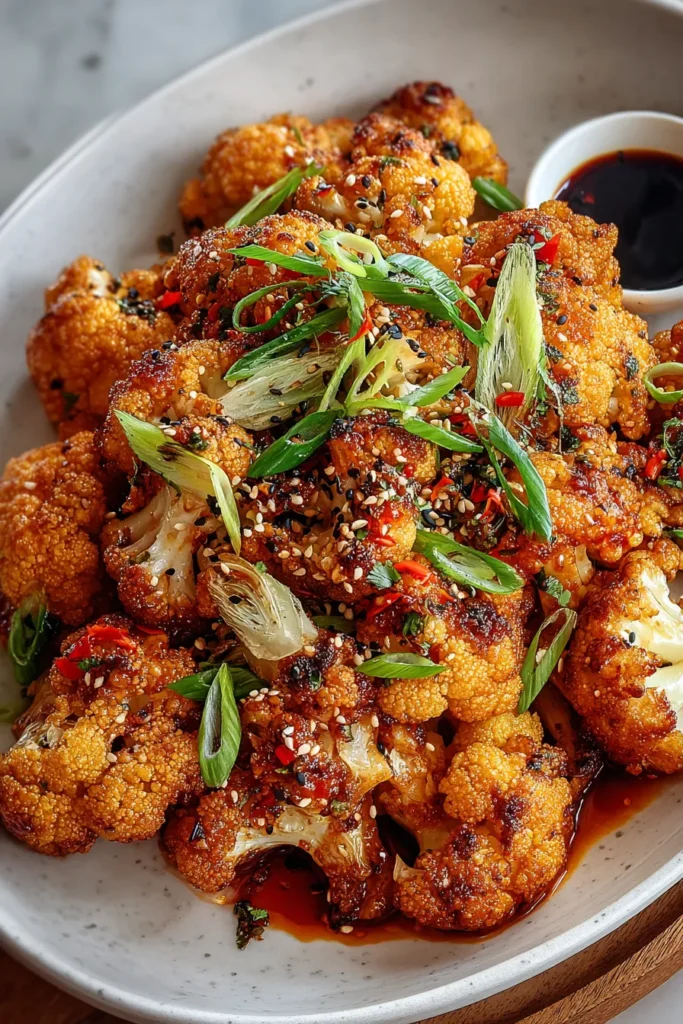

Korean-Style Baked Cauliflower
Description
Each bite of this cauliflower dish bursts with a delightful fusion of spicy gochujang and sweet honey. The crispy, panko-covered florets make for a satisfying treat, perfect as an appetizer or side.
Ingredients
Instructions
-
Preheat your oven to 425°F (220°C) and line a baking sheet with parchment paper.
-
In a large bowl, toss the cauliflower florets with the vegetable oil, salt, and black pepper until evenly coated.
-
In another bowl, mix the flour with water to create a smooth batter.
-
Dip each cauliflower floret into the batter, letting excess drip off, and roll it in the panko breadcrumbs to coat completely.
-
Place the coated cauliflower florets onto the prepared baking sheet in a single layer.
-
Bake in the preheated oven for 25-30 minutes, or until golden brown and crispy, flipping halfway through.
-
Meanwhile, in a small saucepan, combine the gochujang, soy sauce, honey, rice vinegar, sesame oil, garlic, and ginger. Cook on low heat until the mixture is well-combined and slightly thickened, about 5 minutes.
-
Once the cauliflower is done, transfer it to a large bowl and pour the prepared sauce over the top. Toss the cauliflower gently until each floret is well coated in the sauce.
-
Arrange the sauced cauliflower on a serving platter and sprinkle with toasted sesame seeds and sliced green onions.
Note
- Gochujang can be spicy; adjust the amount according to your heat preference.
- Panko breadcrumbs are used for extra crunchiness; you can substitute regular breadcrumbs if needed.
- Serve this dish as an appetizer or accompanying side dish to complement your meal.
- You can add other vegetables like broccoli or bell peppers for more variety.
- The sauce can be stored in the fridge for up to a week and used for other dishes.

