

Ready to bring the flavors of Korea to your dinner table? Our Korean BBQ Chicken Bowls with Spicy Gochujang Cream Sauce feature tender, caramelized chicken thighs bathed in a sweet-savory ginger-soy marinade, nestled atop fragrant jasmine rice and crunchy veggies. Every bite balances textures and spice, while a silky gochujang cream drizzle ties it all together. Whether you’re craving something new for meal prep or a fun weeknight dinner, these bowls promise to hit the spot—let’s dive in!
Key Ingredients
Let’s gather everything you need to build these vibrant bowls, from the marinated chicken to the creamy sauce.
- 1 pound boneless, skinless chicken thighs: Tender, juicy protein that soaks up the sweet-savory ginger-soy marinade.
- 1 tablespoon soy sauce: Adds depth and umami to the marinade.
- 1 tablespoon sesame oil: Brings a fragrant, nutty aroma.
- 2 cloves garlic, minced: Provides sharp, aromatic flavor.
- 1 tablespoon brown sugar: Balances savory notes with a touch of sweetness.
- 1 teaspoon ground ginger: Infuses a warm, slightly spicy undertone.
- 1 teaspoon rice vinegar: Adds tangy brightness.
- 1 cup cooked jasmine rice: Fragrant, fluffy base to soak up juices.
- 1 cup shredded carrots: Offers natural sweetness and crunchy texture.
- 1 cup sliced cucumber: Refreshes the bowl with cool, crisp bites.
- 1 cup shredded red cabbage: Brings vibrant color and satisfying crunch.
- 2 green onions, sliced: Garnishes with fresh, mild onion flavor.
- 1 tablespoon sesame seeds: Sprinkles nuttiness and extra crunch on top.
- 3 tablespoons gochujang (Korean chili paste): Delivers bold, spicy heat in the cream sauce.
- 1/2 cup sour cream: Creates a creamy, tangy base for the sauce.
- 1 tablespoon lime juice: Brightens the sauce with citrusy zing.
- 1 tablespoon honey: Balances heat with sweet notes.
- 1 teaspoon garlic powder: Adds savory depth to the sauce.
- 2 teaspoons water (to thin, if necessary): Helps you achieve a smooth drizzling consistency.
How To Make Korean BBQ Chicken Bowls with Spicy Gochujang Cream Sauce
Ready to transform these ingredients into a mouthwatering meal? We’ll start by marinating the chicken, whip up a silky gochujang cream sauce, and then grill everything to perfection before layering it all in bowls. Follow these steps for restaurant-worthy results at home.
1. In a mixing bowl, combine soy sauce, sesame oil, minced garlic, brown sugar, ground ginger, and rice vinegar to create the marinade. Whisk until the mixture is smooth and balanced.
2. Add the chicken thighs to the bowl, ensuring each piece is fully coated in the marinade. Cover and refrigerate for at least 30 minutes or up to 2 hours to let the flavors meld deeply into the meat.
3. While the chicken marinates, prepare the gochujang cream sauce. In a separate bowl, combine gochujang, sour cream, lime juice, honey, and garlic powder. Whisk until smooth, then add water 1 teaspoon at a time if you need to thin it for easy drizzling. Set aside.
4. After marinating, preheat a grill or skillet over medium-high heat. Remove the chicken from the marinade and discard any excess liquid.
5. Place the chicken on the hot grill or skillet, cooking for 6–7 minutes per side, or until the internal temperature reaches 165°F (75°C) and the exterior is nicely caramelized.
6. Once cooked through, transfer the chicken to a cutting board and let it rest for a few minutes. Then slice the thighs into even strips.
7. To assemble, layer jasmine rice in each bowl. Top with sliced chicken, shredded carrots, sliced cucumber, shredded red cabbage, and sliced green onions.
8. Finally, drizzle the spicy gochujang cream sauce over each bowl and sprinkle with sesame seeds for a finishing touch.
Serving Suggestions
These bowls are versatile and delicious, but a few simple pairings can elevate your experience even further. Whether you’re hosting friends or prepping a solo feast, these ideas will add extra layers of flavor and fun.
- Citrus Zest Enhancement: Serve with a wedge of lime to squeeze over the top for a bright, tangy finish.
- Pickled Accents: Offer quick-pickled radishes or onions on the side to cut through the richness with a vinegary crisp.
- Herb Garnish: Top with chopped fresh cilantro or Thai basil for an aromatic, herbal lift.
- Extra Crunch: Sprinkle crushed peanuts or fried shallots on top to amp up the texture and flavor.
Tips For Perfect Korean BBQ Chicken Bowls with Spicy Gochujang Cream Sauce
No matter your cooking level, these friendly tips will help you nail the balance of flavors and textures every time.
- For a vegetarian option, substitute chicken with grilled tofu or tempeh.
- You can add cooked edamame or avocado for extra nutrients and flavors.
- Adjust the level of spiciness in the cream sauce by adding more or less gochujang according to your preference.
- These bowls can be easily meal prepped for a quick lunch or dinner option.
How To Store It
Planning ahead? Proper storage keeps every component fresh, so your leftovers taste as good as the day you made them. Follow these guidelines to maintain flavor and texture.
- Refrigerate: Store each component in airtight containers for up to 3–4 days.
- Freeze: Place sliced chicken in a freezer-safe bag for up to 2 months; thaw overnight in the fridge.
- Sauce Storage: Keep the gochujang cream sauce in a small sealed jar to preserve its creamy texture, stirring before serving.
- Veggie Care: Store shredded carrots, cabbage, cucumber, and green onions in ventilated containers or produce bags to retain crispness.
Frequently Asked Questions
Got questions? Check out these quick FAQs:
- How long should I marinate the chicken, and what’s the impact of marinating it for less or more time?
You should marinate the chicken thighs for at least 30 minutes to allow the soy sauce, sesame oil, garlic, brown sugar, ginger, and rice vinegar to penetrate the meat. Marinating for up to 2 hours will deepen the flavor without compromising texture. If you marinate for less than 30 minutes, the surface won’t absorb as much seasoning, resulting in a milder taste. If you go beyond 2 hours, the acid in the vinegar can begin to break down the meat fibers excessively, making the chicken too soft.
- Can I substitute chicken breast for thighs, and how should I adjust the cooking process?
Yes, you can use boneless, skinless chicken breasts instead of thighs. Because breasts are leaner, they cook faster and can dry out. Reduce the cooking time to about 5–6 minutes per side over medium-high heat, and consider removing them from heat when they reach an internal temperature of 160°F, allowing residual heat to reach 165°F. You might also slice the breasts into thinner cutlets before marinating to ensure even cooking and better absorption of the flavors.
- What’s the best way to adjust the spiciness of the gochujang cream sauce?
To increase heat, add more gochujang a teaspoon at a time and taste between additions until you reach your desired spiciness. To mellow it out, reduce the gochujang by a tablespoon or swap half the amount for sweet chili paste. You can also add a little extra sour cream or honey to balance the heat. If the consistency gets too thick, thin with water one teaspoon at a time until it’s easy to drizzle over the bowls.
- How can I meal prep these bowls for the week?
Cook and cool the jasmine rice, grill and slice the chicken, and prepare the gochujang cream sauce in advance. Store each component separately in airtight containers: rice, sliced chicken, prepared vegetables (carrots, cucumber, cabbage, green onions), and sauce. When you’re ready to eat, assemble a bowl by reheating the rice and chicken in the microwave or on the stove, then topping with vegetables, sauce, and a sprinkle of sesame seeds. This method keeps ingredients fresh and prevents sogginess.
- What’s the best way to store and reheat leftovers without losing texture?
Refrigerate leftovers in separate containers: one for sliced chicken, one for rice, and one for the gochujang cream sauce. The vegetables can be stored together in a third container. For reheating, warm the chicken and rice gently in the microwave for about 1–2 minutes, stirring halfway through, or reheat in a skillet over medium-low heat until warmed through. Do not heat the sauce; add it cold after reheating to maintain its creamy texture.
- How do I make this recipe vegetarian or vegan?
Substitute the chicken with firm tofu or tempeh. Press tofu to remove excess moisture, then cut into cubes or strips and marinate exactly as you would the chicken. Grill or pan-fry until golden brown, about 3–4 minutes per side. For a vegan gochujang cream sauce, replace sour cream with coconut cream or cashew cream and use maple syrup instead of honey. Keep the rest of the process the same.
- Can I swap jasmine rice for other grains or bases?
Absolutely. Brown rice, quinoa, or cauliflower rice all work well as a base. Brown rice will add a nuttier flavor and more fiber but may require a longer cooking time. Quinoa offers extra protein and a slightly different texture; rinse it thoroughly and cook in a 1:2 ratio of quinoa to water for about 15 minutes. Cauliflower rice is a low-carb option—simply sauté it with a dash of oil for 5–6 minutes until tender. Assemble your bowl the same way once your chosen base is cooked.
What Makes This Special
These Korean BBQ Chicken Bowls with Spicy Gochujang Cream Sauce hit all the right notes: tender, caramelized chicken, fragrant jasmine rice, vibrant veggies, and a luscious, spicy drizzle. The balance of textures—from crunchy cabbage to creamy sauce—keeps every bite exciting, and the flexible meal-prep options make it a kitchen hero. Feel free to print this article and save it for later, then swing back here with your feedback, questions, or triumph stories once you’ve built your perfect bowl!
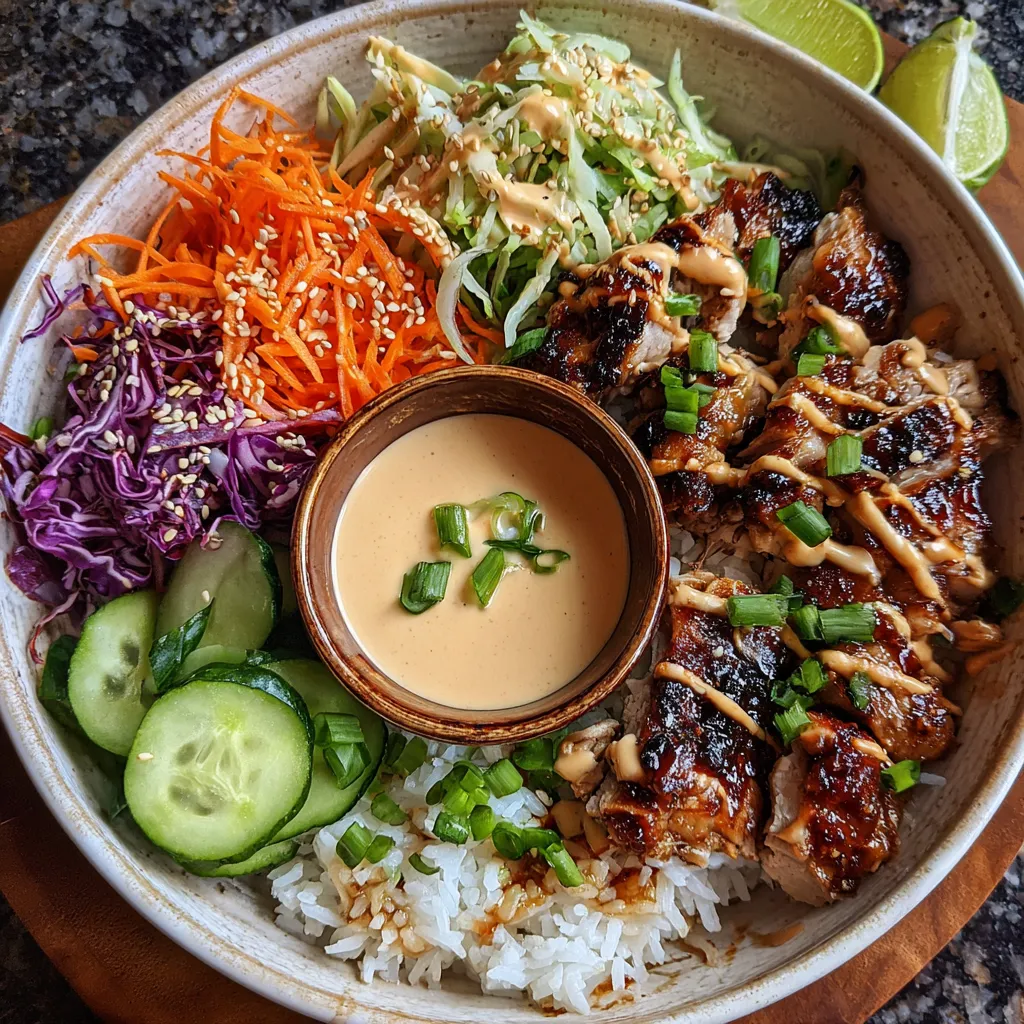

Korean BBQ Chicken Bowls with Spicy Gochujang Cream Sauce
Description
This bowl layers warm jasmine rice, crunchy carrots, crisp cabbage, and succulent chicken thighs soaked in a ginger-soy marinade. A dollop of silky, fiery gochujang cream sauce ties every bite into a harmony of textures and spice.
Ingredients
Instructions
-
In a mixing bowl, combine soy sauce, sesame oil, minced garlic, brown sugar, ground ginger, and rice vinegar to create the marinade. Whisk until well mixed.
-
Add the chicken thighs to the marinade, ensuring they are fully coated. Cover and refrigerate for at least 30 minutes or up to 2 hours to let the flavors meld.
-
While the chicken marinates, prepare the gochujang cream sauce. In a separate bowl, combine gochujang, sour cream, lime juice, honey, and garlic powder. Whisk until smooth. If the sauce is too thick, add water a teaspoon at a time until desired consistency is reached. Set aside.
-
After marinating, preheat a grill or skillet over medium-high heat. Remove the chicken from the marinade and discard the remaining marinade.
-
Cook the chicken for 6-7 minutes on each side, or until the internal temperature reaches 165°F (75°C) and the chicken is caramelized and cooked through.
-
Once cooked, remove the chicken from the grill or skillet and let rest for a few minutes before slicing into strips.
-
To assemble the bowls, start with a base of jasmine rice. Top with sliced chicken, shredded carrots, sliced cucumber, shredded red cabbage, and sliced green onions.
-
Drizzle the spicy gochujang cream sauce over the top and sprinkle with sesame seeds.
Note
- For a vegetarian option, substitute chicken with grilled tofu or tempeh.
- You can add cooked edamame or avocado for extra nutrients and flavors.
- Adjust the level of spiciness in the cream sauce by adding more or less gochujang according to your preference.
- These bowls can be easily meal prepped for a quick lunch or dinner option.

