

Ready to add a punch of sweet heat to your dinner table with Gochujang Glazed Carrots? These bright orange sticks turn crisp-tender as they’re bathed in a glossy, fiery paste that balances honeyed sweetness, tangy rice vinegar, and savory soy sauce. A sprinkle of sesame seeds and ribbons of green onion finish things off, making this beginner-friendly side dish both easy and irresistible. Trust me, once you try this sweet-spicy glaze, you’ll want to make it again and again.
Key Ingredients
To whip up these Gochujang Glazed Carrots, you’ll need a handful of pantry staples plus the star Korean chili paste. Each component plays its part in building that perfect balance of sweet, spicy, and umami.
- 1 pound of carrots, peeled and cut into sticks or rounds: Crisp-tender base that soaks up the sweet-spicy gochujang glaze.
- 2 tablespoons of olive oil: Provides a smooth cooking medium for even sautéing and a light fruity flavor.
- 2 tablespoons of gochujang (Korean chili paste): Star ingredient delivering that signature sweet heat and umami richness.
- 1 tablespoon of honey or maple syrup: Balances the spice with natural sweetness and helps create a glossy finish.
- 1 tablespoon of soy sauce: Adds savory depth and a hint of saltiness to enhance overall flavor.
- 1 tablespoon of rice vinegar: Brightens the dish with tangy acidity that cuts through the richness.
- 2 cloves of garlic, minced: Infuses a punchy, aromatic note that complements the chili paste.
- 1 teaspoon of sesame oil: Offers a nutty aroma and rounds out the glaze.
- 1 sprinkle of sesame seeds (for garnish): Adds a toasted crunch and visual appeal.
- 2 green onions, sliced (for garnish): Provides a fresh, oniony finish and color contrast.
How To Make Gochujang Glazed Carrots
Transforming ordinary carrots into a glossy, sticky side dish is easier than you think. You’ll start by coating your prepared carrots in a vibrant gochujang-honey blend, then sautéing them until tender-crisp. Follow these detailed steps to achieve that restaurant-worthy shine and depth of flavor right at home.
1. Start by preparing the carrots. Peel each carrot and slice into uniform sticks or rounds, about ½-inch thick, to ensure even cooking.
2. In a large mixing bowl, combine gochujang, honey (or maple syrup), soy sauce, rice vinegar, minced garlic, and sesame oil. Whisk vigorously until the sauce is completely smooth and glossy.
3. Add the carrot sticks to the bowl with the sauce and toss well, making sure every piece is thoroughly coated in that vibrant red glaze.
4. Heat the olive oil in a large skillet over medium heat. Once shimmering, carefully add the coated carrots to the pan in a single layer.
5. Sauté the carrots for 8 to 10 minutes, stirring occasionally with a spatula, until they are tender-crisp—cooked through but still offering a slight bite.
6. Pour any remaining glaze from the bowl into the skillet and stir to coat the carrots fully. Cook for an additional 1–2 minutes, letting the glaze become sticky and cling to each piece.
7. Remove the skillet from heat and transfer the glazed carrots to a serving dish, using a spatula to scrape up any caramelized bits.
8. Garnish with a sprinkle of sesame seeds and the sliced green onions before serving for the final pop of flavor and color.
Serving Suggestions
These Gochujang Glazed Carrots make a versatile side that will elevate any meal. Whether you’re serving up a casual weeknight dinner or hosting a spread for friends, here are four tasty ways to present these glossy, spicy-sweet beauties.
- Serve alongside grilled chicken or steak to complement the sweet-spicy heat with savory protein.
- Add to a vegetarian Buddha bowl with brown rice, avocado, and pickled radishes for a balanced and colorful lunch.
- Plate them next to pan-seared tofu drizzled with extra glaze for a hearty plant-based entrée.
- Include on a party platter with other Korean-inspired bites like kimchi, pickled cucumbers, and mini lettuce wraps.
Tips For Perfect Gochujang Glazed Carrots
To get those carrots shimmering with just the right balance of sweet heat and umami, a few insider tweaks can take this simple side from good to unforgettable. Pay attention to how you whisk the glaze, adjust the spice level to your liking, and don’t be shy about garnishing creatively. With these quick tips, you’ll nail the texture, flavor, and presentation every time.
- Gochujang is versatile; try using it in marinades, dressings, or as a base for soups.
- Adjust the level of spiciness by varying the amount of gochujang to suit your taste—less for mild heat, more for a fiery kick.
- These glazed carrots pair wonderfully as a side dish for grilled meats or as part of a vegetarian platter.
- For added texture and flavor, garnish with toasted nuts like peanuts or almonds along with sesame seeds.
How To Store It
If you manage to have any of these sweet-spicy beauties left over (though that’s rare!), proper storage will keep them tasting fresh and sticky. A quick chill in the fridge preserves the texture while sealing in the glaze’s flavorful punch. Follow these simple methods to enjoy your Gochujang Glazed Carrots for days after you make them.
- Store in an airtight container in the refrigerator once the carrots have cooled completely to prevent condensation.
- Keep them no longer than 3 days for the best balance of crisp-tender texture and vibrant flavor.
- When stacking multiple layers, place paper towels between them to absorb any excess moisture and maintain freshness.
- Reheat gently in a skillet over low heat or in short bursts in the microwave, adding a few drops of oil if needed to restore gloss.
Frequently Asked Questions
Got questions? Here are some quick answers to help you master these Gochujang Glazed Carrots.
- How long does it take to prepare and cook these Gochujang Glazed Carrots?
It takes about ten minutes of active prep to peel and slice the carrots and whisk the glaze. Then you’ll sauté them for about eight to ten minutes on medium heat until tender-crisp, plus another one to two minutes to thicken the glaze, for a total of around twenty minutes from start to finish.
- Can I make these carrots in the oven instead of on the stovetop?
Yes. Preheat your oven to four hundred degrees Fahrenheit, toss the carrot sticks in olive oil and the gochujang glaze, then arrange them in a single layer on a baking sheet. Roast for about twenty to twenty-five minutes, stirring once halfway through, until they are tender with caramelized edges. Finish by tossing any remaining glaze over the carrots and broiling for an additional one to two minutes if you like extra stickiness.
- What substitutions can I make if I do not have honey or maple syrup?
You can substitute brown sugar or agave nectar at an equal ratio for honey or maple syrup. Brown sugar adds a deeper molasses note, while agave is slightly milder. Adjust to taste if you prefer a sweeter or less pronounced flavor.
- How can I adjust the spiciness of the dish?
Gochujang has a moderate level of heat. To reduce spiciness, use one tablespoon of gochujang and increase the honey or maple syrup by an extra teaspoon. To ramp up the heat, add a pinch of chili flakes or a little sriracha. Taste the glaze before coating the carrots so you can fine-tune the sweetness or acidity with rice vinegar or honey.
- How should I store and reheat leftovers?
Store any leftover glazed carrots in an airtight container in the refrigerator for up to three days. To reheat, gently warm them in a skillet over low heat until heated through, adding a splash of water or a few drops of oil if they seem dry. You can also microwave them in thirty-second intervals, stirring in between.
- What are some complementary dishes to serve with Gochujang Glazed Carrots?
These carrots pair well with grilled or roasted proteins such as chicken, beef, or tofu. They are also a great addition to a Buddha bowl with rice, avocado, and pickled vegetables. For a full Korean-inspired meal, serve alongside kimchi, steamed rice, and a fried egg.
- Can I add other vegetables or garnishes for extra texture?
Absolutely. Add sliced parsnips or sweet potatoes cut to a similar size so they cook evenly. To finish, sprinkle toasted nuts such as peanuts or slivered almonds along with the sesame seeds and green onions for crunch. You can also add fresh cilantro or a squeeze of lime for brightness.
What Makes This Special
These Gochujang Glazed Carrots stand out because they balance sweet, spicy, tangy, and umami flavors in a single, fuss-free side dish. The sticky red glaze clings beautifully to every carrot piece, creating irresistible bites that are both vibrant and comforting. It’s beginner-friendly, quick enough for a weeknight, and festive enough for company—plus you can print this article and tuck it into your recipe binder for future reference. Give it a whirl, then drop a comment or question below to let me know how they turned out!
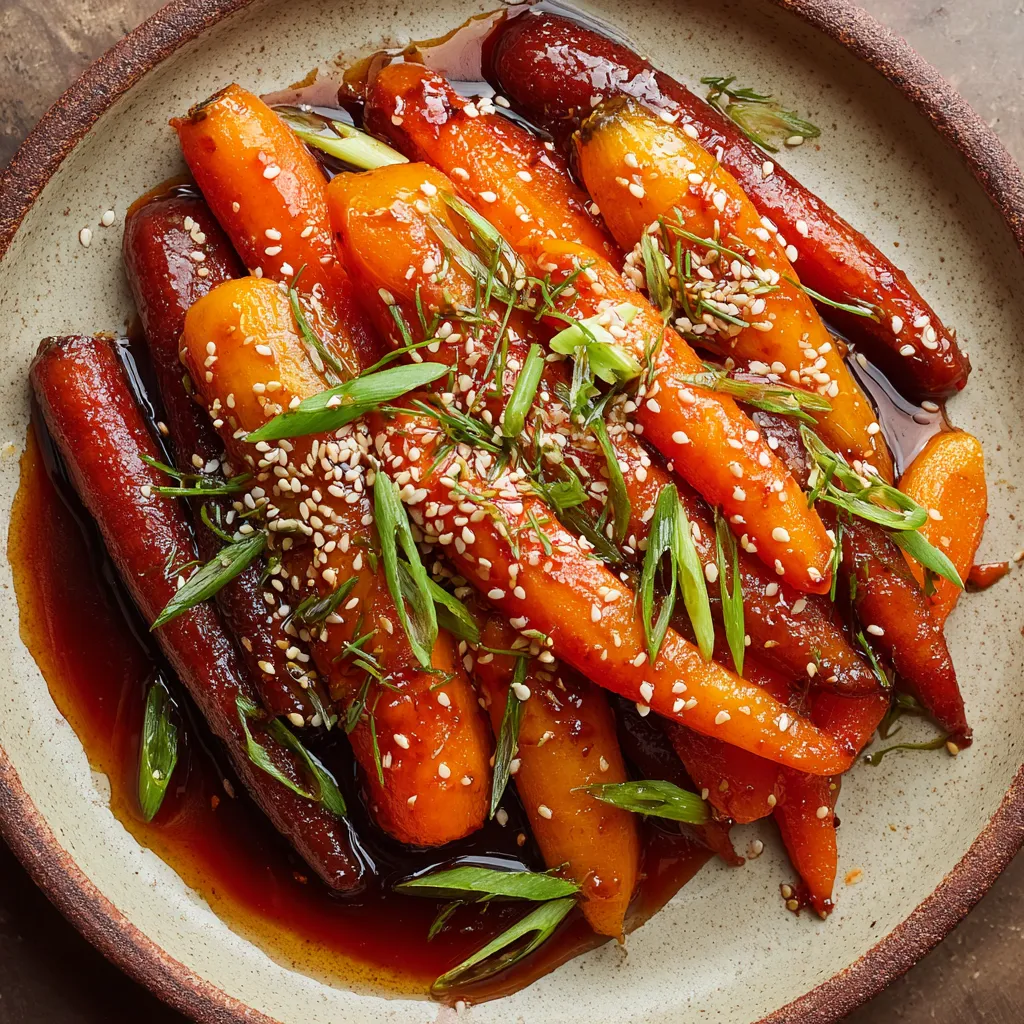

Gochujang Glazed Carrots
Description
Bright orange carrots turn tender-crisp as a sticky gochujang glaze laces each bite with sweet heat and umami depth, finished with nutty sesame seeds and green onion ribbons.
Ingredients
Instructions
-
Start by preparing the carrots. Peel them and cut them into uniform sticks or rounds to ensure even cooking.
-
In a large mixing bowl, combine the gochujang, honey (or maple syrup), soy sauce, rice vinegar, minced garlic, and sesame oil. Whisk everything together until you have a smooth sauce.
-
Add the carrot sticks to the bowl with the sauce and toss them well, ensuring that all the carrots are evenly coated with the gochujang mixture.
-
In a large skillet or pan, heat the olive oil over medium heat. Once the oil is hot, add the coated carrots to the skillet.
-
Sauté the carrots for about 8 to 10 minutes, stirring occasionally, until they are tender but still have a slight crunch.
-
Once the carrots are cooked to your liking, pour any remaining glaze from the bowl into the skillet and stir to coat the carrots thoroughly. Allow it to cook for an additional 1-2 minutes to ensure the glaze is heated through and sticky.
-
Remove the skillet from heat and transfer the glazed carrots to a serving dish.
-
Garnish with sesame seeds and sliced green onions before serving.
Note
- Gochujang is versatile; try using it in marinades, dressings, or as a base for soups.
- Adjust the level of spiciness by varying the amount of gochujang to suit your taste.
- These glazed carrots pair wonderfully as a side dish for grilled meats or as part of a vegetarian platter.
- For added texture and flavor, consider adding toasted nuts like peanuts or almonds as a final garnish.

