

Miso Butter Salmon is a weeknight hero that transforms simple fillets into a mouthwatering, umami-packed feast thanks to a creamy blend of white miso, butter, and sweet mirin. With its golden-brown crust and juicy interior, each bite dances with savory depth and a hint of sweetness. Whether you’re craving an easy dinner or impressing guests, this recipe strikes the perfect balance between fuss-free and gourmet. Keep reading to discover how to nail that caramelized finish and take your salmon game to the next level!
Key Ingredients
Let’s break down the key players that make Miso Butter Salmon truly shine.
- 2 fillets salmon: Rich, flaky fish that soaks up the silky miso butter and becomes the star of the plate.
- 2 tablespoons white miso paste: Deep umami flavor that gives the glaze its signature savory-sweet punch.
- 2 tablespoons unsalted butter: Provides creamy richness, helping the miso paste glide on smoothly and caramelize beautifully.
- 1 tablespoon soy sauce: Enhances depth with a touch of saltiness, balancing the marinade’s sweetness.
- 1 tablespoon sake: Tenderizes the fish slightly and adds a subtle, fragrant sweetness.
- 1 tablespoon mirin: Contributes mellow sweetness and a glossy finish to the top of the salmon.
- 1 teaspoon sugar: Encourages golden caramelization and balances the savory notes in the miso butter.
- 1 clove garlic: Brightens the flavor profile with a punchy aromatic note.
- 1 teaspoon vegetable oil: Keeps the broiler or grill pan from sticking and ensures even heat distribution.
- 1 stalk green onion: Offers a fresh, crisp garnish that contrasts the rich fish.
- 1 teaspoon sesame seeds: Adds a nutty crunch for texture and visual appeal.
How To Make Miso Butter Salmon
Taking salmon from ordinary to unforgettable is all about layering flavors and mastering high heat. In just seven simple steps, you’ll whisk together a luscious miso butter, coat your fillets evenly, and broil or grill them to a caramelized, crackling finish. Ready to impress? Let’s dive into the details.
1. In a bowl combine miso paste unsalted butter soy sauce sake mirin sugar and minced garlic until smooth.
In a medium mixing bowl, whisk together the white miso paste, unsalted butter, soy sauce, sake, mirin, sugar, and minced garlic until you have a silky, lump-free paste.
2. Pat salmon fillets dry and place on a baking sheet lined with parchment paper then spread the miso butter mixture evenly over the top of each fillet.
Use paper towels to thoroughly dry the salmon, then lay them skin-side down on parchment. Smear the miso butter in a thick, even layer, covering every inch of the flesh.
3. Let the salmon marinate at room temperature for 15 minutes.
This short rest allows the fish to absorb the rich flavors and come closer to room temperature, ensuring even cooking under high heat.
4. Preheat the oven broiler to high heat or heat a grill pan over medium-high heat and brush lightly with vegetable oil.
Aim for a hot broiler about 4–6 inches from the element, or get your grill pan smoking hot to achieve those signature char marks.
5. Broil or grill the salmon for 5 to 7 minutes until the tops are caramelized and the fish is just cooked through.
Watch closely—once the surface is golden and bubbling, the salmon will flake easily and should still be moist in the center.
6. Remove from heat and let the salmon rest for 2 minutes before serving.
A brief resting period locks in juices and lets the glaze set up for a picture-perfect finish.
7. Garnish with sliced green onion sesame seeds and serve with lemon wedges.
Sprinkle on the green onion and sesame seeds, then add fresh lemon wedges for a bright, citrusy pop.
Serving Suggestions
Once your Miso Butter Salmon is out of the oven or off the grill, think beyond the fish for a well-rounded meal. These serving ideas elevate the dish with complementary textures, colors, and flavors that will have everyone coming back for seconds.
- Serve over a bed of steamed jasmine rice to soak up every last drop of that umami-rich butter.
- Pair with a crisp cucumber salad tossed in rice vinegar, sesame oil, and a pinch of chili flakes for refreshing crunch.
- Offer a side of homemade pickled vegetables (tsukemono) to cut through the richness with bright acidity.
- Pour a glass of chilled sake or a light, citrusy white wine to complement the sweet-salty glaze.
Tips For Perfect Miso Butter Salmon
Nailing this recipe comes down to timing, temperature, and bold seasoning. Here are a few friendly pointers to ensure your salmon always turns out restaurant-quality delicious:
- For deeper flavor marinate the salmon in the refrigerator for up to 2 hours.
- Adjust sweetness by adding more or less sugar to the miso butter mixture.
- You can substitute yellow miso for a milder taste.
- Serve with steamed rice and pickled vegetables for a complete meal.
How To Store It
Making Miso Butter Salmon means you might have tasty leftovers—and thankfully, they reheat beautifully. Proper storage preserves flavor, texture, and freshness so you can enjoy this dish again tomorrow (or even next week).
- Refrigerate: Once the salmon has cooled to room temperature, transfer to an airtight container and chill for up to 2 days.
- Freeze: Wrap each fillet tightly in plastic wrap and foil, then store in a freezer bag for up to 1 month.
- Reheat in the oven: Place the salmon on a baking sheet, cover loosely with foil, and warm at 300°F (150°C) for 5–7 minutes until heated through.
- Microwave gently: Cover with a damp paper towel and use 50% power in 30-second bursts to preserve moisture.
Frequently Asked Questions
Here are some quick answers to common questions about Miso Butter Salmon:
- How long does it take to prepare and cook the Miso Butter Salmon?
Preparation takes about 15 minutes to combine the miso butter mixture, pat and marinate the salmon at room temperature, plus 2 minutes of resting time after cooking. Cooking under the broiler or on a grill pan takes 5 to 7 minutes. In total, plan for about 25 to 30 minutes from start to finish.
- Can I marinate the salmon for longer or in the refrigerator?
Yes. While a 15-minute room-temperature marinade is sufficient for flavor, you can refrigerate the salmon with the miso butter mixture for up to 2 hours for deeper infusion. If you refrigerate, bring the fillets back to room temperature for 10 minutes before cooking to ensure even cooking under the broiler or on the grill pan.
- What substitutions can I make if I don’t have white miso paste?
Yellow miso is an excellent milder substitute that still delivers umami richness. If you only have red miso, reduce the sugar by half since red miso is saltier and more pungent. Always taste the miso butter mixture before spreading to adjust sweetness or saltiness to your preference.
- How can I tell when the salmon is perfectly cooked?
The salmon is done when the top is caramelized and opaque all the way through with a slight flake at the thickest part. Gently press the center with a fork or your finger—properly cooked salmon should spring back and flake easily along the muscle lines, but still be moist.
- How do I adjust the sweetness of the miso butter mixture?
The recipe calls for 1 teaspoon of sugar, which balances the savory miso and soy sauce. For a sweeter profile, add up to an additional teaspoon of sugar or mirin. For a less sweet finish, reduce the sugar by half or omit the sugar and rely on the mirin’s natural sweetness.
- Should I use the broiler or a grill pan, and how do they differ?
Broiling delivers intense top heat that quickly caramelizes the miso butter, creating a crisp glaze in 5 to 7 minutes. A grill pan provides smoky grill marks and a slightly more even cooking surface but may take a minute or two longer. Whichever method you choose, brush the pan lightly with vegetable oil to prevent sticking.
- How do I store and reheat leftover Miso Butter Salmon?
Cool leftovers to room temperature, then refrigerate in an airtight container for up to 2 days. To reheat, place the salmon on a baking sheet in a 300°F oven for 5 to 7 minutes until warmed through, or gently microwave at 50% power in 30-second intervals to preserve moisture.
- What are the best side dishes to serve with Miso Butter Salmon?
Steamed rice or sushi rice pairs perfectly with the umami-rich salmon, while pickled vegetables (tsukemono) add bright acidity. You can also serve sautéed greens like bok choy or spinach tossed with sesame oil and a sprinkle of sesame seeds for a balanced, restaurant-style meal.
What Makes This Special
Miso Butter Salmon is the kind of recipe that feels fancy but is shockingly simple. The magic lies in that creamy miso-butter paste which caramelizes into a crackly, umami-packed shell that locks in every juicy morsel of salmon. It’s sweet, salty, rich, and fresh all at once. This is one of those dishes you’ll want to print, pin, or save—because once you’ve nailed that broiled glaze, dinner never has to be boring again. Give it a go, and drop a comment below if you have questions or want to share your delicious results!
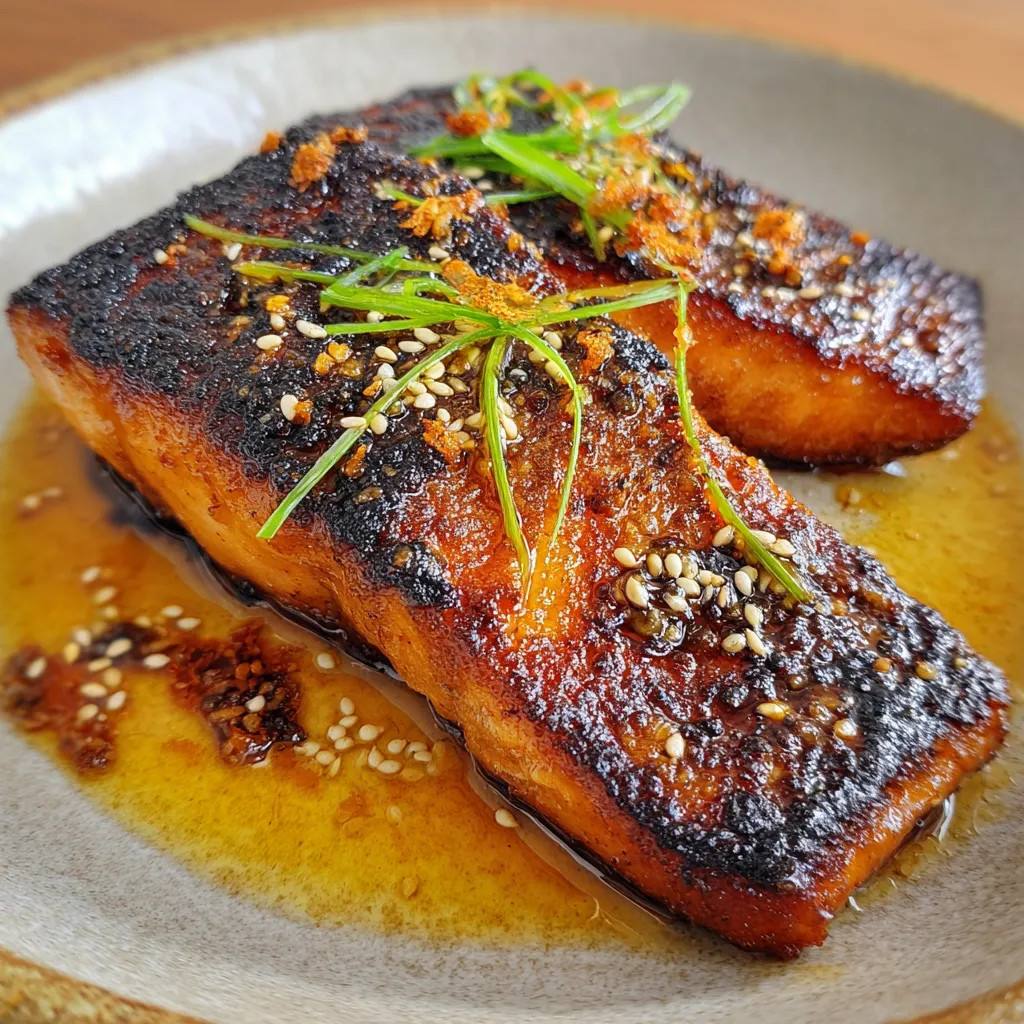

Miso Butter Salmon
Description
Flaky salmon fillets are slathered in a creamy miso butter blend, then broiled to golden perfection. Each bite bursts with sweet-savory umami, finished with scallions and sesame seeds for a satisfying crunch.
Ingredients
Instructions
-
In a bowl combine miso paste unsalted butter soy sauce sake mirin sugar and minced garlic until smooth.
-
Pat salmon fillets dry and place on a baking sheet lined with parchment paper then spread the miso butter mixture evenly over the top of each fillet.
-
Let the salmon marinate at room temperature for 15 minutes.
-
Preheat the oven broiler to high heat or heat a grill pan over medium-high heat and brush lightly with vegetable oil.
-
Broil or grill the salmon for 5 to 7 minutes until the tops are caramelized and the fish is just cooked through.
-
Remove from heat and let the salmon rest for 2 minutes before serving.
-
Garnish with sliced green onion sesame seeds and serve with lemon wedges.
Note
- For deeper flavor marinate the salmon in the refrigerator for up to 2 hours.
- Adjust sweetness by adding more or less sugar to the miso butter mixture.
- You can substitute yellow miso for a milder taste.
- Serve with steamed rice and pickled vegetables for a complete meal.

