

Crispy-edged Korean Vegetable Pancakes Yachaejeon bring together a colorful medley of shredded zucchini, carrot, bell pepper, and crisp onions bound in a lacy, golden batter. This quick, savory snack is perfect for lunch or a light appetizer—dunk each wedge into tangy soy dipping sauce and savor the burst of textures and flavors. Ready to dive in? Let’s explore how to make these flavorful pancakes step by step.
Key Ingredients
Before we start cooking, let’s meet the stars of this recipe. Each component plays a vital role in creating the perfect crispy pancake:
- 1 cup all-purpose flour: Provides the structure and body needed for a golden, firm pancake.
- 3/4 cup cold water: Keeps the batter light and tender by slowing gluten development.
- 1 egg: Acts as a binding agent, adding richness and helping the vegetables adhere.
- 1/2 teaspoon salt: Enhances all the flavors in the batter and veggies.
- 1/4 teaspoon ground black pepper: Adds a subtle kick and depth to each bite.
- 1/2 cup shredded zucchini: Contributes moisture and a delicate, fresh taste.
- 1/2 cup shredded carrot: Offers natural sweetness and vibrant color.
- 1/4 cup thinly sliced onion: Brings a mild sharpness and savory aroma.
- 1/4 cup chopped green onion: Infuses a gentle oniony zing and a pop of green.
- 1/4 cup thinly sliced bell pepper: Adds crunchy texture and sweet notes.
- 2 tablespoons vegetable oil: Ensures a crisp, golden exterior when frying.
How To Make Korean Vegetable Pancakes Yachaejeon
Turning simple ingredients into these crisp, savory pancakes is easier than you think. You’ll whisk the batter to silky smoothness, gently fold in colorful veggies, then pan-fry each pancake until the edges lace and both sides turn beautifully golden. Follow these steps for perfect results:
1. In a mixing bowl, whisk together the flour, cold water, egg, salt, and pepper until a smooth, lump-free batter forms.
2. Fold in the zucchini, carrot, onion, green onion, and bell pepper, stirring gently so each shred is coated without releasing excess moisture.
3. Heat 1 tablespoon of vegetable oil in a nonstick skillet over medium heat until it shimmers lightly.
4. Pour half of the batter into the skillet and use a spatula to spread it into a thin, even circle about 1/4 inch thick.
5. Cook for 2 to 3 minutes, or until the edges begin to set and the bottom turns a rich golden brown.
6. Flip the pancake carefully and cook for another 2 to 3 minutes until both sides are crisp and evenly golden.
7. Transfer the cooked pancake to a plate and repeat steps 3 to 6 with the remaining oil and batter.
8. Slice each pancake into wedges and serve immediately, while still warm and crunchy.
Serving Suggestions
Serving these Korean Vegetable Pancakes Yachaejeon is half the fun—whether you’re hosting a casual gathering or enjoying a solo snack. Here are four great ways to present them:
- Pair with a tangy soy dipping sauce made from soy sauce, rice vinegar, sesame oil, and red pepper flakes for a bright, umami-rich contrast.
- Garnish with toasted sesame seeds and a sprinkle of chopped green onion to boost color and nutty flavor.
- Serve alongside a side of kimchi or quick-pickled radishes to add a refreshing, spicy crunch.
- Plate next to a bowl of steamed rice and a simple miso soup for a balanced Korean-inspired lunch.
Tips For Perfect Korean Vegetable Pancakes Yachaejeon
Perfecting your Yachaejeon is all about balancing texture and flavor. Keep these friendly tips in mind:
- You can adjust the mix of vegetables based on seasonal availability or personal preference.
- For extra crispiness, stir in 1 tablespoon of cornstarch to the batter.
- Serve with a dipping sauce made from soy sauce, rice vinegar, sesame oil, and a pinch of red pepper flakes.
- Leftover pancakes can be reheated in a skillet over low heat to restore their crisp texture.
How To Store It
Whether you have leftovers or want to prep ahead, proper storage keeps your pancakes tasting fresh:
- Store cooled pancakes in an airtight container in the refrigerator for up to two days.
- To freeze, layer pancakes between sheets of parchment paper and place them in a freezer-safe bag for up to one month.
- Reheat in a lightly oiled skillet over low heat, flipping gently until crisp edges return—avoid microwaving to maintain crunch.
- If thawing frozen pancakes, let them sit at room temperature for a few minutes before reheating for even warming.
Frequently Asked Questions
Here are quick answers to your top questions about Yachaejeon:
- How long does it take to prepare and cook these Korean vegetable pancakes?
It takes about 15 minutes to whisk the batter and shred the vegetables, plus 8 to 10 minutes of cooking time for both pancakes. In total, you can expect around 25 minutes from start to finish.
- Why is cold water used in the batter instead of room-temperature water?
Cold water slows down gluten development in the flour, which helps the pancakes stay light and crispy rather than chewy.
- How can I make the pancakes extra crispy?
Stir in 1 tablespoon of cornstarch to the batter, spread the batter as thinly as possible in a hot skillet, and use enough vegetable oil so the edges fry up crisp. Cook on medium heat and avoid overcrowding the pan.
- Can I substitute or add other vegetables in this recipe?
Yes. Feel free to replace or add shredded cabbage, thinly sliced mushrooms, spinach, or bell peppers. Just ensure all vegetables are uniformly thin or shredded and gently pat them dry if they’re very moist to prevent a soggy batter.
- What type of dipping sauce pairs best with yachaejeon?
A classic dipping sauce combines 2 tablespoons soy sauce, 1 tablespoon rice vinegar, 1 teaspoon sesame oil, a pinch of red pepper flakes, and minced garlic or a dash of sugar to taste. Mix well and serve alongside the hot pancakes.
- How should I store and reheat leftover pancakes?
Let the pancakes cool to room temperature, then store them in an airtight container in the refrigerator for up to two days. Reheat in a lightly oiled skillet over low heat until they regain their crisp edges rather than using the microwave.
- Can I make this recipe gluten-free and vegan?
To go gluten-free, swap the all-purpose flour for a 1:1 gluten-free flour blend or rice flour. For a vegan version, replace the egg with a flax egg (1 tablespoon flaxseed meal mixed with 3 tablespoons water) and add that cornstarch tip for extra crispness.
What Makes This Special
Yachaejeon is the kind of recipe that turns simple pantry staples into a snack so addictive you’ll want to print it out and save it for any moment of pancake craving. The combination of zucchini, carrot, bell pepper, and onions in a silky batter yields a crunchy, colorful bite every single time. Whether you’re a beginner cook or a seasoned foodie, these pancakes come together effortlessly and shine bright at lunch or as an appetizer. Give them a try, then drop a comment or question below—I’d love to hear how your Korean Vegetable Pancakes turned out!
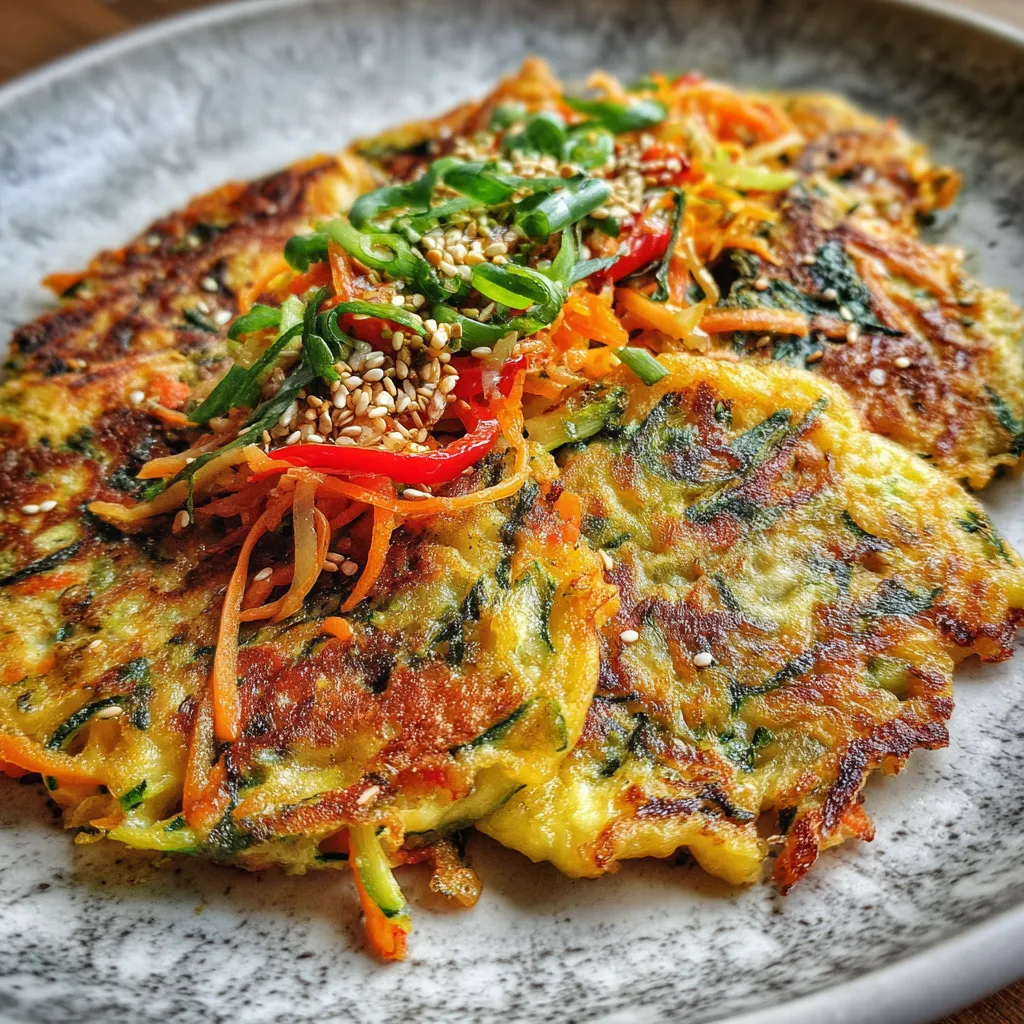

Korean Vegetable Pancakes Yachaejeon
Description
Crispy-edged pancakes shimmer with golden hues as tender ribbons of zucchini, carrot, and peppers mingle in a silky, savory batter, ready for dunking into tangy soy dipping sauce.
Ingredients
Instructions
-
In a mixing bowl, whisk together the flour, water, egg, salt, and pepper until a smooth batter forms.
-
Fold the zucchini, carrot, onion, green onion, and bell pepper into the batter until evenly coated.
-
Heat 1 tablespoon of vegetable oil in a nonstick skillet over medium heat.
-
Pour half of the batter into the skillet and use a spatula to spread it into a thin, even circle.
-
Cook for 2 to 3 minutes, or until the edges start to set and the bottom turns golden brown.
-
Flip the pancake and cook for another 2 to 3 minutes until crisp and golden on both sides.
-
Transfer the cooked pancake to a plate and repeat steps 3 to 6 with the remaining oil and batter.
-
Slice each pancake into wedges and serve immediately.
Note
- You can adjust the mix of vegetables based on seasonal availability or personal preference.
- For extra crispiness, stir in 1 tablespoon of cornstarch to the batter.
- Serve with a dipping sauce made from soy sauce, rice vinegar, sesame oil, and a pinch of red pepper flakes.
- Leftover pancakes can be reheated in a skillet over low heat to restore their crisp texture.

