

Savor the ocean’s flavor with these quick and easy garlic butter scallops! If you love the tender sweetness of fresh sea scallops, this recipe will have you swooning from the very first bite. Each plump scallop is seared to a gorgeous golden brown, creating a delicate crust that gives way to a soft, buttery center. Then comes the showstopper: a shimmering sauce made from melted unsalted butter, fragrant minced garlic, a splash of dry white wine (or chicken broth), and bright lemon juice. The result is nothing short of culinary magic—a glossy coat of garlicky goodness that accentuates every nuance of the scallops’ natural flavor.
I’ll be honest: I was skeptical the first time I tried making scallops at home, fearing I’d overcook them into rubbery little disks. But with just a few simple steps and attention to timing, I discovered how incredibly accessible and delicious this dish can be. It’s truly a beginner-friendly recipe, clocking in at about 15 minutes of prep and 10 minutes of cooking, with zero rest time. Each serving comes in around 350 calories, making it a perfect appetizer or dinner option that feels indulgent without weighing you down. Whether you’re cooking for a special someone or treating yourself to a luxe seafood experience on a weeknight, these garlic butter scallops are bound to impress.
KEY INGREDIENTS IN GARLIC BUTTER SCALLOPS
Before diving into the pan, let’s gather the key players that make this dish so irresistible:
- Sea scallops
Large, muscle-removed scallops provide a sweet, tender base that beautifully soaks up the garlic butter sauce without becoming chewy.
- Salt and freshly ground black pepper
Simple seasonings that form the foundation of flavor, enhancing the natural sweetness of the scallops and balancing the richness of the butter.
- Olive oil
A high-quality oil brings the pan up to searing temperature, helping to create a crisp, golden-brown exterior on the scallops.
- Unsalted butter
Gives the sauce its silky, indulgent body. Using unsalted ensures you can control the seasoning precisely.
- Garlic cloves
Finely minced garlic infuses the butter with aromatic depth and a sharp, savory punch that complements the scallops’ sweetness.
- Dry white wine or chicken broth
Deglazes the pan, lifting up those caramelized browned bits and adding acidity (or a savory base) to the sauce.
- Fresh lemon juice
A final bright note that cuts through the rich butter, lending a refreshing citrus zing to each bite.
- Fresh parsley
Chopped parsley adds a pop of color and a mild herbaceous freshness to finish the dish.
HOW TO MAKE GARLIC BUTTER SCALLOPS
Let’s walk through the step-by-step instructions to achieve perfectly seared scallops bathed in that dreamy garlic butter sauce. Follow each technique closely to preserve the scallops’ tender texture and bring out their natural sweetness.
1. Pat the scallops dry with paper towels to remove any excess moisture. This is crucial for achieving a proper sear, as moisture on the surface will steam rather than brown the scallops.
2. Season the scallops generously on both sides with salt and freshly ground black pepper. This simple seasoning highlights the scallops’ flavor and builds a tasty crust.
3. In a large skillet, heat the olive oil over medium-high heat until it starts to shimmer. The shimmering oil indicates the pan is hot enough to sear without sticking.
4. Gently add the scallops to the hot skillet, ensuring there’s space between each one. Do not overcrowd the pan, or they’ll steam instead of sear.
5. Sear the scallops for about 2 minutes on each side, or until they’re golden brown and easily release from the pan. Timing is key—overcooking will make them tough.
6. Remove the scallops from the pan and set them aside on a plate, freeing up the skillet for the sauce.
7. Reduce the heat to medium and add the butter to the same skillet. As it melts, add the minced garlic and sauté until fragrant, about 1 minute.
8. Carefully pour in the white wine (or chicken broth) and lemon juice, using a wooden spoon to scrape up any browned bits from the bottom of the pan. Let the sauce simmer for 2–3 minutes, reducing slightly.
9. Return the scallops to the skillet, spooning the garlic butter sauce over them so each scallop is well coated.
10. Sprinkle with freshly chopped parsley and remove the pan from heat, letting the residual warmth marry the flavors.
11. Transfer to a serving plate and enjoy immediately while the scallops are still warm and the sauce is silky.
SERVING SUGGESTIONS FOR GARLIC BUTTER SCALLOPS
When it comes to presenting these succulent scallops, a few thoughtful touches can take your dish from delicious to unforgettable. Whether you’re plating them as an elegant appetizer for guests or as the star of your dinner table, consider these serving ideas to complement the rich garlic butter sauce and tender seafood.
- Over creamy risotto
Spoon the scallops and their garlic butter sauce atop a bed of cream-infused risotto, allowing the grains to soak up every drop of buttery pan sauce for a luxurious mouthfeel.
- Alongside roasted asparagus
Arrange the scallops next to oven-roasted asparagus spears that have been tossed with olive oil, salt, and pepper. The crisp-tender veggies bring a fresh, green contrast to the richness.
- On a bed of mixed greens
Create a light seafood salad by placing scallops over a bed of peppery arugula or baby spinach. Drizzle any leftover pan sauce on the greens for an easy, refined starter.
- With crusty garlic bread
Serve slices of warm, garlic-infused bread to mop up the luscious sauce. The crunchy exterior and soft inside of the bread make the perfect vehicle for every buttery drop.
HOW TO STORE GARLIC BUTTER SCALLOPS
Storing scallops properly is key to retaining their delicate flavor and tender texture. If you find yourself with leftovers (or want to prepare ahead), these suggestions will help you keep your garlic butter scallops tasting just as fresh as the moment they hit the plate.
Leftover scallops are best enjoyed within the first one to two days, as the seafood can lose its texture and flavor over time. First, allow the scallops and sauce to cool to room temperature—never seal them while still hot, as this can trap steam and make the scallops soggy. Transfer the scallops and sauce together into an airtight container, preferably glass, to prevent any unwanted odors in your refrigerator from seeping in.
- Refrigerate immediately
Place the sealed container in the coldest part of your fridge. Consume within 48 hours for the best taste and safety.
- Separate sauce and scallops
If you anticipate only reheating a small portion, store the scallops and garlic butter sauce in two separate containers. This prevents the scallops from sitting in excess liquid and becoming mushy.
- Gentle reheating
To reheat, set the scallops and sauce in a small skillet over low heat, warming them just until heated through—about 2–3 minutes. Avoid high heat or the scallops can overcook and toughen.
- Freeze for longer storage
For extended preservation, place cooled scallops and sauce in a freezer-safe bag, remove as much air as possible, and freeze for up to one month. Thaw overnight in the fridge before reheating gently.
CONCLUSION
I hope you’ve enjoyed this deep dive into creating the perfect garlic butter scallops—a dish that brings together the luxurious sweetness of sea scallops and the irresistible aroma of garlic butter. From patting those scallops dry for a flawless sear to whisking together a silky pan sauce in minutes, each step is designed to showcase maximum flavor with minimal fuss. Whether this is your first time cooking scallops or you’re a seasoned seafood enthusiast, this recipe’s beginner-friendly approach and straightforward ingredients list is guaranteed to yield restaurant-quality results at home. Don’t forget that this recipe is both an elegant appetizer and a satisfying dinner option, ready in under 30 minutes and clocking in at just around 350 calories per serving.
Feel free to print this article and save it for later—you can even jot down notes or tweak the ingredient list to suit your taste. Below, you’ll find a FAQ section that tackles common questions about scallop cooking times, sauce variations, and more. If you give this recipe a whirl, I’d love to hear how it turned out! Leave a comment with your own tips, questions, or feedback, especially if you experimented with wine substitutions or side pairings. Happy cooking, and may your scallops always be perfectly seared!
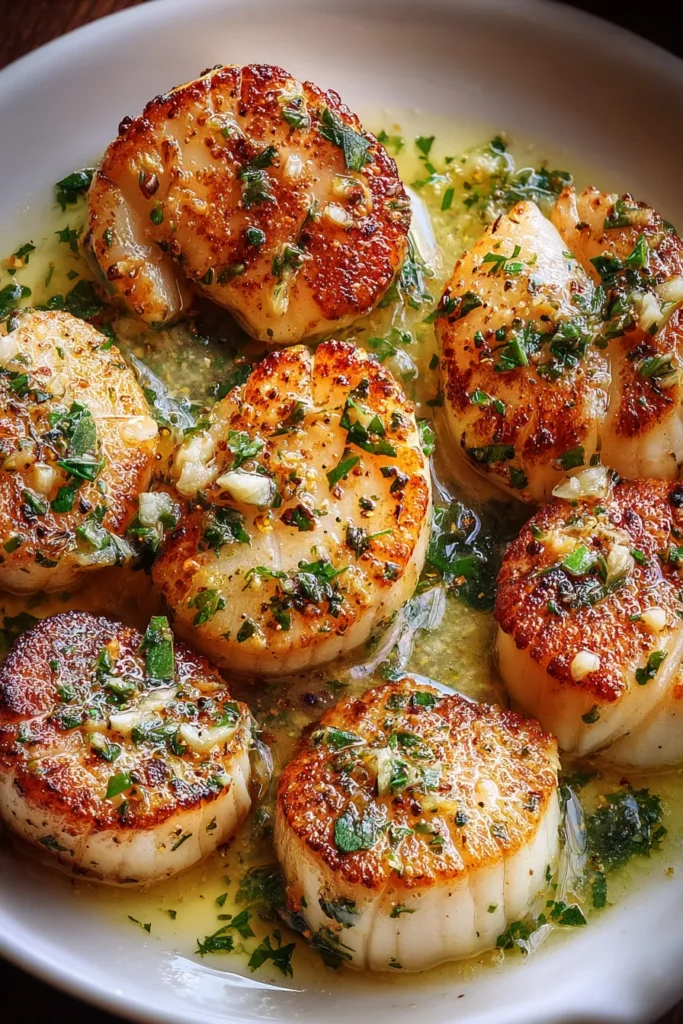

Garlic Butter Scallops
Description
These succulent scallops are seared to perfection and bathed in a luscious garlic butter sauce. Each bite bursts with fresh, zesty flavors that will wow your taste buds.
Ingredients
Instructions
-
Pat the scallops dry with paper towels to remove any excess moisture. This will help them to sear properly in the pan.
-
Season the scallops generously on both sides with salt and freshly ground black pepper.
-
In a large skillet, heat the olive oil over medium-high heat until it starts to shimmer.
-
Gently add the scallops to the hot skillet, ensuring there is space between each one. Do not overcrowd the pan.
-
Sear the scallops for about 2 minutes on each side, or until they are golden brown and easily release from the pan. Avoid overcooking.
-
Remove the scallops from the pan and set aside.
-
Reduce the heat to medium and add the butter to the same skillet. As it begins to melt, add the minced garlic and sauté until fragrant, about 1 minute.
-
Carefully pour in the white wine or chicken broth and lemon juice, scraping up any browned bits from the bottom of the pan with a wooden spoon. Allow the sauce to simmer for about 2-3 minutes, reducing slightly.
-
Return the scallops to the skillet, spooning the garlic butter sauce over them.
-
Sprinkle with freshly chopped parsley and remove from heat.
-
Transfer to a serving plate and enjoy immediately.
Note
- Ensure scallops are dry before cooking for the best sear.
- Cooking time is crucial; overcooked scallops can become tough.
- Pair with a side of asparagus or risotto for a complete meal.
- Freshly squeezed lemon juice is recommended for the best flavor.
- If you prefer, substitute the white wine with chicken broth.

