

Every Sunday morning, I find myself drawn to the kitchen with a clear mission: creating the most pillowy, melt-in-your-mouth treats that feel like a warm hug on the taste buds. Today’s delight? Vanilla French beignets—those cloud-like squares of fried dough that get a generous snowfall of powdered sugar. They’re the embodiment of French pastry perfection, with each bite delivering that sweet whisper of vanilla and the gentle crunch of a golden exterior giving way to a soft, tender center. These warm, pillowy vanilla French beignets are a delightful treat! Each bite is a perfect combination of fluffy dough and sweet powdered sugar, making them a must-try for any occasion. Whether you’re looking to impress brunch guests or simply treat yourself after a long week, these beauties have you covered.
Learning to make these beignets is an intermediate culinary adventure that rewards you with a stack of pastries so ethereal you could almost call them clouds. With a prep time of about 30 minutes, plus 1.5 hours of rest, and 10–15 minutes of frying magic, you’ll end up with a dozen beignets, each around 150 calories—that’s practically guilt-free indulgence, right? The blend of evaporated milk, butter, and vanilla extract creates a dough that’s rich without feeling heavy, and the active dry yeast ensures a fluffiness that rivals any bakery version. Pull up a stool, grab your favorite mug of coffee or hot chocolate, and let’s chat about how these vanilla-scented pillows are as achievable in your kitchen as they are irresistible on your plate.
KEY INGREDIENTS IN VANILLA FRENCH BEIGNETS
Every ingredient in these vanilla French beignets plays a starring role, contributing to that perfect balance of lightness, flavor, and texture. From the yeast that gives the dough its airy lift to the touch of vanilla that rounds out the sweetness, let’s break down what you’ll need and why each element is essential.
- Warm water
This activates the yeast, providing the ideal temperature (around 110°F/45°C) for the microorganisms to bubble to life and create that signature rise.
- Active dry yeast
The magic behind every fluffy beignet, yeast ferments the dough, releasing carbon dioxide that makes each beignet puff up beautifully.
- Granulated sugar
Beyond adding sweetness, sugar feeds the yeast during fermentation, helping to build structure and a light crumb.
- Eggs
They enrich the dough, adding moisture and color while contributing to the overall tenderness of the finished pastry.
- Evaporated milk
Provides a creamy richness that enhances texture without diluting the dough, giving beignets their soft interior.
- Pure vanilla extract
Infuses the dough with fragrant warmth and depth, turning each bite into an aromatic journey.
- Salt
Balances the sweetness and strengthens the gluten network for dough that’s easy to handle and yields a satisfying chew.
- Unsalted butter
Adds flavor and a tender crumb, ensuring the dough isn’t too dry and stays pillowy when fried.
- All-purpose flour
Forms the structure of the beignets; enough to develop gluten but not so much that they become dense—plus extra for dusting.
- Vegetable oil
The frying medium that creates a crisp, golden shell while sealing in the soft, delicate interior.
- Powdered sugar
The finishing touch, dusted generously to add sweetness and that classic café-style presentation.
HOW TO MAKE VANILLA FRENCH BEIGNETS
Ready to turn this lineup of ingredients into warm, sweet pillows? Follow these steps carefully, and you’ll be munching on homemade beignets in no time—no fancy equipment required, just a bit of patience and joy in the process.
1. In a large mixing bowl, combine the warm water, active dry yeast, and granulated sugar. Stir well to dissolve the sugar and evenly distribute the yeast. Let it sit for about 10 minutes until it becomes frothy, indicating the yeast is alive and kicking.
2. Whisk in the eggs, evaporated milk, and pure vanilla extract into the yeast mixture. Use a whisk or fork to ensure the eggs are completely incorporated and the mixture is smooth and uniform.
3. Add the salt and melted butter to the bowl, then gradually add the flour one cup at a time, stirring between additions. Continue until the dough starts to come together in a shaggy mass.
4. Transfer the dough onto a floured surface and knead it gently for about 5–7 minutes until it’s smooth and elastic. If it’s too sticky, sprinkle a bit more flour; avoid adding too much, or the beignets can turn dense.
5. Place the kneaded dough in a lightly greased bowl, cover it with a damp cloth, and let it rise in a warm place for about 1 to 1.5 hours, or until it has doubled in size.
6. Once the dough has risen, punch it down gently to release excess air pockets. Roll it out on a floured surface to about 1/4-inch thickness using a rolling pin.
7. Cut the dough into 2-inch squares using a sharp knife or pizza cutter, creating uniform pieces that will fry evenly.
8. Heat the vegetable oil in a deep skillet or deep fryer to about 350°F (175°C). Use a thermometer for accuracy, ensuring the beignets puff up without absorbing too much oil.
9. Carefully fry the dough squares in small batches for 2–3 minutes on each side, or until they’re golden brown and beautifully puffed.
10. Remove the beignets with a slotted spoon and drain them on paper towels to remove any excess oil before plating.
11. Generously dust the warm beignets with powdered sugar just before serving, giving them that iconic snowy finish.
SERVING SUGGESTIONS FOR VANILLA FRENCH BEIGNETS
Serving these beignets is as fun as making them—let your creativity shine! Whether you’re hosting a chic brunch or just craving a sweet afternoon pick-me-up, these ideas will ensure your vanilla French beignets look as good as they taste.
- Offer a coffee bar setup, complete with freshly brewed espresso or a creamy latte. Let guests sprinkle additional powdered sugar and dash on a bit of cinnamon for a personalized touch.
- Serve alongside a small fruit compote, such as mixed berries simmered with a hint of lemon and sugar. The bright, tangy flavors perfectly cut through the richness of the fried dough.
- Create a dipping trio of chocolate sauce, salted caramel, and vanilla bean crème anglaise. Arrange everything in ramekins for an elegant, interactive dessert station.
- Pair your beignets with a glass of hot chocolate or a frothy chai tea latte, garnished with a cinnamon stick or whipped cream, for a cozy café vibe that’s perfect on cooler mornings.
HOW TO STORE VANILLA FRENCH BEIGNETS
Once you’ve tasted the joy of freshly fried beignets, you’ll want to preserve that magic for later. While they truly shine straight from the fryer, these storage tips ensure you can enjoy them again without losing too much of their glorious texture.
- Store at room temperature in an airtight container for up to 24 hours. Place a sheet of parchment paper between layers to prevent sticking and maintain a bit of crispness.
- Refrigerate in a sealed container for 2–3 days. Warm them briefly in a 300°F oven for 5 minutes to revive that delicate exterior and restore a bit of the original puff.
- Freeze for longer-term storage by flash-freezing on a parchment-lined tray, then transferring to a freezer bag. Freeze for up to one month. Reheat directly from frozen in a 350°F oven for 8–10 minutes until warmed through.
- For on-the-go freshness, pack beignets in a thermos-safe container with a small dry towel to absorb moisture, keeping them warm and protected for a couple of hours.
CONCLUSION
From the very first moment you mix warm water, yeast, and sugar and watch that frothy magic unfold, you’re embarking on a rewarding culinary journey that ends with pillowy bites dipped in sweet, snowy sugar. We’ve walked through each ingredient—every whirl of vanilla extract, every dash of salt—and seen how they harmonize to create beignets so tender and light, they practically float on your tongue. Following the detailed steps, you’ll find that turning out a dozen fluffy, golden morsels is not only possible but downright joyful. Plus, with versatile serving ideas and smart storage tips, you can elevate these beignets into a brunch hero, a dessert showstopper, or a cozy solo treat whenever the craving strikes.
Feel free to print out this article and tuck it into your favorite recipe binder, so you can revisit the step-by-step guide anytime. Save it for later use, whether it’s for a special gathering, a weekend breakfast ritual, or a midweek sweet escape. You’ll notice at the bottom of this page that there’s a FAQ section waiting to answer any lingering questions, from troubleshooting dough consistency to perfecting that golden fry. If you try the recipe, I’d love to hear how it went—leave a comment, share your triumphs (or any hiccups), and ask away if you need help. Your feedback and stories are what make this community so warm and welcoming, just like a fresh batch of vanilla French beignets straight from the fryer. Enjoy every sweet, fluffy bite!
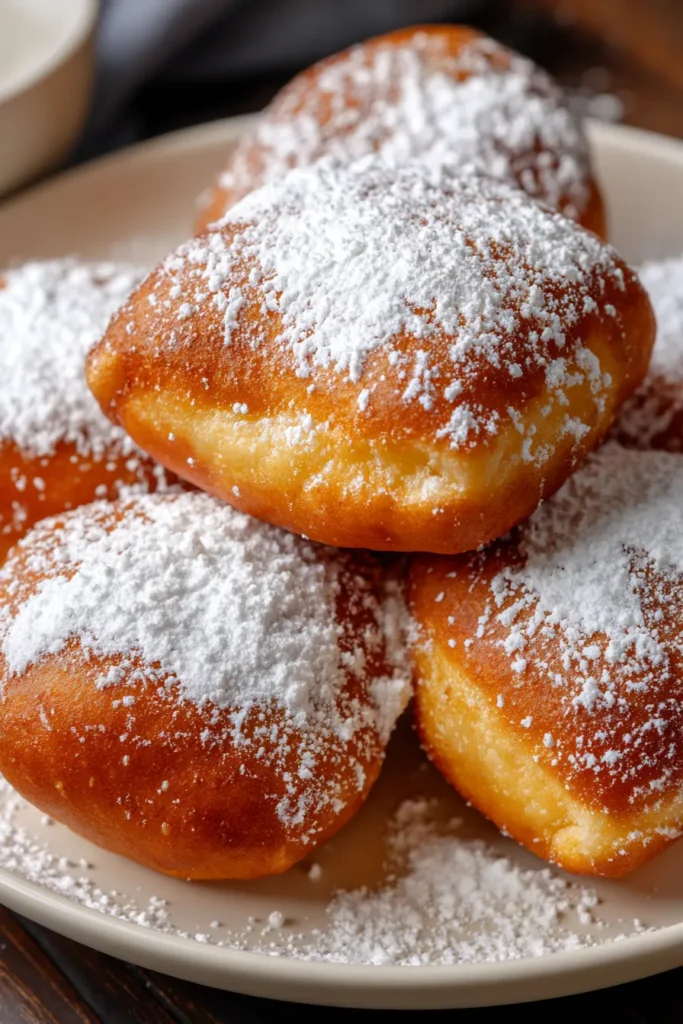

Vanilla French Beignets
Description
These warm, pillowy vanilla French beignets are a delightful treat! Each bite is a perfect combination of fluffy dough and sweet powdered sugar, making them a must-try for any occasion.
Ingredients
Instructions
-
In a large mixing bowl, combine the warm water, active dry yeast, and granulated sugar. Stir well and let it sit for about 10 minutes until it becomes frothy.
-
Whisk in the eggs, evaporated milk, and pure vanilla extract into the yeast mixture. Ensure the eggs are well incorporated.
-
Add the salt and melted butter to the mixture, followed by gradually adding the flour, one cup at a time. Stir until the dough starts to come together.
-
Transfer the dough onto a floured surface and knead it gently for about 5-7 minutes until smooth and elastic. Add more flour if necessary to keep it from sticking.
-
Place the dough in a lightly greased bowl, cover it with a damp cloth, and let it rise in a warm place for about 1 to 1.5 hours, or until it doubles in size.
-
Once risen, punch down the dough and roll it out on a floured surface to about 1/4-inch thickness.
-
Cut the dough into 2-inch squares using a sharp knife or pizza cutter.
-
Heat the vegetable oil in a deep skillet or deep fryer to about 350°F (175°C).
-
Carefully fry the dough squares in small batches for 2-3 minutes on each side, or until they're golden brown and puffed.
-
Remove the beignets with a slotted spoon and drain them on paper towels to remove excess oil.
-
Generously dust the warm beignets with powdered sugar before serving.
Note
- Beignets are best served fresh and warm.
- You can experiment by adding a touch of cinnamon to the powdered sugar for a different flavor.
- For an extra burst of vanilla flavor, consider using a vanilla bean or vanilla paste instead of extract.
- Dough can be prepared the night before and left to rise in the refrigerator overnight, then allowed to come to room temperature before rolling out.
- These are ideal for breakfast or a sweet treat throughout the day, perfect with coffee or hot chocolate.

