

With its silky rice noodles bathed in a luxuriously creamy, spicy red curry sauce, Thai Red Curry Noodles bring a burst of color and flavor to your dinner table. This dish masterfully balances the richness of coconut milk with the bright tang of lime juice and the subtle sweetness of brown sugar, creating a taste sensation that’s at once comforting and exciting. Each forkful delivers tender noodles wrapped in a sauce that’s fragrant with garlic, ginger, and red curry paste, while crisp-tender vegetables provide delightful pops of texture. Whether you’re a curry lover or a noodle enthusiast—or both—this recipe is a one-pan wonder that elevates a simple weeknight meal into something extraordinary.
As a busy home cook, you’ll appreciate how quickly this recipe comes together: just 15 minutes of prep, 20 minutes of cooking, and you’re ready to spoon out steaming bowls of comfort. It’s perfect for beginners, yet versatile enough for seasoned cooks to personalize with extra chili heat or additional veggies. The inclusion of lean proteins like chicken, shrimp, or tofu makes this dish adaptable to almost any diet, including a full-on vegan twist by swapping fish sauce for extra soy sauce and choosing tofu. With roughly 450 calories per serving, it makes a satiating lunch or dinner that won’t weigh you down. Grab your wok or a sturdy skillet, gather fresh ingredients, and let’s dive into a vibrant Thai experience that’s as fun to make as it is to devour.
KEY INGREDIENTS IN THAI RED CURRY NOODLES
Before you embark on this flavorful journey, let’s talk about the star players that make these Thai Red Curry Noodles shine. Each ingredient brings its own personality to the dish, creating that signature harmony of creamy, spicy, tangy, and sweet.
- Rice noodles
Delicate yet sturdy, these translucent noodles soak up the curry sauce beautifully and provide the comforting base for the dish.
- Vegetable oil
A neutral cooking oil that helps sauté aromatics without overpowering their fresh flavors.
- Onion
Thinly sliced to soften quickly, onions add a subtle sweetness and depth when sautéed until translucent.
- Garlic
Minced garlic infuses the curry with its bold, pungent aroma, building layers of savory complexity.
- Ginger
Freshly minced, ginger lends a warm, spicy kick that brightens the rich coconut base.
- Red curry paste
The heart of the sauce, this paste combines chilies, lemongrass, and spices for that characteristic Thai heat and fragrance.
- Coconut milk
Creamy and slightly sweet, coconut milk forms the luxurious body of the curry sauce.
- Soy sauce
Provides a salty, umami backbone that balances the sweetness of coconut milk and brown sugar.
- Fish sauce
Adds an authentic depth of savory, oceanic umami. For a vegetarian version, simply use extra soy sauce.
- Lime juice
Fresh lime juice brings a zesty brightness that cuts through the richness of the sauce.
- Brown sugar
A hint of sweetness that mellows the heat and rounds out the flavor profile.
- Red bell pepper
Thinly sliced for vibrant color and a crisp, juicy bite.
- Broccoli florets
Tender-crisp bites that lend a satisfying crunch and a boost of green goodness.
- Snap peas
Sweet and snappy, these peas keep their fresh crunch after a quick stir-fry.
- Cooked chicken, shrimp, or tofu
Optional proteins that can be swapped or combined, giving you flexibility to suit your dietary needs.
- Fresh basil
Chopped just before serving, basil adds a fragrant herbal note that elevates the entire dish.
- Green onions
Thinly sliced to garnish, these bring a mild oniony crunch and a pop of fresh color.
- Chopped peanuts
Toasted peanuts introduce a nutty texture and a hint of savory crunch that contrasts beautifully with the creamy curry.
- Lime wedges
Served on the side for extra zing, letting everyone adjust the tanginess to their own taste.
HOW TO MAKE THAI RED CURRY NOODLES
Ready to get cooking? This section walks you through each step of building layers of flavor—from perfectly cooked noodles to a silky, spicy curry sauce that hugs every strand.
1. Cook the rice noodles according to package instructions. Typically, you’ll soak them in boiling water until just tender, then drain and rinse under cold water to stop the cooking process. Set aside, lightly drizzled with oil to prevent sticking.
2. In a large pan, heat the vegetable oil over medium heat. Add the sliced onion, minced garlic, and minced ginger. Sauté for 3–4 minutes, stirring occasionally, until the onion becomes translucent and the aromatics soften.
3. Stir in the red curry paste, using a wooden spoon or spatula to break it up. Cook for about 1 minute, until the paste becomes fragrant and releases its full flavor.
4. Pour in the coconut milk, then add soy sauce, fish sauce, lime juice, and brown sugar. Whisk or stir vigorously to combine, forming a smooth, glossy curry sauce.
5. Crank the heat to high, then toss in the sliced red bell pepper, broccoli florets, and snap peas. Stir-fry for 4–5 minutes, until the vegetables are tender-crisp and still vibrant.
6. If you’re using a protein, add the cooked chicken, shrimp, or tofu now. Stir well to ensure each piece is fully coated in the curry sauce and warms through.
7. Gently fold in the cooked rice noodles, mixing until all strands are enveloped in the rich curry. Cook for an additional 1–2 minutes, just until the noodles are heated through.
8. Remove the pan from heat and quickly stir in the fresh basil and green onions. Give the dish a taste, and adjust seasoning—perhaps extra lime juice or a pinch of sugar—to suit your preferences.
9. Serve hot, garnished with a generous sprinkle of chopped peanuts and lime wedges on the side for an extra burst of freshness.
SERVING SUGGESTIONS FOR THAI RED CURRY NOODLES
Transform your bowl of Thai Red Curry Noodles into a complete dining experience by playing with textures, flavors, and accompaniments. Here are some fun ways to serve and elevate this comforting dish:
- Pair with a side of crisp cucumber salad tossed in rice vinegar, sesame oil, and a sprinkle of chili flakes. The cool crunch beautifully contrasts the warm, creamy curry.
- Garnish with fresh cilantro sprigs and a drizzle of toasted sesame oil to introduce an aromatic finish that highlights the dish’s Southeast Asian roots.
- Offer a small bowl of sliced fresh chilies or chili oil on the side for spice lovers to dial up the heat to their liking.
- Serve alongside a light ginger-lime iced tea or a refreshing Thai iced tea to complement the curry’s richness and cleanse the palate between bites.
HOW TO STORE THAI RED CURRY NOODLES
Whether you have leftovers or want to meal-prep, proper storage ensures your Thai Red Curry Noodles stay fresh and delicious. Follow these tips to maintain that vibrant flavor and creamy texture:
- Refrigeration: Allow the noodles to cool to room temperature before transferring to an airtight container. Store in the fridge for up to two days. When reheating, add a splash of water or coconut milk to rejuvenate the sauce and prevent dryness.
- Freezing: For longer storage, place cooled noodles and sauce in a freezer-safe container, leaving some headspace for expansion. Freeze for up to one month. Thaw overnight in the fridge before reheating gently on the stovetop.
- Separate components: If possible, store cooked noodles and curry sauce in separate containers. This prevents noodles from soaking up too much sauce and becoming mushy, so you can mix them fresh at mealtime.
- Reheating: Warm gently over low to medium heat, stirring occasionally. If the sauce has thickened, add a little water, coconut milk, or broth to restore the ideal consistency without losing flavor.
CONCLUSION
Thank you for joining me on this flavorful journey through Thai Red Curry Noodles! We’ve explored every element—from silky rice noodles and creamy coconut milk to the vibrant freshness of crisp vegetables and fragrant herbs. This dish proves that a beginner-friendly recipe can still deliver a stunning array of textures and tastes. With just 15 minutes of prep and 20 minutes of cooking, you’ll have a restaurant-worthy meal that’s perfect for busy weeknights or casual entertaining. Don’t forget that you can easily tailor this recipe to fit your lifestyle: go vegan by swapping in tofu and extra soy sauce, turn up the heat with more red curry paste, or switch up the veggies to keep things interesting.
Feel free to print this article and tuck it into your recipe binder for easy reference, or save it digitally for when you need a go-to quick dinner solution. Below you’ll find a FAQ section to address common questions about ingredients, substitutions, and troubleshooting tips. If you try this recipe, I’d love to hear how it turns out—drop a comment with your twists, questions, or any feedback. Your cooking adventures inspire me, and I’m here to help if you need any guidance as you whip up these creamy, spicy Thai Red Curry Noodles at home. Happy cooking!
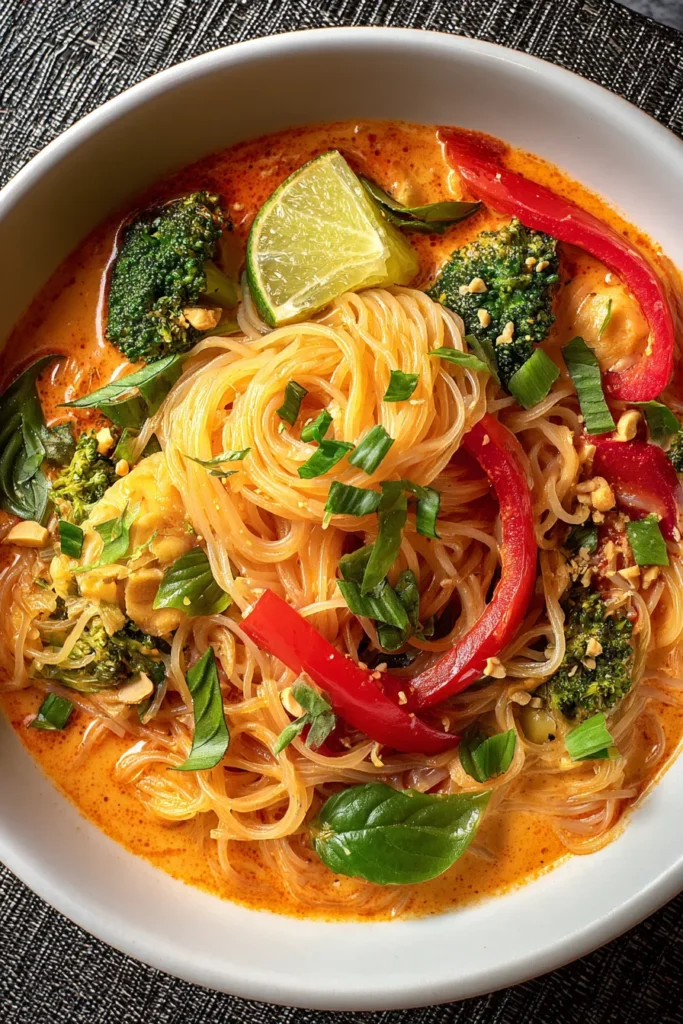

Thai Red Curry Noodles
Description
Experience the vibrant flavors of Thailand with these creamy, spicy red curry noodles packed with fresh vegetables and your choice of protein. A true delight for your taste buds!
Ingredients
Instructions
-
Cook the rice noodles according to package instructions. Drain and set aside.
-
In a large pan, heat the vegetable oil over medium heat. Add the onion, garlic, and ginger; sauté until the onion is translucent.
-
Stir in the red curry paste, cooking for an additional minute until fragrant.
-
Pour in the coconut milk, soy sauce, fish sauce, lime juice, and brown sugar. Stir well to combine.
-
Increase the heat to high and add the bell pepper, broccoli, and snap peas to the sauce. Cook for 4-5 minutes until vegetables are tender-crisp.
-
If using, add the cooked chicken, shrimp, or tofu, and stir to coat with the curry sauce.
-
Mix in the cooked rice noodles until well combined and heated through.
-
Remove from heat and stir in the fresh basil and green onions. Taste and adjust seasonings if necessary.
-
Serve the noodles hot, garnished with chopped peanuts and lime wedges on the side.
Note
- This dish can be made vegan by omitting the fish sauce and using tofu as the protein.
- For a spicier version, add extra red curry paste or sliced fresh chili peppers.
- Leftovers can be stored in the refrigerator for up to two days.
- You can swap or add any of your favorite vegetables to personalize the dish.
- Toasted sesame oil can be added for extra flavor.

