

There’s something deeply satisfying about crafting a bowl of Savory Homemade Japanese Ramen from scratch. You’ll find that combining tender chicken, vibrant greens, and a soulful broth feels like giving your kitchen a warm, welcoming embrace. As you chop garlic and ginger, you’ll notice how these humble aromatics lay the foundation for a broth that resonates with savory depth. The miso paste melts into the simmering chicken stock, creating a rich, slightly sweet umami symphony that dances on your palate. Soft-boiled eggs with their jammy yolks become little pockets of silkiness as you crack them open, while sheets of nori add that briny ocean note that anchors each spoonful.
Every ingredient plays a starring role, from the chewy noodles that soak up every drop of broth to the aromatic sesame oil that drizzles on top like liquid gold. It’s more than just dinner—it’s an experience that captures the essence of Japanese cuisine and comfort food in one bowl. With just a little hands-on time (around 30 minutes of prep, 30 minutes of cooking, and a 30-minute rest for your chicken to bathe in marinade), you’ll end up with a satisfying meal that clocks in at about 600 calories per serving. Whether you’re cooking for a cozy solo night in or impressing friends over lunch, this intermediate-level recipe invites you to savor the rich flavors of tender chicken and aromatic broth, beautifully complemented by fresh veggies and delightful toppings. Get ready to dive into a comforting bowl that you’ll want to revisit again and again!
KEY INGREDIENTS IN SAVORY HOMEMADE JAPANESE RAMEN
Before diving into the cooking process, let’s break down each ingredient that transforms simple pantry staples into a heartwarming bowl of ramen. Each component contributes layers of flavor, texture, and visual appeal—making every slurp a moment to cherish.
- Fresh ramen noodles
These noodles provide the quintessential chewy bite that defines authentic ramen. Their fresh texture absorbs the savory broth beautifully, ensuring each strand is flavored through and through.
- Chicken broth
A light yet deeply savory base that carries the richness of miso and aromatics. Using good-quality stock lays the groundwork for a broth that’s both comforting and complex.
- Boneless skinless chicken breasts
When marinated and seared, they offer juicy, flavorful slices that add protein and depth to your bowl. Their mild taste also balances the umami-rich elements.
- Vegetable oil
This neutral oil is essential for sautéing garlic and ginger without overpowering their aromas, kickstarting the flavor-building process.
- Sesame oil
Added at the finish, it infuses the broth with a nutty, toasty fragrance that elevates the overall aroma and mouthfeel.
- Soy sauce
The salty backbone of the marinade and broth seasoning, it boosts umami and harmonizes with both sweet and savory notes.
- Sake (optional)
A splash in the marinade adds mild acidity and subtle sweetness, helping to tenderize the chicken and layer in Japanese flair.
- Mirin
A sweet rice wine that rounds out the marinade with gentle sugar notes, balancing the savory elements.
- Miso paste
This fermented soybean paste melts into the broth, providing a savory, slightly tangy depth that’s central to traditional ramen.
- Garlic
Minced and sautéed, it delivers a pungent kick that infuses the oil and broth early on, building a flavorful foundation.
- Ginger
Sliced and cooked alongside garlic, it introduces a bright, zesty warmth that cuts through the richness.
- Soft-boiled eggs
With creamy, jammy yolks, these halves add luscious texture and additional umami when nestled atop your noodles.
- Mushrooms (shiitake or cremini)
Earthy and tender, they soak up the broth’s flavors and provide a satisfying bite alongside the chicken.
- Green onions
Fresh, crisp scallions add bursts of sharpness and color, brightening the bowl with every mouthful.
- Steamed spinach
A nutrient-packed green that provides a gentle, leafy texture and a pop of vibrant color.
- Nori sheets
Thin strips of seaweed introduce a subtle brininess and a contrasting crispy mouthfeel.
- Salt and pepper
Simple seasonings to taste, helping you fine-tune the broth’s balance and highlight each ingredient.
- Chili oil (optional)
A drizzle at the end for those who crave a little heat and extra dimension.
- Sesame seeds
Sprinkled on top for garnish, they add a pleasant nuttiness and slight crunch to each bite.
HOW TO MAKE SAVORY HOMEMADE JAPANESE RAMEN
Embarking on your ramen journey is about layering flavors and textures with patience and care. From marinating to assembly, each step builds upon the previous one, resulting in a deeply satisfying bowl of comfort and complexity.
1. Begin by marinating the chicken breasts in a mixture of soy sauce, sake, and mirin. Place the chicken in a sealable container or zip-top bag and refrigerate for at least 30 minutes to allow the flavors to penetrate fully.
2. In a large pot, heat the vegetable oil over medium heat. Add minced garlic and sliced ginger, and sauté until they release their fragrant aromas—about 1–2 minutes—being careful not to let them burn.
3. Pour in the chicken broth and bring it to a simmer, then whisk in the miso paste until it’s completely dissolved, creating an even, umami-rich base.
4. Stir in the sesame oil and adjust the seasoning with salt and pepper to taste. Keep the broth warm over low heat, allowing all flavors to meld.
5. Remove the marinated chicken from the fridge. Heat a separate pan over medium-high heat and cook the chicken breasts until they’re golden brown on each side and cooked through, about 5–7 minutes per side. Set aside to rest.
6. In the same pan, add a touch more oil if needed and sauté the mushrooms until they’re tender and lightly browned, about 3–4 minutes.
7. Slice the cooked chicken breasts thinly against the grain and set aside for topping your ramen bowls.
8. Cook the fresh ramen noodles according to package instructions. Once al dente, drain and rinse them under cold water to stop the cooking process and prevent them from becoming mushy.
9. To assemble, place a portion of noodles in each serving bowl. Ladle the hot broth over the noodles, ensuring it surrounds every strand.
10. Top each bowl with slices of chicken, sautéed mushrooms, steamed spinach, soft-boiled egg halves, green onions, and nori strips for contrasting textures.
11. Drizzle with chili oil if you’d like a spicy kick, and finish with a sprinkle of sesame seeds for a final crunchy touch.
12. Serve hot and relish the harmonious blend of savory chicken, rich broth, and delightful toppings that make each spoonful an inviting moment of comfort.
SERVING SUGGESTIONS FOR SAVORY HOMEMADE JAPANESE RAMEN
Enjoying this homemade ramen is all about the final touches that engage the senses and tailor each bowl to your mood. Whether you’re hosting a casual dinner or indulging in a cozy solo meal, thoughtful presentation and pairings can elevate your experience. Consider how each garnish, condiment, and side dish complements the core flavors of your broth and noodles. Aim for a balanced array of textures—silky eggs, crunchy greens, tender meat, and umami-packed broth. Lighting and plating can also enhance the atmosphere: serve your ramen in deep bowls that retain heat well, and place spoons, chopsticks, or even a small ashtray of pickled ginger on the side for that authentic ramen shop vibe.
- Layered toppings
Arrange ingredients artfully on top of your noodles to showcase each component. Place the soft-boiled egg halves off-center, fan out the chicken slices, and tuck greens around the rim for visual appeal.
- Condiment tray
Offer a small dish with chili oil, toasted sesame seeds, and red pepper flakes so diners can personalize their spice level and texture.
- Beverage pairing
Serve with iced green tea or a light Japanese lager to cleanse the palate between slurps and accentuate the broth’s delicate flavors.
- Appetizer selection
Complement your ramen with edamame sprinkled with sea salt or a side of Japanese pickles (tsukemono) for a crisp, tangy contrast that brightens each bite.
HOW TO STORE SAVORY HOMEMADE JAPANESE RAMEN
Proper storage ensures that your carefully crafted ramen retains its flavor and texture, even if you’re saving leftovers for another day. Because components like noodles, broth, and toppings have different shelf lives and reheating requirements, separating them will yield the best results. Store each element in airtight containers and label them with dates to maintain freshness. When reheating, focus on warming the broth gently while avoiding overcooking the noodles or wilting your greens. These guidelines will help you enjoy your creation almost as much as the first day you cooked it.
- Refrigerate broth separately
Transfer the cooled broth to a sealed container and store in the refrigerator for up to 3 days, allowing flavors to deepen without becoming cloudy.
- Keep noodles chilled
After cooking and rinsing, toss the noodles with a few drops of sesame oil to prevent sticking and store in an airtight container for up to 24 hours.
- Store toppings individually
Place sliced chicken, soft-boiled eggs, and vegetables into separate containers. This prevents moisture transfer and keeps each component at peak texture.
- Freeze for longer storage
If you’d like to save broth for up to 2 months, pour it into freezer-safe bags or containers, leaving room for expansion. Thaw overnight in the fridge before reheating.
CONCLUSION
What started as a handful of simple ingredients transforms into a soul-warming bowl of Savory Homemade Japanese Ramen that brings comfort and joy to any kitchen. You’ve learned how the combination of fresh ramen noodles, rich chicken broth, and thoughtfully prepared toppings creates a symphony of textures and flavors. From the initial marinating of chicken to the final drizzle of sesame oil, each step plays a vital part in crafting a meal that’s both visually stunning and deeply satisfying. This intermediate-level recipe offers hands-on techniques—like properly sautéing aromatics and masterfully assembling your bowl—designed to elevate your home cooking game and surprise your taste buds with authentic Japanese flair.
Feel free to print this article and save it for later reference, whether you’re planning a cozy solo dinner or feeding friends at a weekend gathering. You’ll also find a FAQ section below for quick answers to common questions about ingredients, substitutions, and troubleshooting. If you give this recipe a try, I’d love to hear how it turned out for you! Leave a comment sharing your favorite toppings, any twists you added, or questions you ran into while cooking. Your feedback helps me refine and create even more delicious, approachable recipes. Happy slurping, and may every bowl you make bring warmth and satisfaction to your table!
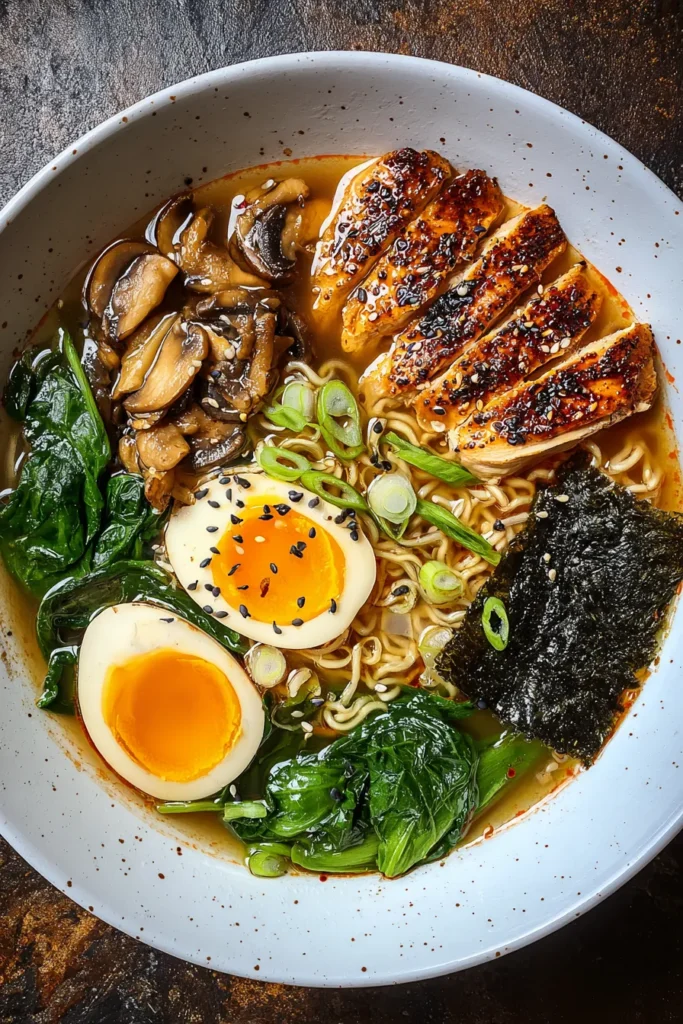

Savory Homemade Japanese Ramen
Description
Savor the rich flavors of tender chicken and aromatic broth, beautifully complemented by soft-boiled eggs and fresh veggies that create a comforting bowl of ramen.
Ingredients
Instructions
-
Begin by marinating the chicken breasts in a mixture of soy sauce, sake, and mirin. Let it sit in the refrigerator for at least 30 minutes.
-
In a large pot, heat the vegetable oil over medium heat. Add minced garlic and sliced ginger, and sauté until fragrant.
-
Pour in the chicken broth and bring it to a simmer. Stir in the miso paste until it is completely dissolved.
-
Add sesame oil to the broth and adjust the seasoning with salt and pepper to taste. Keep the broth warm over low heat.
-
Remove the marinated chicken from the fridge. Heat a pan over medium-high heat and cook the chicken breasts until they are golden brown and cooked through. Set aside.
-
In the same pan, add a little more oil if needed and sauté the mushrooms until tender.
-
Slice the cooked chicken breasts thinly and set them aside for topping the ramen.
-
Cook the fresh ramen noodles according to package instructions. Once cooked, drain and rinse them with cold water to stop cooking.
-
To assemble, place a serving of noodles in each bowl. Ladle the hot broth over the noodles.
-
Top each bowl with slices of chicken, mushrooms, steamed spinach, soft-boiled egg halves, green onions, and nori strips.
-
Drizzle with chili oil if desired and sprinkle with sesame seeds.
-
Serve hot and enjoy the comforting and aromatic flavors of your homemade ramen.
Note
- Ramen noodles can be substituted with soba or udon for a different texture.
- Experiment with toppings like corn, bamboo shoots, or even a slice of pork belly.
- Homemade broth will enhance the flavor, but store-bought can be a great time-saver.
- Adjust the spiciness with red pepper flakes or additional chili oil.
- Use a combination of chicken and pork broth for a richer flavor.

