

Duck A L’Orange is the ultimate blend of rich, succulent roast duck and vibrant citrus glaze. This juicy roast duck bathed in a bright, tangy orange sauce crisps the skin to golden perfection, while each bite balances sweet citrus notes with a whisper of vinegar’s tang. Trust me, once you taste that glossy sauce pooling around tender slices, you’ll be hooked. Ready to elevate your dinner repertoire? Let’s dive into this intermediate-level French classic and make meal magic happen.
Key Ingredients
Gathering the right ingredients makes all the difference for perfect Duck A L’Orange. Each component—from the rich duck itself to the bright orange elements—plays a unique role in creating that signature balance of sweet, tangy, and savory flavors.
- 1 whole duck (about 2 kg): The star protein providing rich, succulent meat and crisp, golden skin.
- 2 unit oranges: Fresh fruit for both juice and zest, delivering bright citrus notes.
- 1 cup orange juice: Forms the sweet, tangy base of the silky orange sauce.
- 1 tablespoon orange zest: Packs concentrated citrus oils for a fragrant flavor boost.
- 1/2 cup granulated sugar: Caramelizes with vinegar to add sweetness, depth, and color.
- 1/4 cup white vinegar: Lends sharp tanginess that cuts through the richness.
- 1/4 cup chicken stock: Introduces savory depth and thins the sauce to the perfect consistency.
- 1 tablespoon cornstarch: Thickens the glaze without altering the bright flavor.
- 2 tablespoons water: Blends with cornstarch to create a smooth thickening slurry.
- 1 tablespoon unsalted butter: Adds a glossy finish and rich, creamy mouthfeel.
- 1 teaspoon kosher salt: Seasons the duck evenly and enhances overall flavor.
- 1/2 teaspoon black pepper: Provides subtle heat and earthy spice under the citrus notes.
How To Make Duck A L’Orange
Roasting the duck to golden crisp and crafting the glossy orange sauce are the two main steps in mastering Duck A L’Orange. You’ll begin by properly seasoning and roasting the bird until its skin crackles to perfection, all while preparing a bright, tangy glaze on the stovetop. Once the duck finishes, you’ll finish the sauce with butter and zest before carving and plating. Follow these detailed steps to achieve that beautiful balance of textures and flavors.
1. Preheat your oven to 375°F (190°C), ensuring it reaches the correct temperature before the duck goes in.
2. Pat dry the duck with paper towels, then season it evenly inside and out with 1 teaspoon kosher salt and 1/2 teaspoon black pepper for balanced flavor.
3. Place the seasoned duck breast-side up on a rack set inside a roasting pan, allowing hot air to circulate under the bird. Roast for about 1 hour and 30 minutes until the skin is crisp and the internal temperature reaches 165°F (74°C).
4. Zest and juice the 2 unit oranges over a bowl to collect 1 tablespoon zest and enough juice for 1 cup total, preparing your fresh citrus components while the duck finishes roasting.
5. In a small saucepan over medium heat, combine 1/2 cup granulated sugar and 1/4 cup white vinegar, stirring until the sugar dissolves and the mixture turns a light amber color.
6. Add 1 cup orange juice and 1/4 cup chicken stock to the pan, whisking constantly to deglaze the saucepan, then bring the mixture to a gentle simmer.
7. Mix 1 tablespoon cornstarch with 2 tablespoons water to form a slurry, stir it into the simmering sauce, and cook until it thickens slightly to coat the back of a spoon.
8. Remove the saucepan from heat and whisk in 1 tablespoon unsalted butter until melted and the sauce is glossy; stir in the reserved orange zest for fragrance and texture.
9. Once the duck comes out of the oven, let it rest for 10 minutes on the rack, then carve and serve with the bright orange sauce spooned generously over each slice.
Serving Suggestions
Serving Duck A L’Orange is all about balancing its vibrant flavors with complementary sides and presentation. Whether you’re hosting a special dinner or simply treating yourself, these suggestions will help you highlight the juicy duck and tangy sauce while creating a memorable plate. From classic starch pairings to fresh garnishes, each idea brings out a new dimension of the dish and ensures every bite tastes as elegant as it looks. Ready to wow your guests? Here are four ways to elevate that final presentation.
- Serve slices of duck on a warm platter to maintain heat, drizzling the orange sauce in thin ribbons for a professional look.
- Pair with creamy garlic mashed potatoes; their richness harmonizes with the tangy glaze and soaks up every last drop of sauce.
- Add a side of steamed green beans tossed in butter and a pinch of salt for a crisp, fresh counterpoint to the rich duck.
- Garnish with fresh orange segments and a sprinkle of chopped parsley to echo the citrus theme and brighten each plate.
Tips For Perfect Duck A L’Orange
When it comes to mastering Duck A L’Orange, a few extra tips can turn good into unforgettable. From prepping the skin to playing with flavor depth, these notes will help you achieve perfectly crisp duck and a deeply flavored sauce every time. Small tweaks—like using a splash of orange liqueur or drying your bird—make a big difference in texture and taste. Keep these friendly suggestions in mind as you cook, and you’ll impress yourself (and everyone at the table) with restaurant-quality results.
- Prick the duck skin gently before roasting for extra crispiness.
- A splash of Grand Marnier can be added to the sauce for deeper orange flavor.
- Store any leftover sauce in the refrigerator for up to three days.
- Adjust the sugar and vinegar levels to balance sweetness and acidity to your taste.
How To Store It
Proper storage ensures your Duck A L’Orange stays fresh and flavorful long after dinner ends. Both the duck and its vibrant orange sauce benefit from careful handling to preserve texture and taste. Whether you’re saving leftovers for a next-day treat or planning ahead, these methods will help you maintain that crisp skin and tangy glaze without compromise. Follow these simple guidelines to keep your meal at its best until you’re ready to reheat and enjoy.
- Refrigeration: Transfer leftover duck and sauce to airtight containers and store in the refrigerator for up to three days, keeping flavors bright.
- Freezing: Divide the cooled duck into portions, wrap tightly in freezer-safe bags, and freeze for up to one month—thaw overnight in the fridge before reheating.
- Reheating: Warm the duck in a 325°F (160°C) oven covered with foil for 15–20 minutes; gently reheat the sauce on low heat, whisking to restore its glossy texture.
- Vacuum Sealing: For maximum longevity, vacuum-seal individual portions of duck and sauce, then freeze; this method preserves moisture and prevents freezer burn.
Frequently Asked Questions
Got questions? Here are answers to the most common queries about Duck A L’Orange:
- How can I ensure the duck skin turns out extra crispy?
Before roasting, prick the skin gently all over with a sharp fork or skewer to render out excess fat. Pat the skin thoroughly dry with paper towels and leave it uncovered in the refrigerator for at least an hour to dry out further. Roast at 375°F (190°C) on a rack so hot air circulates underneath. Let the duck rest skin-side up after cooking to maintain crispiness.
- What internal temperature and visual cues indicate the duck is fully cooked?
The duck is done when an instant-read thermometer inserted into the thickest part of the thigh (without touching bone) reads 165°F (74°C). The skin should be golden brown and crisp, and the juices that run out when you pierce the thigh should be clear, not pink.
- How can I adjust the sweetness and acidity in the orange sauce to suit my taste?
Taste the sauce once it has simmered and thickened, then add more sugar in small increments for sweetness or more vinegar for brightness. Whisk in Grand Marnier or another orange liqueur for depth. Balance by simmering briefly to meld flavors, then finish with butter and zest.
- Can I prepare the orange sauce ahead of time and how should I store it?
Yes. Make the sauce up to step 8, cool completely, then transfer to an airtight container. Store in the refrigerator for up to three days. Gently reheat over low heat, whisking to restore glossiness, and stir in fresh zest just before serving.
- Is there an alternative to cornstarch for thickening the sauce if I don’t have any on hand?
You can use arrowroot powder in a 1:1 substitution for cornstarch, mixed into a slurry with cold water. For a gluten-free option, potato starch works similarly. If using all-purpose flour, whisk it into melted butter to form a roux before adding the liquids, then simmer until the sauce thickens.
- Can I use mandarin or tangerine instead of regular oranges, and what adjustments are needed?
You can substitute mandarins or tangerines for oranges, but their juice is sweeter and less acidic. Taste and reduce the amount of sugar slightly, or increase vinegar for balance. Use the same quantity of juice and zest, adjusting seasoning to your preference.
- What is the best way to carve and serve the roasted duck?
Let the duck rest for 10 minutes on the roasting rack to redistribute juices. Start by removing the legs and wings, then slice along the breastbone to release each breast half. Carve the breasts thinly across the grain. Arrange on a platter and spoon the warm orange sauce over the meat just before serving.
What Makes This Special
From the crackling skin to that finger-licking orange glaze, Duck A L’Orange is a showstopper that tastes as good as it looks. The interplay between the rich duck fat and bright citrus sauce creates a harmony of flavors and textures few dishes can match. Whether you’re impressing house guests or treating yourself, this classic French recipe never disappoints. Feel free to print this article and save it for your next celebration. If you give it a try, I’d love to hear your comments, questions, or any tweaks you discover in your own kitchen!
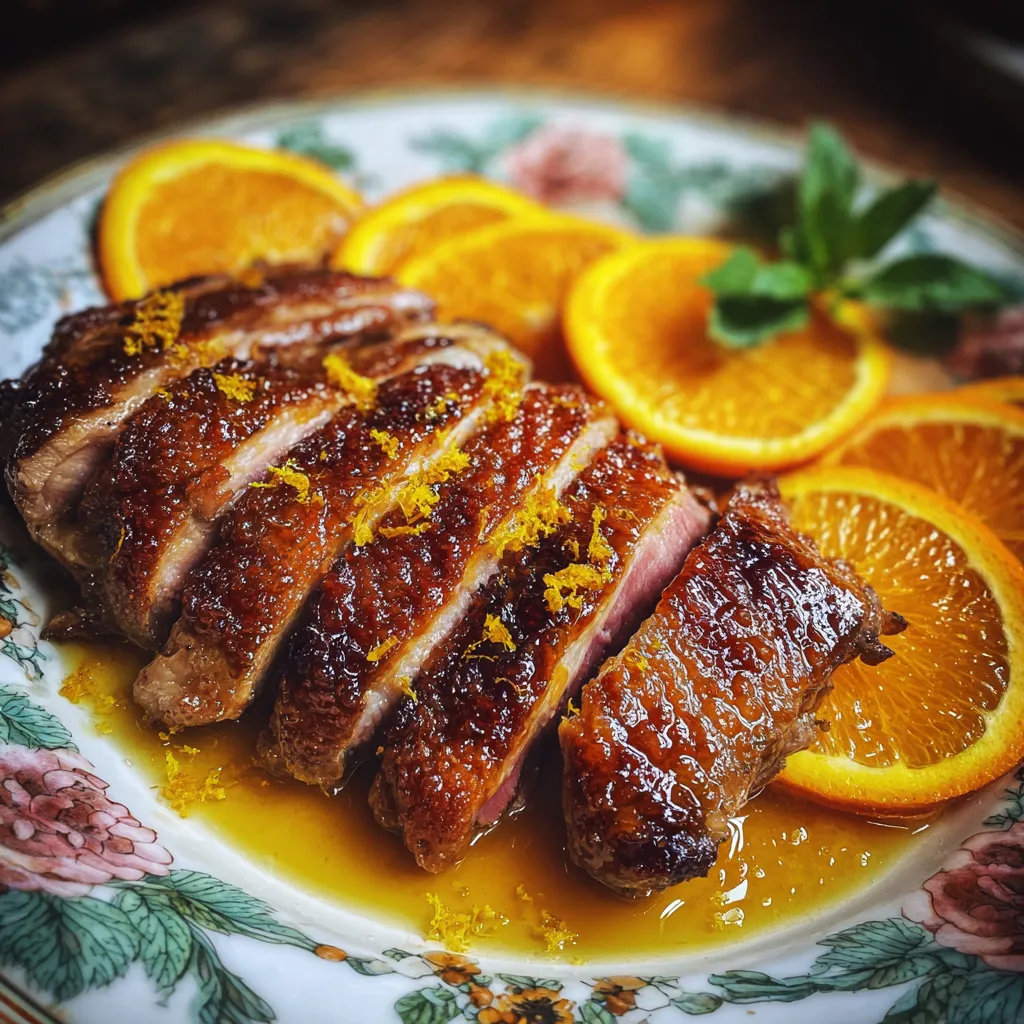

Duck A L’Orange
Description
This roast duck offers crackling skin and tender meat, draped in a glossy orange sauce that balances sweet citrus notes with a touch of vinegar's tang. Each bite pools rich sauce and bursts with fresh zest.
Ingredients
Instructions
-
Preheat oven to 375°F (190°C).
-
Pat the duck dry and season evenly inside and out with salt and pepper.
-
Place the duck breast-side up on a rack in a roasting pan and roast for about 1 hour 30 minutes until the skin is crisp and the internal temperature reaches 165°F (74°C).
-
While the duck roasts, zest and juice the oranges to measure out the orange zest and juice.
-
In a small saucepan over medium heat, combine the sugar and white vinegar, stirring until the sugar dissolves and the mixture turns a light amber color.
-
Carefully add the orange juice and chicken stock, whisking to deglaze the pan, then bring to a gentle simmer.
-
Mix the cornstarch with water to form a slurry, stir it into the sauce, and simmer until the sauce thickens slightly.
-
Remove the pan from heat and whisk in the butter until melted and the sauce is glossy, then stir in the orange zest.
-
Let the duck rest for 10 minutes after roasting, carve, and serve with the orange sauce spooned over the top.
Note
- Prick the duck skin gently before roasting for extra crispiness.
- A splash of Grand Marnier can be added to the sauce for deeper orange flavor.
- Store any leftover sauce in the refrigerator for up to three days.
- Adjust the sugar and vinegar levels to balance sweetness and acidity to your taste.

