

Soft, pillowy bread hugging a creamy, dreamy filling—this is the essence of the Japanese Egg Sandwich, a humble delight that manages to feel both nostalgic and refreshingly modern. Each bite offers a delicate dance between the fluffy white bread and the silky egg mixture, flecked with just the right amount of seasoning. There’s no rush in taking that first bite; you can almost feel the slight give of the moisture-laden crumb and taste the gentle sweetness that sets this sandwich apart from any ordinary deli staple. It’s a little moment of joy that you can enjoy at home, in your lunchbox, or wrapped up for a picnic in the park. Whether you’re a seasoned home cook or someone looking for a fuss-free treat, this recipe promises simplicity without sacrificing any of that irresistible creaminess.
Growing up, egg sandwiches were a weekday treat, but it wasn’t until I tried the Japanese version that I truly understood how transformative a few simple tweaks can be. Japanese mayonnaise—tangy, slightly sweet, and extra-rich—becomes the heart of the filling, lending the eggs a lusciously smooth consistency that clings perfectly to the bread. A whisper of sugar balances the flavors, while a pinch of white pepper adds a gentle warmth. The result is a sandwich that feels special enough for a leisurely weekend brunch but comes together in minutes when you need a quick, comforting bite. When I first made these for my family’s lunch spread, I watched their eyes light up as each half disappeared. And now, I’m thrilled to share this little treasure with you—every step, every tip, every savory mouthful.
KEY INGREDIENTS IN JAPANESE EGG SANDWICH
Before you dive into the kitchen, let’s get to know the stars of this recipe. Each component plays a vital role in creating that iconic texture and flavor, from the fluffiest bread to the glossy mayonnaise that binds everything together. Having high-quality ingredients on hand will elevate your sandwich and give you that authentic Japanese taste with minimal fuss.
- Eggs
These form the creamy core of the sandwich once hard-boiled and mashed. They offer a rich, protein-packed base that’s soft yet substantial, giving you that satisfying mouthfeel at every bite.
- Mayonnaise
Preferably Japanese mayonnaise like Kewpie, this ingredient adds a luscious, tangy creaminess that’s slightly sweeter than Western-style mayo. It binds the eggs together and elevates the overall flavor profile with its umami-rich character.
- Sugar
Just a hint of sweetness to round out the tanginess of the mayonnaise and the savoriness of the eggs. It creates a delicate balance that sets this sandwich apart from more straightforward egg-on-bread combinations.
- Salt
Essential for seasoning the egg mixture, salt enhances all the natural flavors and prevents the filling from tasting flat.
- White Pepper
Offers a gentle heat and aromatic warmth without the dark specks of black pepper, keeping the filling’s appearance clean and elegant.
- Soft White Bread
Think milk bread or shokupan: ultra-soft, slightly sweet, and perfectly pillowy. Its delicate crumb soaks up just enough moisture from the filling, creating a seamless union of bread and eggs.
- Butter
Softened and spread thinly on the bread to add richness and to create a moisture barrier, so the sandwich stays soft and never soggy.
- Parsley or Chives (Optional)
A sprinkle of bright green herbs adds color contrast and a hint of fresh, savory flavor to each bite, turning a simple sandwich into a polished treat.
HOW TO MAKE JAPANESE EGG SANDWICH
Ready to whip up this classic? Follow these detailed steps to achieve the perfect balance of creaminess, sweetness, and fluffy bread every single time. From precise cooking to thoughtful assembly, you’ll have a sandwich worthy of any bento box or leisurely afternoon tea.
1. Place the eggs in a saucepan and pour in cold water until it covers them by about an inch. Heat over medium-high until you reach a rolling boil, which helps ensure even cooking.
2. Once the water is vigorously bubbling, cover the saucepan with a lid and immediately remove it from the heat. Let the eggs sit, undisturbed, in the hot water for 10–12 minutes to achieve that ideal hard-boiled consistency.
3. Carefully drain the hot water from the pot, then cool the eggs under cold running water or transfer them to an ice water bath. This stops the cooking process and makes the shells easier to peel.
4. When the eggs are fully cooled, gently peel them and place them in a mixing bowl. Use a fork to mash the eggs until you reach a coarse texture—you want some chunkiness for a bit of bite.
5. To the bowl, add the mayonnaise, sugar, salt, and white pepper. Mix everything together until smooth and well combined. Taste and adjust the seasoning if needed.
6. Take each slice of bread and spread a thin layer of butter on one side; this keeps the bread soft and adds extra richness.
7. Evenly distribute the egg mixture over the buttered side of two slices, making sure to cover edge to edge for uniform flavor.
8. Top with the remaining slices of bread, buttered side facing inward, creating two neat sandwiches.
9. For a tidy presentation, gently trim the crusts with a sharp knife—this is common in Japanese sandwich shops and adds an elegant touch.
10. With a swift, decisive cut, slice each sandwich in half, either diagonally or into neat rectangles, depending on your preference.
11. If you like a pop of fresh color, finish with a light garnish of parsley or chives sprinkled over the cut edges before serving.
SERVING SUGGESTIONS FOR JAPANESE EGG SANDWICH
Bringing these sandwiches to the table is half the fun. With the right accompaniments, your Japanese Egg Sandwich can become the star of a relaxed afternoon tea, a delightful lunch, or a charming picnic. Below are four creative ideas to elevate your serving style, each designed to showcase that creamy, sweet-savory filling against the backdrop of its signature soft bread.
- Pair with a cup of steaming green tea to complement the sandwich’s mild sweetness and cleanse the palate between bites. The subtle bitterness of the tea contrasts beautifully with the creamy filling.
- Pack in a bento box alongside compact portions of pickled vegetables, fruit wedges, and a small salad. This presentation not only looks inviting but also keeps flavors distinct and fresh.
- Serve with a crisp mixed greens salad tossed in a sesame-ginger dressing. The bright, nutty dressing brings out the mayonnaise’s umami, while the greens add a refreshing crunch.
- Enjoy as a picnic treat by wrapping each sandwich half in parchment paper and securing with a ribbon or kitchen twine. This makes them easy to grab and go while keeping the bread from drying out.
HOW TO STORE JAPANESE EGG SANDWICH
Maintaining that fresh, just-made quality is key if you’re preparing these sandwiches ahead of time. Proper storage prevents sogginess, preserves flavor, and ensures you can enjoy the egg sandwich’s delightful texture long after assembly. Follow these tried-and-true methods to keep your lunchbox or picnic spread tasting as if it were crafted moments ago.
When you’re ready to store, wrap each assembled sandwich individually in plastic wrap, pressing gently to remove any excess air. This tight seal locks in moisture and prevents the bread from drying out. For even better freshness, place the wrapped sandwiches in an airtight container and refrigerate at or below 40°F (4°C). Consume within 24 hours for peak quality.
If you prefer to prepare in stages, keep the bread slices and egg filling separate. Store the bread in a resealable bag or airtight container, and place the filling in a covered bowl or container. When it’s time to eat, spread the filling over the bread and assemble—it’ll taste as if you made it moments ago.
Avoid freezing assembled sandwiches, as the texture of both bread and filling can suffer. Instead, you can freeze the mashed egg mixture alone in a freezer-safe container for up to two weeks. Thaw overnight in the refrigerator, give it a quick stir, and spread on fresh bread when you’re ready.
CONCLUSION
Recapping everything from the perfect soft bread to the ideal ratio of mayonnaise, sugar, and seasoning, the Japanese Egg Sandwich is a testament to the beauty of simplicity in cooking. With only a handful of kitchen staples—eggs, soft white bread, Japanese-style mayo, a touch of sugar, salt, and white pepper—you can create a sandwich that’s both comforting and delightfully nuanced. The steps are straightforward (boil, mash, mix, spread) but yield a result that feels polished and thoughtful, whether you’re making a quick solo lunch or preparing a bunch for friends. Don’t forget the little touches—trimming the crusts, adding a sprinkle of parsley or chives, and wrapping each half neatly—those are the flourishes that make this recipe truly shine.
Feel free to print this article and save it in your recipe collection for whenever you need a comforting, creamy bite. Remember, there’s an FAQ section below to answer any lingering questions you might have about timing, substitutions, or serving ideas. If you give this recipe a try, I’d love to hear how it turns out! Let me know in the comments if you have any tweaks, run into any hiccups, or simply want to share your sandwich success stories. Your feedback, questions, and creative spins on this classic treat are always welcome—happy cooking!
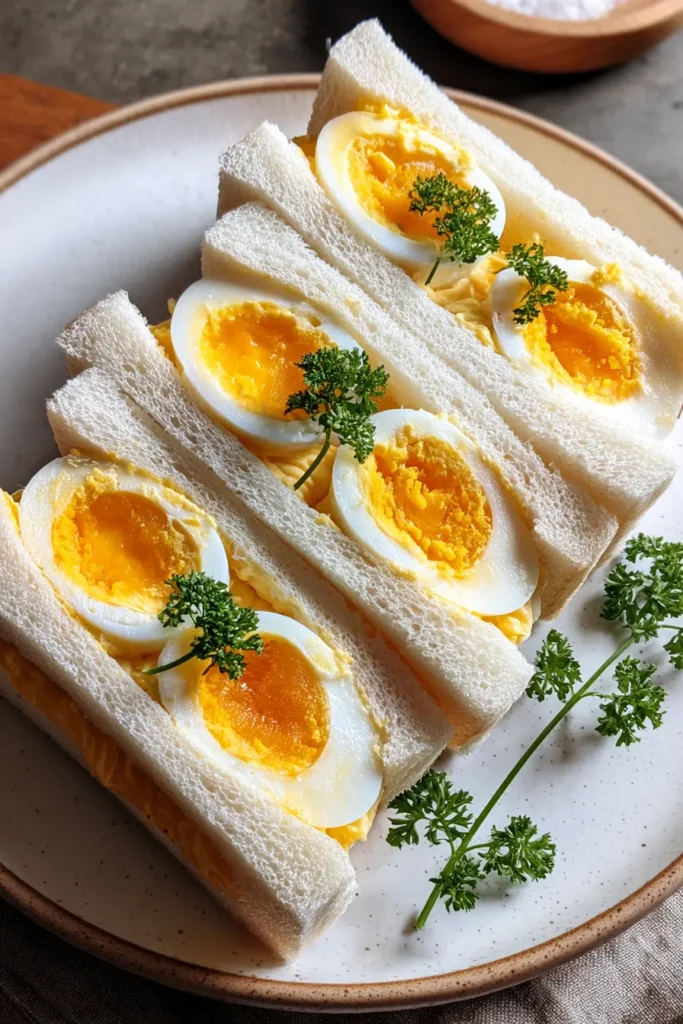

Japanese Egg Sandwich
Description
Creamy mashed eggs blended with rich mayonnaise and a hint of sweetness, all nestled between soft, fluffy bread. This sandwich is a delightful treat for any meal!
Ingredients
Instructions
-
Begin by boiling the eggs. Place the eggs in a saucepan and cover them with cold water by about an inch. Bring the water to a rolling boil.
-
Once boiling, cover the saucepan with a lid and remove it from the heat. Let the eggs sit in the hot water for about 10-12 minutes for a hard-boiled consistency.
-
Drain the hot water and cool the eggs under cold running water or let them sit in an ice water bath to stop the cooking process.
-
Once cooled, peel the eggs and place them in a bowl. Use a fork to mash the eggs until you achieve a coarse texture.
-
Add the mayonnaise, sugar, salt, and white pepper to the mashed eggs. Mix until well combined. Adjust seasoning to taste.
-
Spread a thin layer of butter on one side of each slice of bread.
-
Spread the egg mixture evenly over the buttered side of two slices of bread.
-
Top with the remaining slices of bread, buttered side facing the eggs to form a sandwich.
-
Trim the crusts off the sandwich for a neater look, if desired.
-
Cut the sandwiches in half, either diagonally or into neat rectangles, before serving.
-
If using, garnish with a sprinkle of parsley or chives for added color and flavor.
Note
- Japanese mayonnaise imparts a slightly sweet and tangy flavor due to its unique blend of ingredients.
- For extra creaminess, some variations include adding a small amount of milk or cream to the egg mixture.
- This sandwich is a popular choice in Japan for bento boxes and convenience store meals.
- Soft, fluffy bread is key to achieving the authentic taste and texture of a Japanese Egg Sandwich.

