

On a chilly winter morning, nothing warms you like a hearty bowl of Korean Winter Soup. This soul-nourishing dish, with its silky broth and tender beef brisket, feels like a warm hug in every spoonful. Rich and comforting, this recipe melds earthy radish, silky tofu, and delicate mushrooms into a symphony of flavors that dance on your palate. As an intermediate-level home cook, you’ll love how the process unfolds—20 minutes of prep, followed by a leisurely 2-hour simmer that builds layers of depth. Yielding six generous servings, each bowl clocks in at around 450 calories, making it the perfect lunch to fend off winter’s chill.
Beyond just a meal, Korean Winter Soup is an invitation to slow down and savor each step. The moment the soy sauce and gochujang melt into the steaming broth, you’ll know why this dish is a staple in Korean kitchens when temperatures plummet. Each serving feels like a mini celebration of the season, with vibrant green onions and fiery red chili adding pops of color and heat. This is ultimate comfort food—one that builds character and flavor overnight, if you have the patience to let it rest. Gather your ingredients, set aside an afternoon, and let the kettle whistle become the soundtrack to your coziest cooking adventure yet.
As a passionate home cook, I’ve found that each ingredient in this soup tells a story of tradition and taste. From the first simmer of aromatic broth to the final garnish of bright scallions, you’ll discover how simple components come together to create something truly extraordinary. Whether you’re cooking for family or friends, this recipe is designed to bring people around the table and foster conversation, laughter, and, of course, seconds.
KEY INGREDIENTS IN KOREAN WINTER SOUP
Before diving into the cooking, let’s explore the star players that make this soup so comforting. Each ingredient has a distinct role, contributing to the rich broth, mellow heat, or vibrant textures that define this classic winter dish.
- Beef brisket
Delivers succulent, beefy richness that forms the hearty backbone of the soup once it’s slowly simmered to tender perfection.
- Water
Serves as the base for the broth, gently extracting flavor from the meat and aromatics to create a clear, comforting liquid.
- Onion
Adds natural sweetness and depth to the broth, balancing the savory elements and enriching the overall flavor profile.
- Garlic
Infuses the soup with warm, pungent notes, creating a fragrant foundation that complements the other ingredients.
- Ginger
Brings a subtle, warming spice to the broth, cutting through richness and adding a refreshing undertone.
- Korean radish
Offers an earthy sweetness and crisp texture that softens with simmering, contributing both flavor and heartiness.
- Green onions
Provide a fresh, sharp bite when mixed into the broth and as a garnish, adding color and bright contrast.
- Soy sauce
Introduces a deep umami character and savory saltiness that balances the sweetness of root vegetables.
- Sesame oil
Lends a nutty aroma and richness, rounding out the broth with silky, toasty notes.
- Gochujang
Injects a gentle heat and subtle complexity, marrying sweet and spicy flavors typical of Korean cuisine.
- Salt and pepper
Allow you to adjust the seasoning, ensuring every spoonful hits just the right savory spot.
- Firm tofu
Adds silky texture and plant-based protein, soaking up the broth’s flavor while keeping each bite tender.
- Napa cabbage
Contributes a delicate crunch and mild sweetness, brightening the soup and adding nutritious greens.
- Enoki mushrooms
Offer a lightly chewy texture and earthy taste, perfectly complementing the softer tofu and cabbage.
- Cooked rice
Serves as the comforting foundation for serving, turning the soup into a more substantial meal.
- Sliced red chili and green onions
Function as garnish, adding vibrant color, extra spice, and a final aromatic flourish.
HOW TO MAKE KOREAN WINTER SOUP
Bringing this cozy winter soup to life is both simple and rewarding. Each step focuses on building flavor through careful simmering and seasoning. Follow these detailed instructions to achieve a deeply savory, soul-warming bowl.
1. In a large pot, combine the beef brisket, water, onion, garlic, and ginger. Bring to a rolling boil over high heat. This initial high temperature extracts maximum flavor from the meat and aromatics.
2. Once boiling, reduce the heat to low, cover the pot, and simmer gently for about 1½ to 2 hours until the beef is meltingly tender. This slow simmer is key for a clear, rich broth.
3. During cooking, skim off any foam or impurities that rise to the surface. Doing so ensures a clear broth with a clean taste.
4. Carefully remove the beef from the pot and shred it into bite-sized pieces. Set the tender meat aside while you work with the broth.
5. Strain the broth through a fine-mesh sieve, discarding the solids. Return the clear broth to the pot to maintain its pristine appearance and smooth flavor.
6. Add the sliced Korean radish to the simmering broth and cook for another 15 minutes until the radish pieces are tender but still hold their shape.
7. Stir in the green onions, soy sauce, sesame oil, and gochujang. Mix well until the chili paste is fully dissolved, lending a subtle heat and depth to the broth.
8. Season with salt and pepper to taste. Adjust slowly, tasting as you go, to avoid over-salting.
9. Gently add the tofu, napa cabbage, and enoki mushrooms to the pot. Let these delicate ingredients simmer for about 5 minutes until they are just cooked through.
10. Return the shredded beef to the pot and heat through for a final minute. Taste and adjust seasoning if needed, then ladle the hot soup into bowls. Serve with cooked rice on the side and garnish with sliced red chili and extra green onions.
SERVING SUGGESTIONS FOR KOREAN WINTER SOUP
Now that your Korean Winter Soup is bubbling away and your kitchen is filled with cozy warmth, let’s talk about the best ways to present this dish. Whether you’re hosting a casual lunch or enjoying a quiet meal at home, these serving ideas will elevate your soup’s appeal and make every bite memorable. Think about the balance of textures, complementary side dishes, and the visual pop of fresh garnishes to create a feast for both the eyes and taste buds.
- Serve the soup in deep bowls with a generous scoop of cooked rice at the bottom. The rice soaks up the flavorful broth, creating a satisfying base for each hearty spoonful.
- Offer a variety of banchan (Korean side dishes) such as kimchi, pickled radishes, or spicy cucumbers. These vibrant accompaniments cut through the richness and add exciting flavor contrasts.
- Drizzle a few drops of sesame oil and a sprinkle of toasted sesame seeds on top just before serving. This finishing touch adds an extra layer of nutty aroma and subtle crunch.
- For a family-style gathering, place a large serving pot in the center of the table, allowing guests to ladle their own portions. Provide small plates of sliced red chili, chopped green onions, and extra gochujang so everyone can customize their heat level.
HOW TO STORE KOREAN WINTER SOUP
After enjoying the first comforting bowls of your Korean Winter Soup, you’ll likely have leftovers that taste even better the next day. Proper storage is crucial to maintain that fresh, vibrant flavor and ensure safe reheating. The flavors in this soup can deepen over time, making day-old servings some of the most delicious. Follow these tips to keep your soup tasting its best whether you’re refrigerating for tomorrow’s lunch or freezing for a quick future meal.
- Store leftover soup in airtight containers once it’s cooled to room temperature. Refrigerate for up to 3 days, ensuring the broth remains clear and the textures of the vegetables stay nice.
- For longer storage, use freezer-safe containers or heavy-duty freezer bags. Portion the soup in individual servings and freeze flat. It will keep well for up to 2 months.
- When ready to enjoy, thaw frozen portions overnight in the refrigerator. Reheat gently in a saucepan over low heat to preserve the tenderness of tofu and cabbage.
- Keep any garnishes—such as sliced red chili and chopped green onions—separate in small containers. Add them fresh when serving to maintain crispness and vibrant color.
CONCLUSION
This Korean Winter Soup has been a joy to share, from its humble ingredients to its heartwarming final presentation. We’ve walked through every step, from selecting the best beef brisket and Korean radish to mastering the gentle simmer that transforms simple components into a rich, comforting broth. You now have the full recipe, serving ideas, storage tips, and all the encouragement you need to make this dish a staple in your cold-weather repertoire. Remember, this soup is perfect for a cozy lunch with friends or a quiet solo meal, and it gets even better after resting overnight.
Feel free to print and save this article for easy reference whenever winter rolls around—or whenever you need a bowl of warmth and comfort. Right below, you’ll find a FAQ section to address common questions and troubleshooting tips, so you can cook with confidence. If you try the recipe, please share your thoughts: Did the flavors meld perfectly? Did you personalize the heat level? Leave a comment, ask any questions, or drop feedback—I’m here to help and always excited to hear how your own Korean Winter Soup adventure turns out. Enjoy every sip!
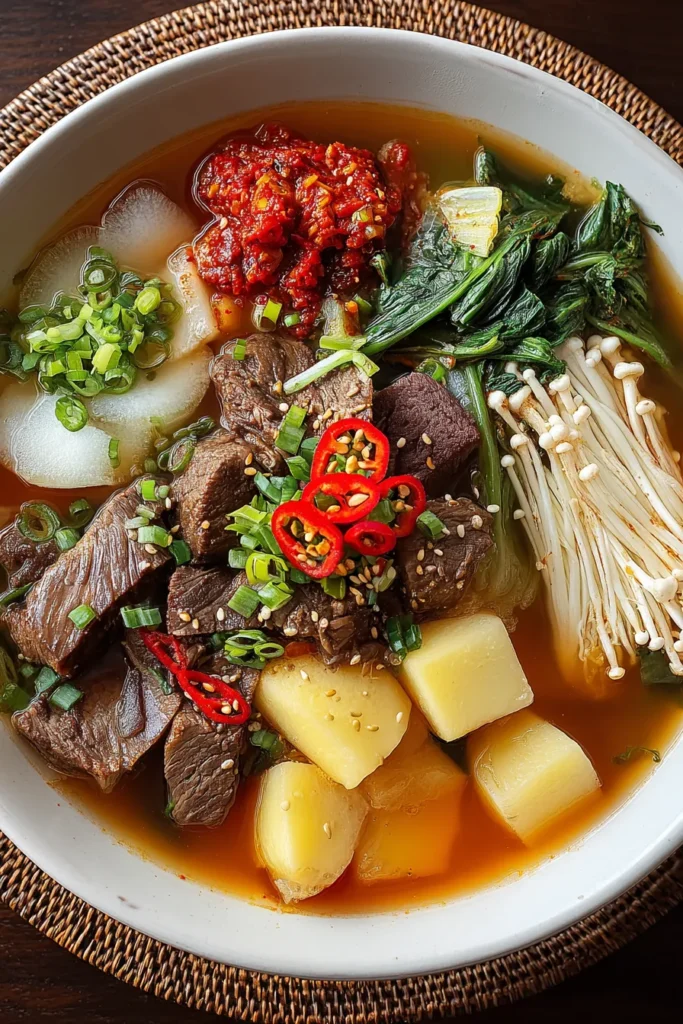

Korean Winter Soup
Description
Rich and comforting, this Korean Winter Soup melds tender beef brisket with the earthy flavors of radish, tofu, and mushrooms. Perfect for chilly days, it's a bowl of pure warmth!
Ingredients
Instructions
-
In a large pot, combine beef brisket, water, onion, garlic, and ginger. Bring to a boil over high heat. Once boiling, reduce the heat to low, cover, and simmer for about 1.5 to 2 hours until the beef is tender.
-
Skim off any foam that rises to the surface during cooking for a clear broth.
-
Remove the beef from the pot and shred it into bite-sized pieces. Set aside.
-
Strain the broth using a fine-mesh sieve, discarding the solids, and return the clear broth to the pot.
-
Add the sliced Korean radish and continue to simmer for another 15 minutes until the radish is tender.
-
Mix in the green onions, soy sauce, sesame oil, and gochujang. Stir well to combine.
-
Season with salt and pepper to taste.
-
Gently add the tofu, napa cabbage, and enoki mushrooms to the pot. Let them simmer until they are cooked through, about 5 minutes.
-
Return the shredded beef to the pot and heat through. Adjust seasoning, if necessary.
-
Serve the soup hot in bowls, with cooked rice on the side. Garnish with sliced red chili and green onions before serving.
Note
- Korean radish, also known as Mu, is a winter staple and adds depth to the soup.
- The soup gets better with time, and flavors deepen after a day.
- Gochujang adds a subtle heat and depth; adjust according to spice preference.
- Perfect for a cold day to warm you from the inside out.
- For a vegetarian version, omit beef and use vegetable broth.

