

Loaded Baked Potato Salad brings together the comfort of baked potatoes with the zing of a tangy dressing, making it the perfect side for summer barbecues or casual lunches. This creamy medley of tender potato cubes, crisp bacon bits, and melty cheddar is studded with green onions and parsley for freshness. Whether you’re planning a picnic or a simple weeknight dinner, this salad delivers big on flavor and texture—plus, it’s a breeze to make!
Key Ingredients
To create this Loaded Baked Potato Salad, you’ll need a handful of simple components that pack serious taste and texture:
- 1.5 pounds russet potatoes: The starchy base that soaks up the creamy dressing while holding its shape.
- 1 teaspoon salt: Seasons the cooking water and enhances the potatoes’ natural flavors.
- 4 slices bacon: Crispy, smoky bites that add savory crunch.
- 0.5 cup sour cream: Brings tangy creaminess to the dressing.
- 0.5 cup mayonnaise: Adds rich, smooth texture and body.
- 1 cup shredded cheddar cheese: Sharp, melty goodness for that classic “loaded” taste.
- 2 tablespoons chopped green onions: Fresh oniony crunch and a pop of green color.
- 1 tablespoon chopped fresh parsley: Bright herbaceous note to balance richness.
- 1 teaspoon black pepper: A subtle kick that rounds out the flavors.
- 0.5 teaspoon garlic powder: Adds earthy depth in every bite.
- 0.25 teaspoon paprika: A dash of warmth and color in the creamy dressing.
How To Make Loaded Baked Potato Salad
Let’s walk through how these simple steps transform humble spuds and classic toppings into a crowd-pleasing side dish. With just a bit of prep and a short chill time, you’ll have a salad bursting with flavor and ready to steal the show.
1. Wash and dice the russet potatoes into bite-sized cubes by rinsing them under cold water, patting dry, and cutting evenly so they cook uniformly.
2. Place potatoes and salt in a large pot, cover with cold water by a couple of inches to ensure even cooking and seasoning.
3. Bring to a rolling boil, then reduce heat and simmer until potatoes are fork-tender, about 10–12 minutes, taking care not to overcook.
4. Meanwhile, cook the bacon in a skillet over medium heat until crispy, then drain on paper towels and crumble into small pieces.
5. Drain the potatoes and let them cool slightly in the pot for about 5 minutes so steam escapes and cubes stay firm.
6. In a large bowl, combine sour cream, mayonnaise, black pepper, garlic powder, and paprika, whisking until smooth and well blended.
7. Add the warm potatoes, crumbled bacon, shredded cheddar, green onions, and parsley to the bowl, layering each ingredient for maximum flavor impact.
8. Gently toss until all ingredients are evenly coated in the dressing, using a soft spatula to keep potato cubes intact.
9. Cover and refrigerate for at least 1 hour to allow flavors to meld and chill the salad thoroughly.
10. Give the salad a final stir before serving and adjust seasoning if needed with a pinch more salt or pepper.
Serving Suggestions
This Loaded Baked Potato Salad shines on its own but also pairs beautifully with a variety of mains and presentations:
- Barbecue companion: Serve alongside grilled burgers, ribs, or hot dogs for a contrast of creamy and smoky flavors.
- Picnic star: Pack it chilled in a cooler and garnish with extra chopped parsley and green onions just before serving.
- Dinner side: Spoon it next to roasted chicken or steak to add a comforting, textured element.
- Sandwich topper: Pile a scoop on open-faced bread or sliders for a playful, hearty twist.
Tips For Perfect Loaded Baked Potato Salad
A few simple tricks will elevate your salad from good to unforgettable. Keep these pointers in mind as you prep and assemble:
- For best texture, cool the potatoes only slightly so they remain warm enough to absorb the dressing while staying firm.
- Leftover salad will keep in the fridge for up to 3 days if stored in an airtight container, making this perfect for meal prep.
- Feel free to swap cheddar for Monterey Jack or pepper jack to tweak the flavor profile to your taste.
- Add a squeeze of lemon juice or a dash of hot sauce right before chilling to brighten the final dish.
How To Store It
After enjoying this creamy, herb-speckled salad, proper storage will keep it tasting fresh and vibrant:
- Refrigerate in an airtight container: Seal the salad and store it in the coldest part of your fridge for up to 3 days.
- Cover with plastic wrap: Press the wrap directly onto the salad surface before sealing the container to prevent a skin from forming.
- Keep dressing on the side: If you plan to serve later, store extra dressing separately and toss just before plating for crispness.
- Avoid freezing: Freezing can break down potato texture and alter the creamy dressing, so stick to refrigeration.
Frequently Asked Questions
Here are answers to some common questions to help you nail this recipe every time:
- How can I prevent the potatoes from becoming mushy when mixing the salad?
To keep the potato cubes firm, start by cutting them into uniform, bite-sized pieces so they cook evenly. Simmer just until tender—about 10–12 minutes—then immediately drain and let them rest in the pot for 5 minutes so steam evaporates. Toss the slightly warm potatoes gently with the dressing; the heat helps absorb flavors without turning the salad to mush. Avoid over-stirring and be cautious when reheating, as repeated temperature changes can break down the potato structure.
- Can I make the potato salad ahead of time, and how long will it keep?
Yes, you can make this loaded baked potato salad up to a day in advance. After tossing, cover it tightly and refrigerate for at least 1 hour (or overnight) so the flavors meld. Store it in an airtight container and consume within 3 days. Before serving, give the salad a final stir and taste; you may need to adjust seasoning or add a splash of lemon juice or reserved dressing to revive the texture and brightness.
- What are suitable ingredient substitutions for dietary preferences or to change up the flavor?
Swap sour cream for plain Greek yogurt to add tang and protein, or use half mayo and half crème fraîche for a richer profile. Replace cheddar with Monterey Jack, pepper jack, or smoked gouda for different flavors. For a vegetarian version, omit bacon and stir in smoked paprika, chopped roasted red peppers, or store-bought vegetarian bacon bits. If you need dairy-free, use vegan mayonnaise and dairy-free sour cream alternatives, and choose a nondairy cheese substitute.
- How can I scale the recipe to serve a larger crowd?
To increase servings, multiply each ingredient by your desired factor (for example, for double the recipe, use 3 pounds of potatoes, 1 cup each of sour cream and mayonnaise, 2 cups cheddar, etc.). Ensure your pot and mixing bowl are large enough to accommodate the extra volume. Adjust seasoning proportionally but taste as you go—sometimes you may need slightly more salt or pepper to balance the increased quantity.
- What tips can enhance the salad’s flavor and presentation?
For extra zing, stir in a squeeze of fresh lemon juice or a dash of hot sauce just before chilling. Garnish with additional chopped parsley and green onions for color contrast, and sprinkle a bit of paprika on top. If you like more crunch, fold in a handful of diced celery or red bell peppers. Serving the salad on a bed of leafy greens or in a hollowed-out bread bowl can elevate the presentation for gatherings.
- Is there a recommended potato variety other than russet?
Russets are ideal for their starchy texture, which absorbs dressing well. If you prefer waxier potatoes that hold their shape better (like red or Yukon gold), you can substitute them; expect a slightly firmer bite and less creamy absorption. Adjust boiling time accordingly—waxy potatoes may cook a minute or two faster—then follow the same cooling and mixing steps.
- How should I reheat leftovers if I prefer a warm potato salad?
For warmed potato salad, gently heat it in a skillet over low to medium-low heat with a splash of milk or broth to prevent drying out. Stir occasionally until heated through, about 5–7 minutes. Alternatively, microwave individual portions in short 30-second bursts, stirring between intervals, to maintain the salad’s creaminess without turning it gummy.
What Makes This Special
This Loaded Baked Potato Salad is the ultimate mash-up of comfort and brightness—the creamy dressing clings to warm, herb-speckled potato cubes while smoky bacon and melty cheddar steal the show. Bursts of green onion and parsley lift the flavors, making each forkful satisfying yet light. It’s beginner-friendly, ready in just a few steps, and perfect for picnics, barbecues, or weeknight meals. Don’t forget to print or bookmark this article for easy reference, and let me know in the comments how your salad turns out or if you have any questions!
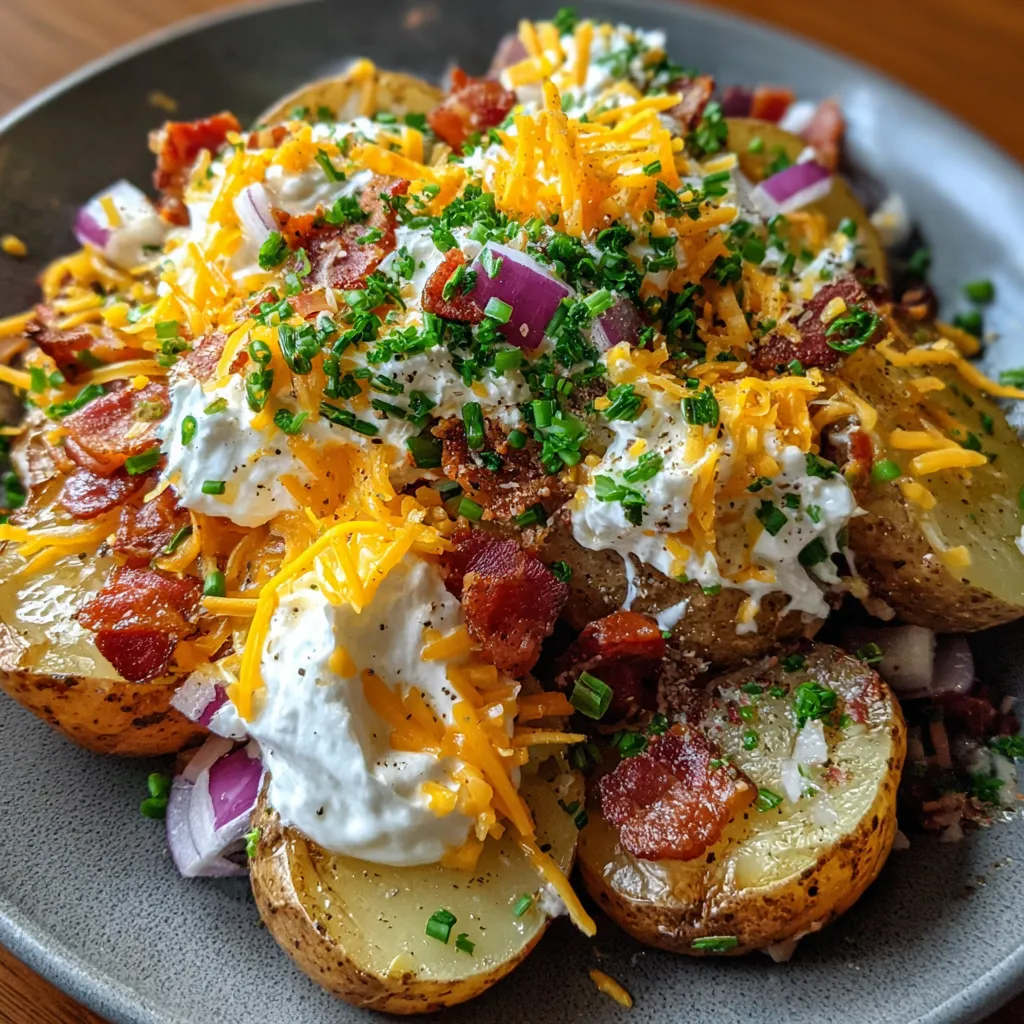

Loaded Baked Potato Salad
Description
Forkfuls of warm, herb-speckled potatoes meet creamy sour cream and mayo dressing, studded with smoky bacon, sharp cheddar, and a pop of green onion for crunch. Chill to meld flavors for a side that’s both comforting and bright.
Ingredients
Instructions
-
Wash and dice the russet potatoes into bite-sized cubes.
-
Place potatoes and salt in a large pot and cover with cold water.
-
Bring to a boil, reduce heat, and simmer until potatoes are tender, about 10–12 minutes.
-
Meanwhile, cook the bacon in a skillet over medium heat until crisp, then drain on paper towels and crumble.
-
Drain the potatoes and let them cool slightly in the pot for about 5 minutes.
-
In a large bowl, combine sour cream, mayonnaise, black pepper, garlic powder, and paprika.
-
Add the warm potatoes, crumbled bacon, shredded cheddar, green onions, and parsley to the bowl.
-
Gently toss until all ingredients are evenly coated in the dressing.
-
Cover and refrigerate for at least 1 hour to allow flavors to meld.
-
Give the salad a final stir before serving and adjust seasoning if needed.
Note
- For best texture, cool the potatoes only slightly so they absorb the dressing without turning mushy.
- Leftover salad will keep in the fridge for up to 3 days if stored in an airtight container.
- Feel free to swap cheddar for Monterey Jack or pepper jack for a different flavor profile.
- Add a squeeze of lemon juice or a dash of hot sauce for extra brightness.

