

When velvety lobster cream embraces al dente fettuccine, you get Lobster Bisque Pasta—a heavenly combination of sweet ocean notes and a whisper of brandy warmth. This dish features aromatic mirepoix and briny lobster chunks, coating every strand in a luxuriously smooth sauce that's like a seaside feast in every bite. Whether it's a cozy dinner or a special celebration, you’ll love how each forkful delivers indulgent, creamy goodness.
Key Ingredients
Let’s gather everything you need to bring this rich, ocean-inspired pasta to life:
- 12 oz fettuccine pasta: Al dente strands that serve as the perfect vessel for the lush lobster bisque sauce.
- 24 oz lobster tails: Sweet, tender meat that brings the signature seafood flavor to every bite.
- 2 tbsp butter: Adds a velvety richness and helps sauté the aromatics.
- 2 tbsp olive oil: Balances the butter’s richness and prevents the aromatics from sticking.
- 1 small onion, chopped: Contributes savory depth as part of the classic mirepoix base.
- 1 carrot, chopped: Offers a subtle sweetness and color to the sauce.
- 1 celery stalk, chopped: Adds earthy flavor and balances the sweetness of the carrot.
- 2 garlic cloves, minced: Infuses the bisque with aromatic warmth.
- 2 tbsp tomato paste: Builds body and adds a hint of acidity.
- 1 tbsp all-purpose flour: Forms a roux that thickens the bisque.
- 1/4 cup brandy or cognac: Brings a warm, boozy note and helps deglaze the pan.
- 1/2 cup dry white wine: Deepens the flavor and adds a bright acidity.
- 1 1/2 cups lobster stock: Intensifies the lobster flavor base.
- 1 cup heavy cream: Creates the velvety texture characteristic of a bisque.
- 1/2 tsp paprika: Provides a mild smokiness and a touch of color.
- Pinch of cayenne pepper: Adds a gentle heat to balance the richness.
- Salt to taste: Enhances and rounds all the flavors.
- Pepper to taste: Adds a final layer of subtle spice.
- 2 tbsp fresh parsley, chopped: Delivers a pop of fresh color and herbaceous brightness.
How To Make Lobster Bisque Pasta
Ready to dive into cooking your Lobster Bisque Pasta? These steps will guide you through building layers of flavor, from perfectly cooked noodles to a silky, lobster-infused sauce.
1. Bring a large pot of salted water to a rolling boil, then add the fettuccine and cook until al dente, about 10 minutes. Reserve ½ cup of the starchy pasta water, drain the rest, and set the noodles aside.
2. While the pasta cooks, split the lobster tails lengthwise with kitchen shears. Remove the meat in one piece, chop into bite-sized chunks, and keep the shells for stock or discard later.
3. Heat the butter and olive oil in a large skillet over medium heat. Add the chopped onion, carrot, and celery, cooking until the vegetables are softened and fragrant, about 5 minutes.
4. Stir in the minced garlic and tomato paste, cooking for 1 minute until the mixture is fragrant and the paste darkens slightly.
5. Sprinkle the flour over the vegetables and stir continuously for 1 minute to form a light roux that will thicken the bisque.
6. Carefully pour in the brandy or cognac and white wine to deglaze the pan, scraping up any browned bits from the bottom. Simmer until the liquid is reduced by half.
7. Add the lobster stock, heavy cream, paprika, and a pinch of cayenne pepper. Bring everything to a gentle simmer and cook until the sauce is slightly thickened, about 5 minutes.
8. Season the bisque with salt and pepper to taste, then stir in the chopped lobster meat just long enough to warm through without overcooking.
9. Transfer the fettuccine into the sauce, tossing gently and adding reserved pasta water a tablespoon at a time to achieve a silky consistency that clings to each strand.
10. Divide the pasta among serving plates and garnish with chopped fresh parsley before serving.
Serving Suggestions
This Lobster Bisque Pasta shines on its own, but a few thoughtful touches will elevate the whole meal:
- Serve on pre-warmed plates to keep the sauce silkier, and sprinkle extra fresh parsley for color.
- Pair with crisp garlic bread or toasted baguette slices to soak up every last drop of the creamy sauce.
- Offer a chilled glass of dry white wine—like Sauvignon Blanc or Chardonnay—to complement the bisque’s richness.
- Balance the indulgence with a light mixed green salad dressed in lemon vinaigrette for a bright, refreshing counterpoint.
Tips For Perfect Lobster Bisque Pasta
Creating restaurant-worthy Lobster Bisque Pasta at home is all about mastering balance and timing. Make sure your pasta is cooked just right, your roux is smooth before adding liquids, and you adjust the sauce consistency with reserved pasta water. Ready for insider hacks?
- You can substitute half-and-half for heavy cream to reduce richness.
- Reserving pasta water helps adjust sauce thickness and improve coating.
- If lobster stock is unavailable, use seafood or fish stock for a similar depth of flavor.
- Leftovers can be refrigerated in an airtight container and enjoyed within 2 days.
How To Store It
Got extras? Here’s how to keep your Lobster Bisque Pasta tasting just as good the next day:
- Refrigerate: Transfer the pasta and sauce into an airtight container and chill for up to 2 days.
- Freeze: If you need longer storage, separate the sauce and pasta, freeze the sauce in freezer-safe bags, and store pasta flat in another bag.
- Reheat on the stovetop: Warm the sauce gently over low heat, stirring in a splash of water or half-and-half to restore silkiness before adding the pasta.
- Avoid microwaving: Rapid heating can break the cream emulsion—stick to low, gentle reheating for the best texture.
Frequently Asked Questions
Got a few questions while planning your seafood feast? Let’s clear them up:
- How long does it take to prepare and cook the Lobster Bisque Pasta from start to finish?
From start to finish, plan on about 30–35 minutes. That includes 10 minutes to boil and cook the fettuccine until al dente, about 5–7 minutes to sauté the mirepoix and garlic with tomato paste, another 1–2 minutes for the roux with flour, 3–4 minutes to deglaze with brandy and white wine, 5 minutes to simmer the bisque until slightly thickened, and a final 2–3 minutes to warm the lobster meat and toss the pasta in the sauce.
- What’s the best method for preparing lobster tails and making lobster stock?
Split each lobster tail lengthwise with kitchen shears, remove the meat in one piece, and chop it into bite-sized chunks. Save the shells and simmer them in water with aromatics (onion, celery, carrot, bay leaf) for 20–30 minutes to create a rich lobster stock. Strain out solids before using. If you’re short on time, you can substitute high-quality seafood or fish stock.
- How can I adjust the sauce if it’s too thick or too thin?
Use the reserved ½ cup of pasta water to thin the sauce incrementally until it achieves a silky consistency—start with a tablespoon at a time. If the sauce is too thin, continue simmering for another minute or two to reduce and thicken. The starch in the pasta water helps the sauce cling to the noodles.
- What can I substitute for heavy cream to reduce the richness?
You can swap in an equal amount of half-and-half for cream to lighten the sauce slightly. The bisque will still be creamy but with fewer calories and less fat. You may need to simmer a bit longer to thicken, since half-and-half has lower fat content than heavy cream.
- How do I properly deglaze the pan to capture all the flavors?
After forming a roux with tomato paste and flour, pour in the brandy or cognac first, using a wooden spoon to scrape up all the browned bits stuck to the bottom of the skillet. Once those flavors are released, add the dry white wine and simmer until the liquid is reduced by half, ensuring a concentrated, deeply flavored base for the bisque.
- What’s the best way to season the bisque and lobster meat?
Season the simmering bisque with salt, freshly ground black pepper, ½ teaspoon paprika, and a pinch of cayenne pepper. After the base has thickened, stir in the chopped lobster meat just long enough to warm it through—about 1–2 minutes—to prevent overcooking. Taste and adjust salt and pepper before tossing with pasta.
- How should I store and reheat any leftovers?
Transfer leftover pasta and sauce into an airtight container and refrigerate for up to 2 days. To reheat, gently warm in a saucepan over low heat, adding a splash of water or half-and-half to loosen the sauce as needed. Stir frequently until heated through to maintain the sauce’s creamy texture.
What Makes This Special
This Lobster Bisque Pasta truly shines because it marries luxurious creaminess with the sweet, briny essence of lobster, all brightened by a whisper of brandy and fresh parsley. It works every time because the mirepoix, roux, and deglazing steps build layers of flavor that make the final sauce silky and deeply satisfying. Go ahead, print this article, save it for a celebration—or a self-care dinner night—and let me know how it turned out! Drop your comments, questions, or any hilarious kitchen mishaps below—I’m here to help you perfect every strand.
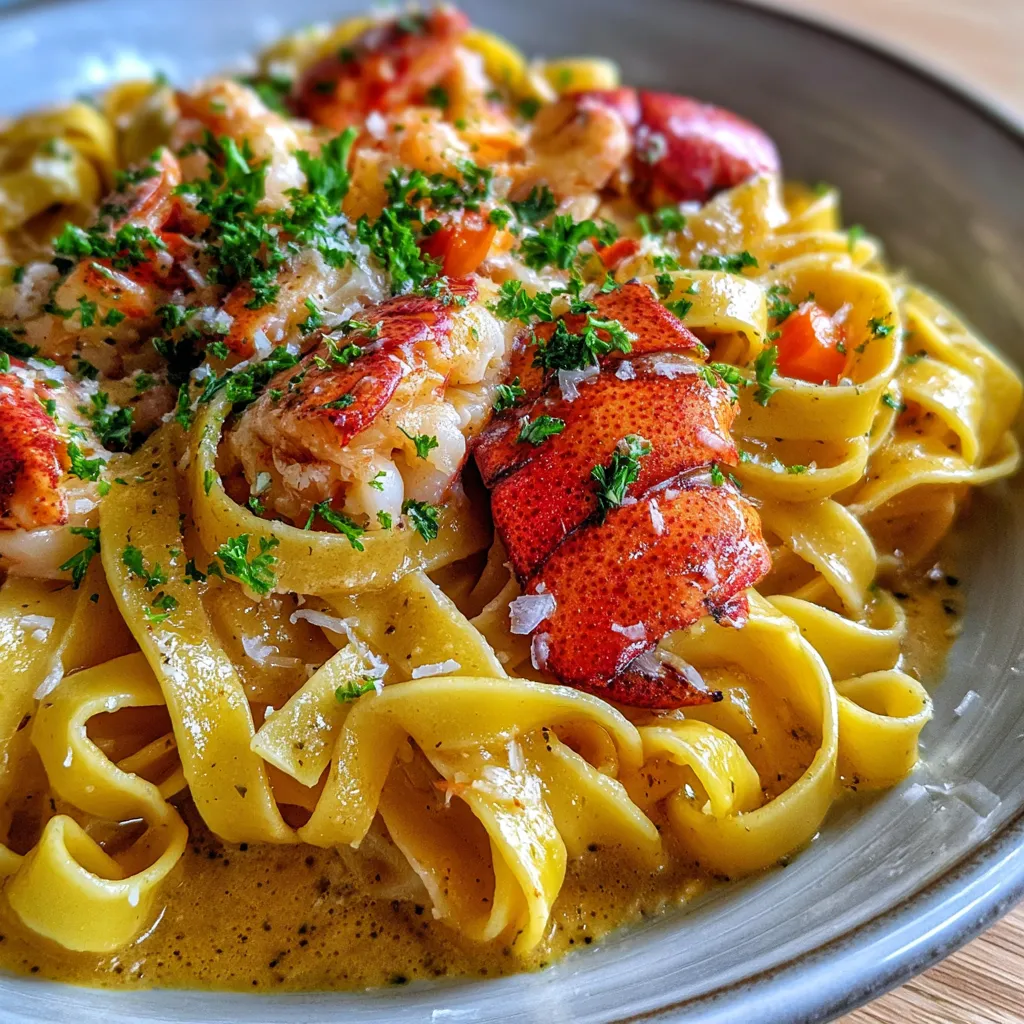

Lobster Bisque Pasta
Description
Velvety cream mingles with aromatic mirepoix and briny lobster chunks, coating fettuccine in a luxuriously smooth sauce, brightened by a splash of brandy and fresh parsley. A seaside feast in every bite.
Ingredients
Instructions
-
Bring a large pot of salted water to a boil and cook fettuccine until al dente, about 10 minutes; reserve 1/2 cup pasta water and drain the rest.
-
Meanwhile, split lobster tails lengthwise, remove meat, chop into bite-sized pieces, and set shells aside.
-
Heat butter and olive oil in a large skillet over medium heat; add onion, carrot, and celery and cook until softened, about 5 minutes.
-
Stir in garlic and tomato paste and cook for 1 minute until fragrant.
-
Sprinkle flour over vegetables, stir to combine, and cook for 1 minute to form a roux.
-
Carefully add brandy or cognac and white wine to deglaze the pan, scraping up any browned bits; simmer until reduced by half.
-
Add lobster stock, heavy cream, paprika, and cayenne pepper; bring to a gentle simmer and cook until slightly thickened, about 5 minutes.
-
Season bisque with salt and pepper to taste and stir in chopped lobster meat to warm through.
-
Toss cooked fettuccine into the sauce, adding reserved pasta water as needed to achieve a silky consistency.
-
Divide pasta among plates and garnish with fresh parsley before serving.
Note
- You can substitute half and half for heavy cream to reduce richness.
- Reserving pasta water helps adjust sauce thickness and improve coating.
- If lobster stock is unavailable, use seafood or fish stock for a similar depth of flavor.
- Leftovers can be refrigerated in an airtight container and enjoyed within 2 days.

