

There’s something truly enchanting about tearing into a loaf of Pesto Parmesan Sourdough fresh from the oven. As the crust crackles under your fingertips, you’ll discover a tender, chewy crumb studded with vibrant green swirls of pesto and pockets of nutty Parmesan cheese. This artisan bread brings together the tangy depth of a well-fed sourdough starter with the savory richness of freshly grated Parmesan. Whether you’re a seasoned home baker or someone dipping their toes into the world of sourdough starter for the first time, this intermediate-level recipe delivers clinking glasses of flavor with every slice.
Rich, savory, and tangy, this Pesto Parmesan Sourdough melds the nutty goodness of Parmesan with vibrant pesto, creating a delightful, textured loaf that’s perfect for lunch. You’ll spend about 30 minutes on hands-on prep, plus 4 to 6 hours for the first fermentation, another 1 to 2 hours proofing, and a relaxing 35 minutes in a preheated 450°F (232°C) oven. The total rest time between fermentation and proofing is 6 to 8 hours—ideal for fitting your baking into a busy day. When it’s all done, you’ll have a round loaf yielding 12 thick slices, each boasting approximately 320 calories. Keep this loaf at the ready for impromptu gatherings, midday feasts, or cozy solo nibbling alongside soups and salads.
KEY INGREDIENTS IN PESTO PARMESAN SOURDOUGH
To craft a loaf that sings with bright herbal notes and savory depth, you need high-quality, straightforward ingredients. Here’s what you’ll reach for each time you mix up this irresistible dough:
- All-purpose flour
Provides the structural backbone for your sourdough. The proteins in this flour develop into gluten strands during kneading, giving your loaf its chewy texture and impressive rise.
- Sourdough starter
This active, bubbly culture is the heart of any true artisan loaf. It ferments the dough naturally, lending a pleasant tang and complex flavor that commercial yeast simply can’t match.
- Water
Room-temperature water hydrates the flour and activates the starter. The right hydration level ensures your dough is easy to work and results in an open, airy crumb.
- Salt
A small amount of salt enhances all the flavors and helps regulate fermentation, so your dough never becomes too slack or overproofed.
- Pesto
Whether store-bought or homemade, pesto brings garlicky basil, rich olive oil, and pine nut goodness into the heart of your bread, creating beautiful swirls of color and flavor.
- Parmesan cheese
Aged and nutty, grated Parmesan disperses through the dough, melting into little savory pockets that add texture and umami with every chew.
- Olive oil
A quick swipe of extra virgin olive oil greases the mixing bowl and proofing basket, preventing sticking while adding a hint of fruity richness to the crust.
HOW TO MAKE PESTO PARMESAN SOURDOUGH
Get ready to roll up your sleeves and enjoy the therapeutic rhythm of sourdough baking. From that first mix to the final crackle of the crust, this recipe guides you step by step through creating a stunning loaf.
1. In a large mixing bowl, combine the sourdough starter and water. Stir gently until the starter is completely dissolved and you have a smooth, milky liquid. This ensures even fermentation and a consistent rise.
2. Gradually add the flour and salt to the starter mixture. Use a wooden spoon or your hand to mix just until a shaggy dough forms, with no large pockets of dry flour. This initial mix sets the stage for gluten development.
3. Once the ingredients are combined, transfer the dough to a lightly floured surface and knead for about 10 minutes. Work the dough with the heels of your hands, folding and pressing until it becomes smooth, elastic, and slightly tacky.
4. Place the kneaded dough into a bowl lightly greased with olive oil. Cover it with a damp cloth and let it ferment at room temperature for 4 to 6 hours, or until it has doubled in size and shows a network of bubbles.
5. After the bulk rise, gently deflate the dough by pressing down in the center. Using your fingers or a small spatula, add dollops of pesto and Parmesan cheese across the surface, aiming for even distribution.
6. Carefully fold the dough over itself multiple times to encase the pesto and cheese within the loaf. Be gentle to preserve the dough’s structure and avoid tearing.
7. Shape the dough into a round loaf by pulling the edges toward the center, creating surface tension on top. Place it seam-side down in a floured proofing basket, cover with a cloth, and proof for 1 to 2 hours until puffy.
8. About 30 minutes before baking, preheat your oven to 450°F (232°C). If you have a baking stone or Dutch oven, place it in the oven to ensure a hot, steamy environment for a perfect crust.
9. When the dough is ready, gently invert it onto a piece of parchment paper. Use a sharp knife or blade to score the top, creating vents for steam and allowing the loaf to expand.
10. If using a Dutch oven, carefully lift the loaf by the parchment paper and place it inside. If you’re on a baking stone, slide the loaf and parchment directly onto the hot surface.
11. Bake for 30 to 35 minutes, or until the crust turns a deep golden brown and a thermometer reads about 200°F (93°C) in the center. This ensures a fully cooked interior and a crisp exterior.
12. Remove the bread from the oven and let it cool on a wire rack for at least 30 minutes before slicing. This rest period allows the crumb to set and flavors to develop fully.
SERVING SUGGESTIONS FOR PESTO PARMESAN SOURDOUGH
After all that baking anticipation, it’s time to indulge in your masterpiece. This Pesto Parmesan Sourdough shines on its own or paired with complementary flavors. Whether you’re hosting a casual lunch or simply treating yourself, these ideas will make your loaf the star of the table.
- Serve thick, warm slices with a drizzle of herbed olive oil and a sprinkle of flaky sea salt for an elevated, yet simple appetizer that lets the pesto and cheese take center stage.
- Turn leftover slices into indulgent panini by layering with fresh tomato, mozzarella, and a swipe of additional pesto. Grill until the cheese melts into gooey perfection and the crust is golden and crisp.
- Pair generous wedges of bread with a bowl of creamy tomato soup—the tangy tomato notes mirror the loaf’s sourdough depth, while the cheese pockets add richness and texture.
- Transform the slices into rustic bruschetta by toasting them, rubbing with garlic, and topping with diced tomatoes, basil chiffonade, and a light drizzle of balsamic glaze for a festive party snack.
HOW TO STORE PESTO PARMESAN SOURDOUGH
Proper storage ensures each slice of your homemade loaf stays flavorful and retains its ideal texture, whether you enjoy it fresh today or days from now. With a handful of simple techniques, you can prevent staleness and maintain that delightful chew and crispness.
- Store at room temperature in a bread box or wrapped in a clean kitchen towel. This breathable environment keeps the crust crisp while locking in moisture for the soft interior. Avoid plastic, which can lead to a limp crust.
- For longer freshness, slip the cooled loaf into an airtight container or a tightly sealed bread bag. This slows down staling by limiting air exposure, so each slice remains tender.
- To freeze, cut the loaf into individual slices and arrange them in a single layer on a baking sheet. Once frozen, transfer the slices into a resealable freezer bag with parchment between layers. This lets you pull out just what you need.
- When you’re ready to eat frozen slices, refresh them in a preheated 350°F (175°C) oven for 5 to 10 minutes. This revives the crust and warms the crumb, almost as if freshly baked.
CONCLUSION
Baking Pesto Parmesan Sourdough is more than just following a recipe—it’s an immersive sensory journey that rewards patience and craftsmanship. From whisking your active sourdough starter with room-temperature water to kneading the dough into a supple, elastic ball, each step builds flavor and character. The optional swirl of bright green pesto and pockets of aged Parmesan elevate this loaf into a standout centerpiece for any lunch spread or casual dinner. As you wait through the 4 to 6 hours of fermentation and 1 to 2 hours of proofing, you’ll witness a humble mixture transform into a lofty, bubbly dough ready for the oven at 450°F (232°C). After a 30- to 35-minute bake and a cooling rest on a wire rack, your kitchen will be filled with a golden-brown crust that crackles dramatically as you slice through it. Yielding 12 generous slices at about 320 calories each, this intermediate-level artisan bread is perfect for sharing or savoring solo.
Feel free to print and save this article for your next baking adventure—keep it in your kitchen binder so you can revisit the steps and tips whenever a loaf of homemade bread calls your name. Below, you’ll find a handy FAQ section to troubleshoot common sourdough starter questions, proofing tips, and more. If you try this Pesto Parmesan Sourdough, please drop a comment with your own flavor variations, ask any baking questions, or share photos of your beautiful results. Your feedback helps fellow home bakers tackle this recipe with confidence and creativity!
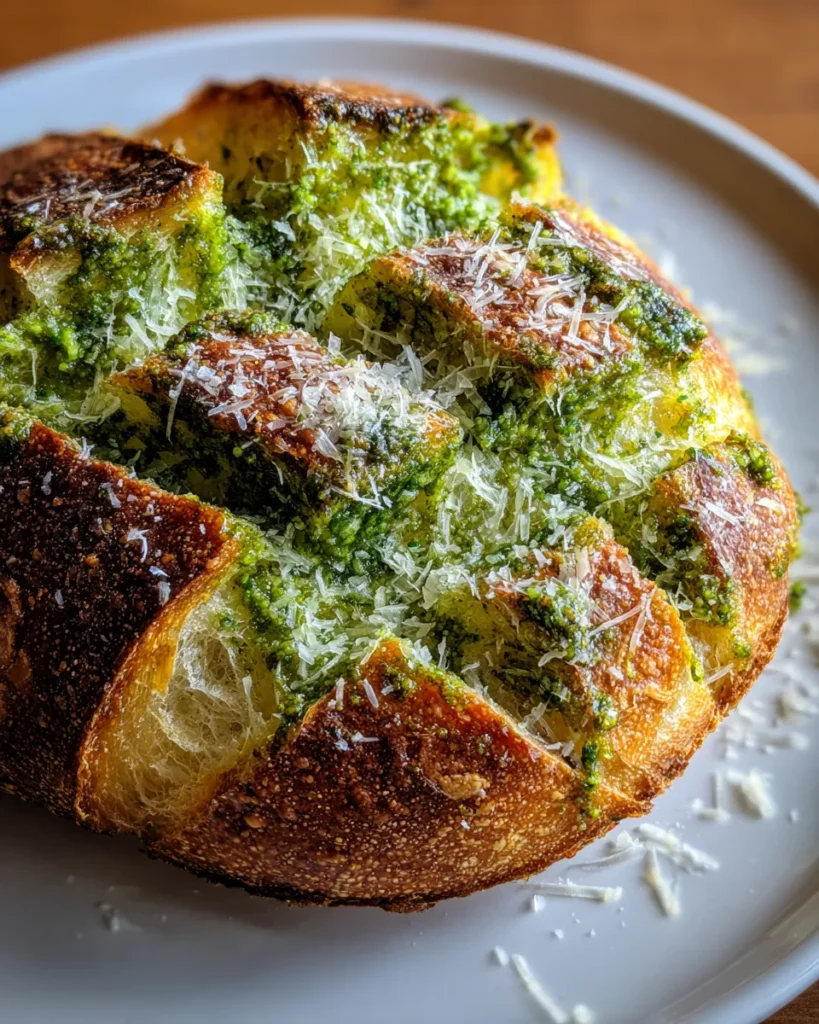

Pesto Parmesan Sourdough
Description
Rich, savory, and tangy, this Pesto Parmesan Sourdough melds the nutty goodness of Parmesan with vibrant pesto, creating a delightful, textured loaf.
Ingredients
Instructions
-
In a large mixing bowl, combine the sourdough starter and water. Mix until the starter is dissolved.
-
Gradually add the flour and salt to the starter mixture, stirring with a wooden spoon or your hand until a shaggy dough forms.
-
Once combined, knead the dough on a lightly floured surface for approximately 10 minutes, until smooth and elastic.
-
Place the kneaded dough in a greased bowl, cover it with a damp cloth, and let it ferment at room temperature for 4 to 6 hours, or until it has doubled in size.
-
After the dough has risen, gently deflate it by pushing down in the center. Add the pesto and Parmesan cheese in dollops across the dough’s surface.
-
Fold the dough over itself multiple times to encase the pesto and cheese. Be gentle to avoid tearing the dough too much.
-
Shape the dough into a round loaf and place it seam-side down in a floured proofing basket. Cover it with a cloth and let it rise for another 1 to 2 hours.
-
Preheat your oven to 450°F (232°C) about 30 minutes before baking. If you have a baking stone or Dutch oven, place it in the oven to preheat as well.
-
Once the dough is ready, carefully invert it onto a piece of parchment paper. Score the top with a sharp knife or blade for steam ventilation.
-
If using a Dutch oven, carefully lift the loaf using the parchment paper and place it inside the hot pot. If using a baking stone, slide the loaf directly onto it.
-
Bake for 30-35 minutes, or until the crust is golden brown and the internal temperature of the bread reaches about 200°F (93°C).
-
Remove the bread from the oven and let it cool on a wire rack for at least 30 minutes before slicing.
Note
- Using homemade pesto can enhance the flavor of the bread with fresh ingredients.
- This bread pairs wonderfully with a variety of soups and salads.
- Leftover bread can be stored in an airtight container for up to 3 days or frozen for longer storage.
- Experiment with different cheeses or add-ins like sun-dried tomatoes for a unique twist.

