

Every mouthful of a Portuguese Custard Tart feels like a warm hug from the heart of Lisbon itself. The delicate, flaky crust shatters with the gentlest bite, releasing a whisper of butter that harmonizes perfectly with the silky custard nestled inside. Each tart is a miniature treasure chest of contrasting textures: a golden shell that gives way to a luxuriously smooth filling, kissed by hints of vanilla, a touch of cinnamon, and the bright spark of lemon zest. When you first sink your teeth into one of these pastries, it’s hard not to pause and let the flavors swirl around on your tongue, reminding you why this timeless classic has captured hearts around the world.
I still remember my first adventure baking these tarts at home, complete with flour-dusted countertops and a slightly haphazard rolling pin dance. There’s something wonderfully therapeutic about coaxing the dough into thin, even circles and carefully pressing it into tiny molds, knowing that a delectable reward awaits. While the custard simmers gently on the stove, the kitchen fills with inviting warmth, and by the time they’ve baked to a perfect golden-brown, you’ll feel an overwhelming sense of joy and accomplishment. Whether you’re whipping these up for a festive gathering or simply treating yourself to an afternoon delight, Portuguese Custard Tarts offer a playful blend of tradition, texture, and taste that never fails to bring a smile to your face.
KEY INGREDIENTS IN PORTUGUESE CUSTARD TARTS
Every extraordinary tart starts with quality ingredients, each playing a vital role in delivering that iconic balance of flaky shell and creamy filling. Sourcing the freshest items ensures your custard tarts come out of the oven tasting authentically delicious.
- Whole milk
Provides the creamy foundation for the custard, lending a rich mouthfeel and slight sweetness that helps the filling set smoothly.
- Heavy cream
Boosts the creaminess and adds a luxurious texture to the custard, ensuring it remains silky without becoming too firm.
- Granulated sugar
Sweetens both the pastry and the custard, balancing the richness of the dairy and enhancing the natural flavors.
- Egg yolks
Contribute to the custard’s velvety texture and golden hue, while also acting as a natural thickener.
- Whole egg
Adds structure and stability to the custard, helping it bind together without curdling.
- Cornstarch
Ensures a smooth consistency by preventing lumps in the custard and helping it set properly.
- Vanilla extract
Infuses the custard with warm, fragrant notes that harmonize beautifully with the other flavors.
- Ground cinnamon
Offers a subtle, spicy warmth that complements the sweetness and deepens the overall flavor profile.
- Lemon zest
Introduces a bright, citrusy lift that cuts through the richness and adds a refreshing twist.
- All-purpose flour
Forms the backbone of the pastry, providing the right balance of strength and tenderness for a flaky crust.
- Unsalted butter
Cold and diced, it creates flaky layers in the dough and delivers a pure, buttery flavor.
- Salt
Enhances all the flavors in both the crust and the filling, ensuring nothing tastes flat.
- Cold water
Brings the dough together without warming the butter, preserving those crucial flaky layers.
HOW TO MAKE PORTUGUESE CUSTARD TARTS
Crafting these tarts involves a two-part dance between preparing a flawless pastry and stirring up a velvety custard filling. You’ll want to be mindful of temperature and timing to achieve that signature contrast between crisp shell and creamy center. Below is a detailed, step-by-step guide to bring this Portuguese classic into your kitchen.
1. In a mixing bowl, combine the all-purpose flour and salt. Add the cold, diced butter and, using a fork or pastry cutter, work it into the flour until the mixture looks like coarse crumbs with visible flecks of butter. This ensures your pastry will be delightfully flaky.
2. Gradually add the cold water to the flour-butter mixture, stirring gently until the dough just comes together. Avoid overmixing to keep the butter from melting. Shape the dough into a disk, wrap it in plastic, and refrigerate for at least 30 minutes to firm up.
3. While the dough chills, preheat your oven to 475°F (245°C). A hot oven is key to achieving those perfectly puffed-up, golden edges.
4. In a medium saucepan, combine the whole milk, heavy cream, and half of the sugar over medium heat. Stir occasionally until the sugar completely dissolves. Remove from heat as soon as the mixture begins to steam—no need to let it boil.
5. In a separate bowl, whisk together the egg yolks, whole egg, cornstarch, the remaining sugar, vanilla extract, ground cinnamon, and lemon zest until you have a smooth, homogeneous mixture with no lumps.
6. Gradually pour the warm milk-cream mixture into the egg mixture, whisking constantly to temper the eggs and prevent scrambling. This gentle approach yields a silky custard.
7. Pour the combined mixture back into the saucepan and return to medium heat. Stir continuously with a whisk or spatula for about 5–7 minutes, until the custard thickens enough to coat the back of a spoon. Remove from heat and allow it to cool slightly before filling.
8. On a lightly floured surface, roll out the chilled dough to about 1/8-inch thickness. Using a round cutter or a glass (about 3 inches in diameter), cut out circles that will snugly line your tart pans or muffin tin.
9. Gently press each dough circle into the greased tart pans or muffin tin cups, ensuring the sides and bottom are fully covered, with no thin spots.
10. Fill each pastry shell with the custard, stopping when they’re roughly 3/4 full to leave room for the custard to puff up while baking.
11. Bake in the preheated oven for 15–20 minutes, or until the custard has puffed up and the tops are beautifully golden brown with tiny, caramelized speckles.
12. Remove the tarts from the oven and let them rest in the pans for a few minutes. Carefully transfer them to a wire rack to cool completely, allowing the custard to set fully.
SERVING SUGGESTIONS FOR PORTUGUESE CUSTARD TARTS
There’s something truly special about presenting these tarts just the right way—each thoughtful touch can elevate a simple pastry into an unforgettable treat. Whether you’re hosting a weekend brunch, sharing a sweet moment with friends, or simply savoring a quiet afternoon break, proper serving can transform each bite into a cherished memory. Consider the ambiance of your presentation: a rustic wooden board brings out the tarts’ warm tones, while delicate porcelain plates add an air of elegance. Soft, natural lighting accentuates the golden hues on top, and a gentle dusting of powdered sugar or extra cinnamon will highlight the creamy filling peeking through.
Pairing your tarts with complementary beverages also enhances the experience: a robust espresso balances the custard’s sweetness, whereas a lightly steeped tea brings subtle floral notes. For a fancy twist, serve a dollop of lightly whipped cream tinted with lemon zest alongside each tart. Fresh berries or a small cluster of currants on the side provide a pop of color and tartness, creating a dynamic flavor duet. No matter how you choose to serve them, these suggestions will ensure your Portuguese Custard Tarts shine at the center of any spread, delighting both your eyes and your taste buds.
- Arrange the tarts on a wooden serving board with scattered lemon slices and a light dusting of powdered sugar for rustic charm.
- Present each tart with a small cup of strong coffee or espresso, letting the bitterness cut through the sweet custard.
- Add a side of fresh berries or a berry compote in miniature bowls to introduce a bright, fruity contrast.
- Place tarts on delicate porcelain plates with a mint sprig garnish, creating an elegant, café-style presentation.
HOW TO STORE PORTUGUESE CUSTARD TARTS
Ensuring your custard tarts maintain their fresh-from-the-oven quality requires a bit of care when it comes to storage. The goal is to keep the pastry crisp while preserving the creamy custard’s texture and flavor balance. Before stashing them away, let your tarts cool completely on a wire rack; this prevents condensation that could make the crust soggy. Once cooled, consider the time frame for enjoying them—these tarts are at their best within the first 24 hours but can still be delicious for a couple of days if stored correctly.
For short-term storage, you’ll want to shield each tart from moisture and other refrigerator odors. If you’re planning to keep them for up to two days, arrange them in a single layer inside an airtight container, separating layers with parchment paper to avoid sticking. If you anticipate needing them beyond that window, freezing is a reliable option: wrap each tart individually in plastic wrap, then slide them into a freezer-safe bag. When you’re ready to indulge again, simply thaw at room temperature and refresh in a warm oven for a few minutes. With these methods, you can ensure your Portuguese Custard Tarts stay as delightful as the moment they came out of the oven.
- Refrigeration: Store cooled tarts in an airtight container for up to 2 days. The cool environment preserves the custard’s consistency while preventing odors from sneaking in.
- Layering with parchment: Place parchment paper between each tart to avoid moisture buildup and sticking, maintaining the integrity of the flaky crust.
- Freezing individual tarts: Wrap each tart tightly in plastic wrap, then place them in a freezer bag. Freeze for up to 1 month and thaw at room temperature before serving.
- Oven refresh: To revive a slightly softened crust, pop tarts into a preheated 350°F (175°C) oven for 3–5 minutes after refrigeration or thawing.
CONCLUSION
Bringing together a flaky, buttery crust and a luxuriously creamy filling, Portuguese Custard Tarts stand out as a truly magical dessert experience that’s surprisingly accessible for home cooks with an intermediate skill level. From the moment you combine the first handful of flour and butter to the glorious second when those golden tarts emerge from the oven, each step invites you to slow down and savor the process. These tarts aren’t just about satisfying a sweet craving; they tell a story of tradition, family kitchens, and joyful discoveries. Whether you’re a seasoned baker or someone who’s curious to stretch their culinary wings, this recipe offers the perfect blend of technique and soul, rewarding you with tarts that melt in your mouth and warm your heart.
Feel free to print this article and save it in your personal recipe collection, so you can revisit these instructions whenever the craving strikes. Below, you’ll find a handy FAQ section to address any common questions about ingredient swaps, troubleshooting custard consistency, and more. If you try making these tarts, I’d love to hear how it goes—please leave a comment, share your variations, or ask any questions you have along the way. Your feedback and stories not only help fellow home cooks but also make this shared kitchen adventure all the more delightful. Happy baking!
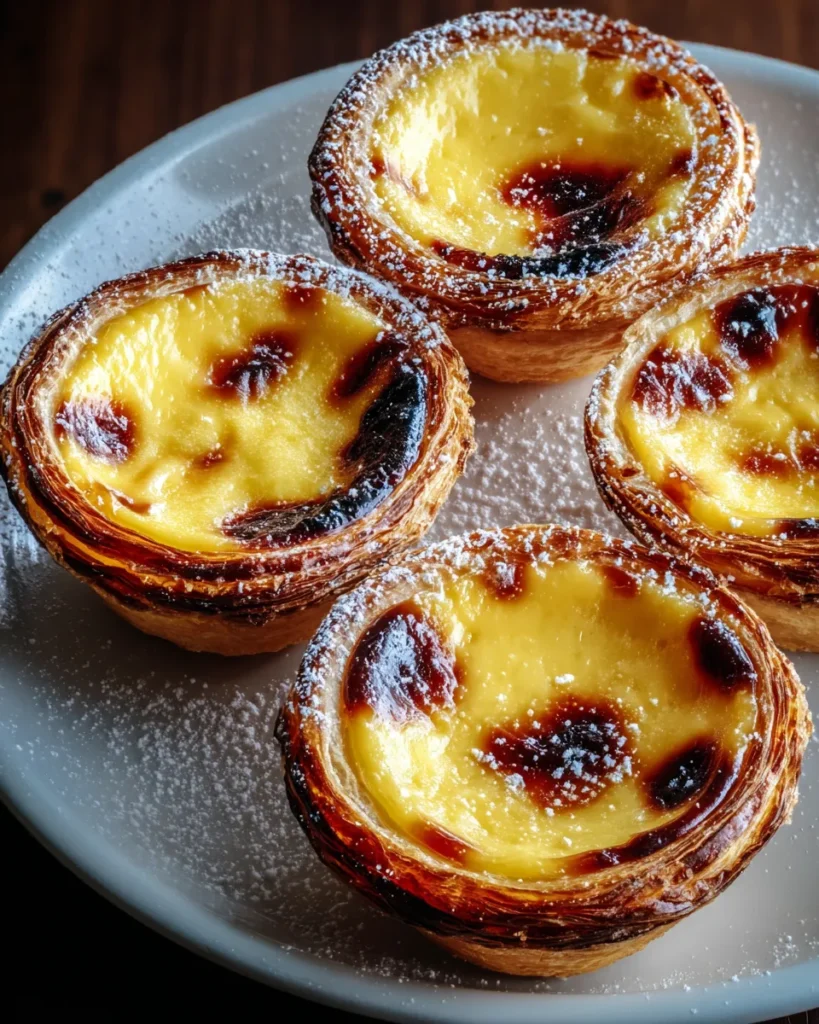

Portuguese Custard Tarts
Description
These creamy custard tarts feature a flaky, golden crust and a smooth vanilla filling, delivering a delightful balance of sweet and zesty flavors. Perfect for any occasion!
Ingredients
Instructions
-
Begin by making the pastry. In a mixing bowl, combine the flour and salt. Add the cold, diced butter and use a fork or pastry cutter to mix until the mixture resembles coarse crumbs.
-
Gradually add the cold water, mixing until the dough comes together. Wrap the dough in plastic wrap and refrigerate for at least 30 minutes.
-
Preheat your oven to 475°F (245°C) while the dough is chilling.
-
In a saucepan, combine the milk, heavy cream, and half of the sugar over medium heat. Stir until the sugar dissolves, then remove from heat.
-
In a separate bowl, whisk together the egg yolks, whole egg, cornstarch, remaining sugar, vanilla extract, cinnamon, and lemon zest until smooth.
-
Gradually pour the warm milk mixture into the egg mixture, whisking constantly to ensure the eggs don’t scramble.
-
Pour the mixture back into the saucepan and cook over medium heat, stirring continuously until it thickens (around 5-7 minutes). Once thickened, remove from heat and let it cool slightly.
-
Roll out the chilled dough on a lightly floured surface until about 1/8-inch thick. Cut out circles big enough to line your tart pans or muffin tin (approximately 3 inches in diameter).
-
Press the dough circles into the greased tart pans or muffin tin, ensuring the sides are well covered.
-
Pour the custard filling into each pastry shell, filling them about 3/4 full.
-
Bake in the preheated oven for about 15-20 minutes, or until the custard is puffed and the tops are golden brown.
-
Remove from the oven and let the tarts cool for a few minutes before transferring them to a wire rack to cool completely.
Note
- The secret to a good custard filling is to whisk continuously when adding the warm milk to prevent curdling.
- These tarts are best enjoyed fresh, but they can be stored in the refrigerator for a couple of days.
- You can sprinkle a little powdered sugar or extra cinnamon on top before serving for added flavor and presentation.
- Traditionally, these tarts are best served at room temperature for the perfect texture.

