

Slow Cooker Korean Beef Noodles bring cozy comfort to any dinner table, marrying fall-apart beef slow-cooked with gochujang and soy, served over tender rice noodles for a hands-off feast. Tender chunks of beef bathed in a sweet-spicy Korean sauce tumble over slippery rice noodles, garnished with crisp green onions and sesame seeds for a delightful crunch. Whether you’re craving a cozy weeknight meal or hosting friends, this easy dinner delivers deep savory depth and gentle heat without standing over the stove. Grab your slow cooker and let’s dive in!
Key Ingredients
Here’s what you’ll need to build those layers of rich, sweet-spicy flavor in this Slow Cooker Korean Beef Noodles recipe.
- 2 pound beef chuck roast: Rich, marbled protein that becomes melt-in-your-mouth tender during slow cooking.
- 1 cup beef broth: Liquid base that infuses the meat with savory depth as it simmers.
- 1/2 cup soy sauce: Adds salty umami richness and balances the sweetness of the brown sugar.
- 1/4 cup brown sugar: Brings caramelized sweetness to counter the heat of the gochujang.
- 2 tablespoon gochujang: Fermented Korean chili paste providing signature sweet-spicy punch.
- 1 tablespoon sesame oil: Nutty aroma and flavor that rounds out the sauce.
- 1 tablespoon rice vinegar: A touch of acidity to brighten and balance the rich beef.
- 4 clove garlic minced: Aromatic foundation that deepens the savory profile.
- 1 teaspoon grated ginger: Fresh zing that complements the gochujang’s heat.
- 1 medium onion sliced: Adds sweet, mellow layers as it cooks down.
- 2 medium carrot sliced: Provides natural sweetness and a pop of color.
- 8 ounce mushroom sliced: Earthy bite that soaks up the Korean sauce.
- 3 tablespoon cornstarch: Thickening agent to give the sauce a glossy finish.
- 3 tablespoon water: Combined with cornstarch to create a slurry for perfect sauce consistency.
- 8 ounce rice noodles: Tender base that catches every drop of sauce.
- 2 stalk green onion sliced: Fresh garnish that adds crisp bite and color.
- 1 tablespoon sesame seeds: Final sprinkling of nutty texture and visual flair.
How To Make Slow Cooker Korean Beef Noodles
Slow cooking allows flavors to deepen and beef to become incredibly tender, making assembly a breeze. In just a few simple steps—layering sauce ingredients, shredding the beef, thickening the sauce with a cornstarch slurry, and cooking rice noodles—you’ll have a bowlful of deliciousness without fuss. Follow these instructions to create that perfect balance of sweet, spicy, and savory in every bite.
1. Place beef chuck roast in the slow cooker and add beef broth, soy sauce, brown sugar, gochujang, sesame oil, rice vinegar, garlic, ginger, onion, carrot, and mushroom.
2. Stir ingredients gently to coat the beef evenly in the sauce. Use a spatula or tongs to ensure everything is well coated for maximum flavor absorption.
3. Cover and cook on low for 6 to 8 hours or on high for 3 to 4 hours until beef is tender. Let the slow cooker do its magic so the roast falls apart with minimal effort.
4. Remove beef and shred with two forks, then return shredded beef to the slow cooker. This classic pulled beef technique allows the meat to soak up every bit of sauce.
5. Whisk together cornstarch and water to make a slurry and stir into the slow cooker to thicken the sauce. Cook on high for 10 minutes so the sauce transforms into a luscious, glossy coating.
6. Meanwhile cook rice noodles according to package instructions, then drain and rinse under cold water. This shock step stops cooking and prevents sogginess while you finish the beef.
7. Divide noodles among bowls and top with shredded Korean beef, sauce, green onion, and sesame seeds. Finish with a sprinkle of sesame seeds and sliced green onions for extra crunch and color.
Serving Suggestions
This Slow Cooker Korean Beef Noodles recipe shines on its own but you can elevate the meal with a few creative accompaniments. Whether you’re aiming for extra crunch, contrast in temperature, or a touch of freshness, these serving ideas will complement the rich sweet-spicy beef and silky noodles perfectly.
- Serve with kimchi for a tangy, fermented kick that cuts through the richness and adds vibrant color.
- Add pickled cucumbers on the side to bring a refreshing crunch and balance the spicy-sweet sauce.
- Garnish with fresh cilantro and lime wedges for a citrusy lift that brightens each bite.
- Pair with steamed bok choy drizzled in sesame oil for extra greens and a complementary texture.
Tips For Perfect Slow Cooker Korean Beef Noodles
With a bit of extra care you can dial in the texture, flavor, and even add more veggies or protein swaps. These friendly tips will help you customize the recipe while keeping that sweet-spicy Korean soul intact.
- Adjust gochujang for spice level or substitute with sriracha for a milder heat
- For extra vegetables add bell pepper or baby spinach in the last hour of cooking
- Leftovers can be stored in an airtight container in the refrigerator for up to 3 days
- Swap beef for thinly sliced pork or chicken thighs for a different protein variation
How To Store It
Proper storage keeps your Slow Cooker Korean Beef Noodles tasting fresh and ensures you can enjoy leftovers with minimal fuss. Follow these methods to maintain the best texture and flavor for reheating later.
- Refrigerate in airtight containers: Let the beef and sauce cool, then transfer to an airtight container for up to 3 days.
- Store noodles separately: Keep the rice noodles in their own container to prevent them from getting soggy.
- Freeze for longer storage: Freeze the beef and sauce in freezer-safe bags for up to 3 months; thaw overnight in the fridge.
- Reheat gently: Warm the sauce on the stovetop over medium-low heat, adding a splash of beef broth if it’s too thick; heat noodles by briefly soaking in hot water.
Frequently Asked Questions
Here are some quick answers to common questions about Slow Cooker Korean Beef Noodles—because no one likes to be left hanging in the kitchen!
- Can I use a different cut of beef instead of chuck roast?
Yes. Chuck roast is recommended because its marbling breaks down during slow cooking, yielding tender, flavorful beef. You can substitute brisket, short ribs, or beef stew meat. If you choose a leaner cut like sirloin or round roast, reduce the cooking time slightly and add an extra ½ cup of beef broth to prevent the meat from drying out.
- How do I adjust the spice level to suit my taste?
Gochujang provides both heat and depth of flavor. For a milder dish, start with 1 tablespoon of gochujang and replace the remaining amount with sriracha or omit it entirely, then taste halfway through cooking and add more if desired. For extra heat, stir in additional gochujang or a pinch of Korean red pepper flakes (gochugaru) before serving.
- My sauce turned out too thin. What can I do to thicken it?
The recipe’s cornstarch slurry (3 tablespoons cornstarch mixed with 3 tablespoons water) should thicken the sauce during the final 10 minutes on high. If the sauce remains thin, whisk together another 1 tablespoon cornstarch with 1 tablespoon cold water, stir it in, and cook for an additional 5–10 minutes on high. Alternatively, you can use arrowroot powder or potato starch in the same ratio.
- How can I prevent my rice noodles from becoming soggy?
Cook rice noodles just until al dente according to package instructions, then drain and rinse immediately under cold water to stop further cooking. Toss them lightly with a teaspoon of sesame oil to keep them from sticking. Combine with the sauce and beef right before serving; avoid letting them sit too long in the sauce to maintain their texture.
- Can I add more vegetables or swap in different proteins?
Absolutely. For extra veggies, stir in sliced bell peppers, baby spinach, snow peas, or broccoli florets during the last hour of cooking so they remain crisp-tender. You can also replace the beef with thinly sliced chicken thighs or pork shoulder—adjust the cooking time to 3–4 hours on low or 1.5–2 hours on high for chicken, ensuring it reaches 165°F internally.
- What’s the best way to store and reheat leftovers?
Let the beef and sauce cool slightly, then transfer to an airtight container and refrigerate for up to 3 days. Store the noodles separately if possible to avoid sogginess. To reheat, warm the beef and sauce on the stovetop over medium-low heat, adding a splash of beef broth if it’s too thick. Microwave noodles for 30–45 seconds or briefly dunk in hot water, then assemble and garnish with fresh green onions and sesame seeds.
What Makes This Special
This recipe works its magic by letting the slow cooker coax every bit of flavor out of the beef and gochujang sauce, delivering melt-apart meat and noodles coated in glossy, clingy sweetness and spice. It’s practically effortless and endlessly comforting—your future weeknight savior. Print and save this guide for rainy evenings, busy weeks, or whenever you need a reliable crowd-pleaser. I’d love to hear how yours turned out, so drop a comment or question if you give it a go!
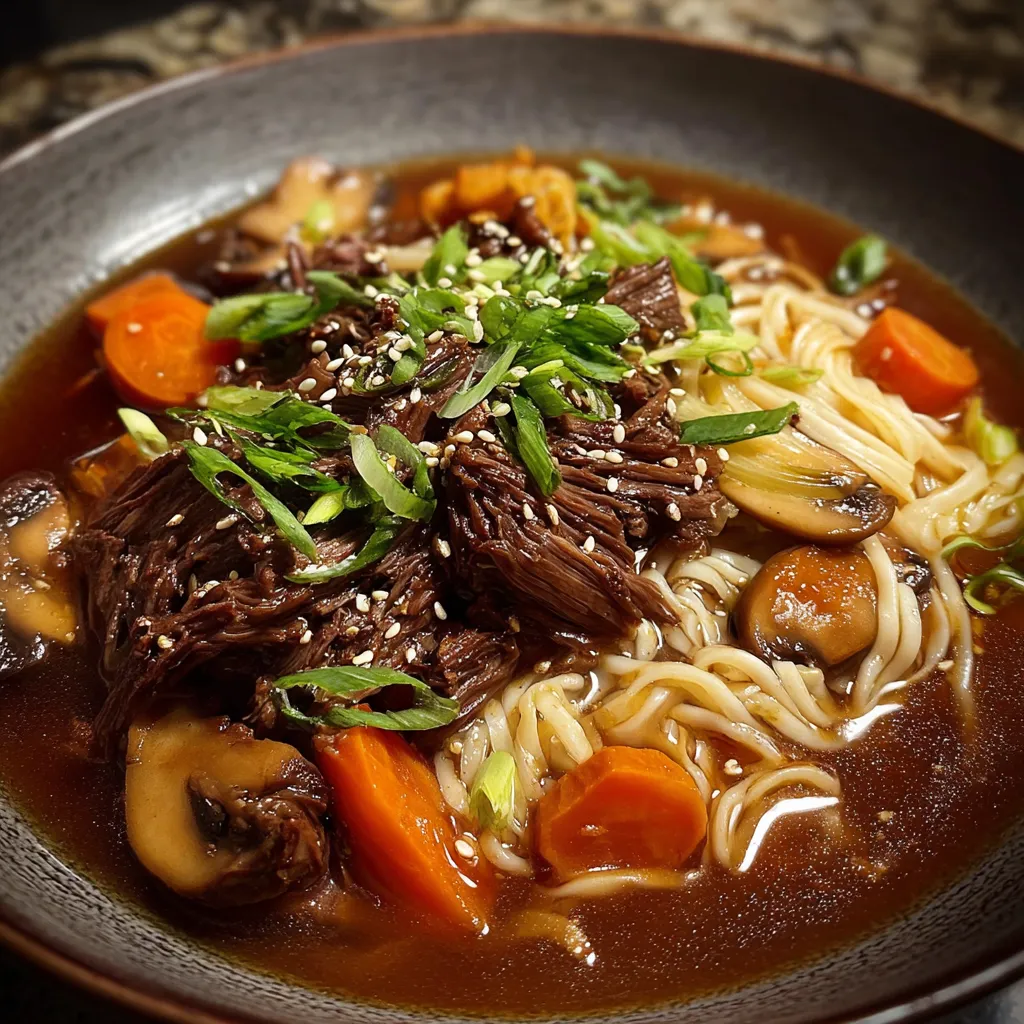

Slow Cooker Korean Beef Noodles
Description
Tender chunks of beef bathed in a sweet-spicy Korean sauce tumble over slippery rice noodles. Garnished with crisp green onions and sesame seeds, each bite marries savory depth and gentle heat.
Ingredients
Instructions
-
Place beef chuck roast in the slow cooker and add beef broth, soy sauce, brown sugar, gochujang, sesame oil, rice vinegar, garlic, ginger, onion, carrot, and mushroom.
-
Stir ingredients gently to coat the beef evenly in the sauce.
-
Cover and cook on low for 6 to 8 hours or on high for 3 to 4 hours until beef is tender.
-
Remove beef and shred with two forks, then return shredded beef to the slow cooker.
-
Whisk together cornstarch and water to make a slurry and stir into the slow cooker to thicken the sauce. Cook on high for 10 minutes.
-
Meanwhile cook rice noodles according to package instructions, then drain and rinse under cold water.
-
Divide noodles among bowls and top with shredded Korean beef, sauce, green onion, and sesame seeds.
Note
- Adjust gochujang for spice level or substitute with sriracha for a milder heat
- For extra vegetables add bell pepper or baby spinach in the last hour of cooking
- Leftovers can be stored in an airtight container in the refrigerator for up to 3 days
- Swap beef for thinly sliced pork or chicken thighs for a different protein variation

